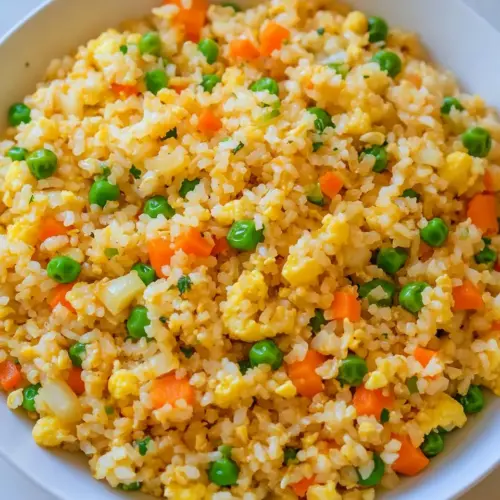
Cauliflower Fried Rice
Cauliflower Fried Rice is a crispy, savory bowl that swaps rice for riced cauliflower for a lighter twist on a takeout classic. Bright vegetables, aromatic garlic and onion, and a splash of soy create an easy weeknight dinner that is flavorful and quick. It’s a perfect pantry friendly dish that’s great for busy evenings and makes a persuasive case to keep riced cauliflower on hand.
Equipment
- Nonstick pan
- Spatula
Ingredients
- 6 cups cauliflower rice, fresh or frozen Provide finely pulsed cauliflower that acts as the rice substitute, giving the dish a low-carb, vegetable-forward base and a light, slightly nutty texture when cooked.
- 2 diced carrots, or 1/2 cup finely chopped broccoli Add diced carrots or chopped broccoli as a colorful, crunchy vegetable component that contributes sweetness and nutrients while balancing the dish’s textures.
- 1 cup peas or edamame (can sub a different vegetable for keto) Include peas or edamame to supply bursts of sweetness and protein, enhancing mouthfeel and adding visual contrast against the cauliflower base.
- 1/2 cup diced onion Offer diced onion to build aromatic depth and savory sweetness through caramelization, forming part of the flavor foundation when sautéed.
- 2 tsp minced garlic Deliver minced garlic to introduce aromatic pungency and savory depth, quickly infusing the oil and vegetables with characteristic fragrant notes.
- 3 tbsp soy sauce or coconut aminos Provide soy sauce or coconut aminos to contribute umami, saltiness, and color that season and tie together the flavors across the skillet.
- 1 tbsp oil or water for sautéing Use oil or water for sautéing to prevent sticking and help soften vegetables, enabling even cooking and gentle browning of the cauliflower rice.
- optional 2 tsp toasted sesame oil (adds a ton of flavor) Drizzle toasted sesame oil optionally to impart a rich, nutty aroma and finish that elevates overall flavor when added near the end.
- optional 1/2 cup corn Add corn optionally to introduce sweet, juicy kernels that boost texture and sweetness, creating a more traditional fried-rice profile.
- optional sriracha or hot sauce to taste Include sriracha or hot sauce optionally to add spicy heat and tangy complexity that can be adjusted to personal taste preferences.
- salt and pepper as desired Season with salt and pepper to brighten flavors and provide basic seasoning control, allowing adjustment for individual taste and sodium needs.
- feel free to stir cooked protein of choice in near the end Stir in cooked protein optionally near the end to incorporate additional substance, protein, and flavor, making the dish more satisfying and complete.
Instructions
- If using frozen cauliflower rice, do not defrost it first. In a nonstick pan, sauté the onion, carrot, and garlic in a little oil or water over medium heat until the onion begins to brown. Stir in the remaining ingredients except sesame oil, and cook until the cauliflower browns and carrots are soft. Stir in the oil, and season with salt and pepper as desired. For spicy cauliflower rice, add sriracha or hot sauce to taste. Serve hot, and enjoy. Leftovers can be stored in a covered airtight container in the refrigerator for 3-4 days.: You will notice a faint icy scent when you scoop it from the bag, and cooking it from frozen helps the pieces brown instead of turning mushy. As the frozen cauliflower hits the hot pan, it releases quick steam that evaporates, concentrating flavor and allowing surface browning. If you defrost first you risk a soggy texture, so resist the urge to thaw. A common mistake is crowding the pan, which traps steam and prevents the golden edges you want.
- In a nonstick pan, sauté the onion, carrot, and garlic in a little oil or water over medium heat until the onion begins to brown: Listen for a gentle sizzling as the onion and carrot hit the pan, and watch the edges of the onion take on a warm, translucent gold. The aroma will shift from sharp to sweet, and the garlic will perfume the air without burning if added after the onion softens. This step builds the savory base, so patience matters, and stirring occasionally ensures even color. Avoid turning the heat too high, which can char the garlic and introduce bitterness.
- Stir in the remaining ingredients except sesame oil, and cook until the cauliflower browns and carrots are soft: At this point add the riced cauliflower , peas or edamame , and any optional corn or other vegetables. The pan will resume a lively sizzle as moisture hits the heat, and you should toss frequently to encourage small patches of golden brown to appear on the riced pieces. Those browned bits add toasty flavor and texture contrast. Cook until the carrot yields to the fork but still has body, and be careful not to over stir which can prevent browning.
- Stir in the oil, and season with salt and pepper as desired: Add your chosen fat, whether a neutral oil or a touch of toasted sesame oil later for aroma, and then season gradually with salt and pepper . The moment you add oil the pan will glisten and coating will enhance browning and mouthfeel. Taste and adjust in small increments, keeping in mind that soy sauce will contribute sodium. Over seasoning is a frequent misstep, so always taste before adding more.
- For spicy cauliflower rice, add sriracha or hot sauce to taste: Introduce heat sparingly, stirring so it melds evenly into the bowl, and take note of how a little spice brightens the savory notes. A teaspoon can coax out complex flavors, while more will shift the profile to assertive and lively. If you overshoot the heat, a squeeze of citrus or a pinch of sugar can help temper it, though those fixes are not part of the base recipe.
- Serve hot, and enjoy: Spoon the finished Cauliflower Fried Rice into warmed bowls so the steam can lift the aromas as you dig in. The final bowl should show flecks of golden brown, bright green peas, and tender orange from the carrot , with a glossy sheen from the oil and sauce. Letting it rest a minute off the heat helps flavors settle, but serve promptly so the textures remain lively. A common error is leaving it in the pan on residual heat, which can soften the vegetables too much.
- Leftovers can be stored in a covered airtight container in the refrigerator for 3 to 4 days: Cool the rice quickly before sealing to preserve texture and reduce condensation in the container. Reheat in a hot skillet, adding a splash of water or oil to revive the texture, and stir frequently until piping hot. Avoid microwaving for long stretches which can make the riced cauliflower gummy and the vegetables limp.
Notes
- Use a wide pan to give the riced cauliflower room to brown, because surface contact is what creates the toasty flavor you want.
- Reserve toasted sesame oil for finishing so its aroma remains bright and nutty, adding depth without cooking away its character.
- Cook vegetables in stages starting with onion and carrot, this preserves their textures and avoids a uniformly soft result.
- Do not over crowd the pan or you will steam instead of brown, which leads to a limp, pale final texture.
- Adjust soy sauce gradually to control sodium, tasting between additions to find the perfect balance for your palate.
- Reheat gently in a skillet with a splash of oil or water to revive leftovers rather than microwaving, which can make the vegetables mushy.