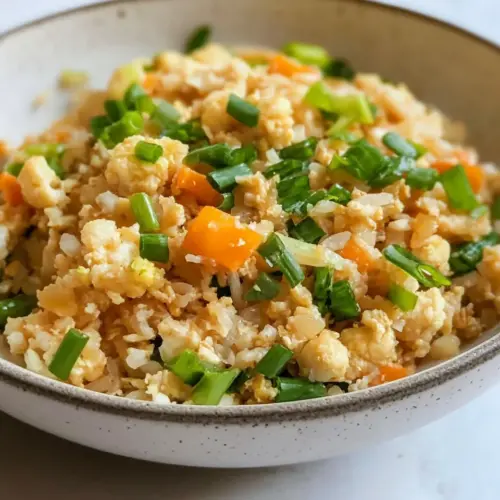
Cauliflower Fried Rice
Cauliflower Fried Rice is a light, crispy, and savory bowl that delivers takeout style satisfaction with fewer carbs. Bright peas, tender pulsed cauliflower, and silky scrambled egg mingle with a savory soy and sesame finish for an easy weeknight dinner. It is ready fast, flavorful, and a persuasive reason to skip heavy sides and enjoy something nutritious tonight.
Equipment
- Large Skillet
- Food Processor
- Spatula
- Small Bowl
Ingredients
- 1 small head cauliflower or 2 cups cauliflower rice Roughly chop or pulse into rice-sized pieces to provide the low-carb starchy base that soaks up flavors and mimics fried rice texture; can use pre-riced cauliflower for convenience and faster cooking. Sauté until just tender and slightly golden to avoid sogginess while maintaining a bit of bite.
- 2 tablespoons soy sauce Add a salty, umami backbone that seasons the vegetables and cauliflower; use reduced-sodium soy sauce if preferred to control saltiness. Stir in toward the end of cooking so it coats the rice evenly without evaporating completely.
- 1/2 teaspoons sugar or honey Balance savory elements with a touch of sweetness to round flavors and counteract the soy sauce; honey or sugar both work depending on dietary preference. Dissolve into the soy sauce mixture so the sweet note distributes evenly across the dish.
- 1 teaspoons sesame oil Drizzle a little for a toasty, aromatic finish that enhances the overall flavor profile; sesame oil is potent so use sparingly. Stir in at the end or mix with soy sauce to layer a nutty fragrance without overwhelming other ingredients.
- 2 tablespoons olive oil Provide the primary cooking fat for stir-frying vegetables and cauliflower, creating a lightly crisp surface and preventing sticking. Use enough to maintain high heat and quick cooking, which helps achieve a slightly caramelized finish.
- 1 large egg beaten Whisk and scramble briefly to add protein, richness, and a silky texture; push cooked cauliflower to the side and pour egg into the pan to create ribbons of cooked egg. Season lightly and fold into the rice so the egg distributes throughout.
- 1/2 white onion diced Sweat or sauté until translucent to build sweet aromatics and soften the texture; diced onion contributes depth and a mild savory-sweet base for the dish. Cook over medium heat first to coax out sugars without burning.
- 1 medium carrot diced Sauté until tender and slightly caramelized to add natural sweetness, color, and a bit of bite; diced carrot also contributes texture contrast and visual appeal. Cut uniformly so pieces cook evenly with the cauliflower and onion.
- 2 cloves garlic minced Crush or mince and cook briefly to release pungent, savory aroma that brightens the dish; garlic provides a foundational savory note when added early in the sauté. Be careful not to burn garlic; add it after the onion and carrot have softened.
- 1/4 cup frozen peas Stir in frozen peas near the end of cooking to add pops of color, subtle sweetness, and a fresh texture; no need to thaw beforehand as they warm quickly. Fold gently so peas stay intact and maintain their bright green appearance.
- Green onions for garnish Slice thinly and scatter on top as a fresh, crisp garnish that adds herbal brightness and a mild onion flavor; green onions also provide a pleasant color contrast. Use both white and green parts where possible for layered flavor.
- Sesame seeds for garnish Toast lightly and sprinkle over the finished dish to add a nutty crunch and visual interest; sesame seeds accentuate the sesame oil flavor. Use white or black seeds as desired and add just before serving to preserve texture.
Instructions
- If using fresh cauliflower, cut it into florets and place them in a food processor. Pulse until the cauliflower reaches a rice-like consistency. Skip this step if using store-bought cauliflower rice.: You'll notice a faint, clean vegetal aroma as the florets break down, and the texture should look like tiny grains, not mush. I pulse in short bursts to avoid turning the cauliflower into a paste, stopping when the pieces are roughly the size of rice grains. The reason this matters is the final pan sear depends on separate granules to brown slightly and develop a nutty flavor. A common mistake is over processing, which yields a mushy texture and prevents that pleasant chew.
- In a small bowl, combine the soy sauce, sugar, and sesame oil. Stir well and set aside.: When you mix these, the aroma of the soy sauce and sesame oil becomes more layered, and you can taste and adjust for salt or sweetness. I always stir until the sugar dissolves, which helps the sauce coat the cauliflower evenly later. This matters because an even sauce prevents salty pockets and helps caramelization. Avoid adding this directly to a cold pan because it will not distribute properly and can leave parts under seasoned.
- Heat 1 tablespoon of olive oil in a large skillet over high heat. Add the beaten egg and cook for about 1 minute. Gently scramble with a spatula, then remove the egg from the skillet and set aside.: As the egg hits the hot pan you should hear a quick sizzle and see it set almost immediately along the edges, creating tender curds. I push it gently into soft ribbons, keeping the texture custardy rather than rubbery, then pause cooking to preserve that softness. This step contributes silkiness to the finished dish and prevents the egg from overcooking when added back later. A frequent error is leaving the egg in too long, which leads to dryness and a chalky mouthfeel.
- In the same skillet, heat the remaining tablespoon of olive oil. Add the diced onion and carrot, and stir-fry for 2 to 3 minutes until they start to soften. Stir in the minced garlic and frozen peas, cooking for another minute until the garlic is fragrant and the peas are heated through.: You should hear light sizzling and see the onion become translucent while the carrot begins to gleam. The garlic should be added only after the vegetables have softened slightly so it can release its aroma without burning, producing a warm, savory perfume. The peas will burst into bright green pops as they warm, adding visual contrast. Overcrowding the pan here causes steaming rather than sautéing, which prevents the development of flavor and texture.
- Add the cauliflower rice to the skillet. Stir-fry for 5 minutes, or until the cauliflower is tender and slightly browned.: At this stage the pan should be hot enough that the cauliflower makes a light sputtering sound as moisture evaporates, and you will see tiny edges turning a warm, golden tone. Toss frequently to encourage even browning and to prevent burning, aiming for tender but not mushy grains. This browning is crucial because it builds nutty, roasted notes that mimic traditional fried rice. A common pitfall is cooking at too low a temperature, which results in limp, waterlogged texture instead of pleasant chew.
- Pour the soy sauce mixture over the cauliflower rice and stir to combine. Return the cooked egg to the skillet, mixing it into the fried rice. Remove from heat.: When the sauce hits the hot pan it should hiss faintly and quickly coat the cauliflower , giving the dish a uniform savory sheen. Folding the reserved egg back in distributes soft pockets of richness throughout, creating contrast with the slightly crisped cauliflower . Removing the pan from heat right after combining preserves the delicate textures and prevents the sauce from concentrating too much. A mistake to watch for is overheating after the sauce is added, which can make the dish overly salty or dry.
- Transfer the cauliflower fried rice to plates or bowls. Garnish with chopped green onions and a sprinkle of sesame seeds before serving.: The final presentation should include a scattering of bright green slices that introduce a fresh, sharp note, while the sesame seeds add a subtle crunch and toasted aroma. I like to serve it immediately so the textures remain distinct and the warmth accentuates the aromatics. Letting it sit too long can cause the grains to become soggy as moisture redistributes, so plate and enjoy right away.
Notes
- Double the aromatics by adding extra diced onion and minced garlic if you want a more pronounced savory base. Cook the onion a touch longer to coax out sweetness before adding garlic so it does not burn. This deepens the backbone of the dish without altering texture.
- Adjust the sauce balance by tweaking the amount of soy sauce or sugar to match your taste. If you prefer a bolder salt profile, increase the soy sauce slightly, or add a touch more sugar to round it. Always taste and add in small increments to avoid oversalting.
- Swap oils for flavor by using toasted sesame oil in the pan for a nuttier base, but add it at the end to preserve its aroma. If you heat it too long its fragrance will dissipate, so reserve a finishing splash when you remove the pan from heat.
- Use pre riced cauliflower for speed when you are short on time, it saves the pulsing step and still gives good texture. Fresh pulsed typically browns better, but store bought is a perfectly valid shortcut for busy nights.
- Toast sesame seeds first in a dry pan before garnishing to amplify their nutty note. They will darken slightly and release oil, giving a more complex finish when sprinkled on top of the warm rice.