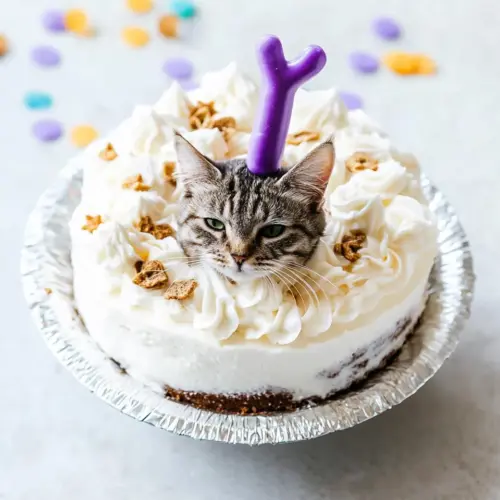
Cat Birthday Cake
Cat Birthday Cake is a simple, savory celebration cake for feline friends, combining creamy pâté, crunchy powdered treats, and a smooth mashed potato 'frosting' for a playful texture contrast. This easy to assemble, no bake treat is perfect for a special meal, offering enticing aroma and texture that cats love. Make it for birthdays or small milestones to give your pet a memorable, safe celebration.
Equipment
- Blender or food processor
- Bowl
- Plastic Wrap
- Offset Spatula
- Ramekin or mold
Ingredients
- 1/3 cup dry cat treats extra for decorating Crunchy, used to provide texture and structure for the cake layers and to add an appealing crunch for cats; reserve a small amount for decorating the top to entice sniffing and nibbling.
- 1 5.5 ounce can pate cat food Smooth, used to bind and moisten the cake while delivering a rich, palatable protein flavor that cats love; choose pâté-style canned food for easy spreading and even consistency.
- 1/3 cup plain instant mashed potatoes prepared Starchy, used to create bulk and a soft, moldable base when prepared; instant mashed potatoes help hold the cake shape and add a neutral taste that blends with the cat food.
- Catnip for topping Aromatic, sprinkled on top to encourage interest and add a familiar, enticing scent that stimulates a cat’s appetite; use sparingly as a finishing garnish to elevate enjoyment.
Instructions
- Use a blender, spice grinder, or food processor to blend the cat treats into a fine powder.: The crushed cat treats should smell faintly meaty and have a sandy texture, not coarse chunks; this ensures they will bind smoothly with the pâté. You will hear a steady, even whir as the pieces break down into a fine dust. If you stop too early, large bits will remain and the cake can crumble, so pulse until you see a uniform powder. One common mistake is overpacking the processor, which produces uneven grinding, so work in small batches if needed.
- Add the pate (without the liquid, if there is any) and powdered cat treats to a bowl and mix until combined.: As you fold the pate cat food into the powdered treats, the mixture should take on a glossy sheen and a soft, cohesive feel. Use a spoon or spatula and press the mixture against the bowl sides to bring it together. You should be able to form a loose ball with your fingers; if it feels too wet, add a touch more powdered treats, if too dry, a dab more pâté. Avoid overmixing, which can make the texture gummy rather than pleasantly dense.
- Scoop the mixture onto a sheet of plastic wrap and wrap tightly, so the cat food mixture forms a puck or a ball, depending on how you want to shape your cake. You can chill it like this, or you can carefully press the mixture (still wrapped in plastic) into a bowl, ramekin, or mold, to make it a specific shape. I used a 4-ounce ramekin for mine.: When wrapped, press firmly so the surface is smooth, listening for faint compressing sounds as air is expelled. This compression helps the cake set, and it will release more cleanly when chilled. A frequent misstep is leaving air pockets which cause the cake to collapse or break when unwrapped, so smooth the exterior thoroughly before chilling.
- Let it chill in the fridge for 30-40 minutes to make sure it maintains its shape.: Pressing into a mold gives crisp edges and a defined silhouette, with a satisfying, compact sound as you pack the mixture in. If you press with too much force the cake can become overly dense, losing the delicate texture cats enjoy, so aim for firm but not rock solid packing. If using a mold, line it with plastic wrap for an easier release.
- Once chilled, remove the cake from the plastic wrap and place it on your chosen serving plate.: Cooling firms the fats and helps the cake hold its form, and you will notice the surface become matte rather than glossy. The chilling period also concentrates the aroma so the cake smells more enticing when presented. Leaving it out too long at room temperature risks a runny texture, while chilling much longer is usually fine but unnecessary for small cakes; however, avoid freezing which alters mouthfeel.
- Use an offset spatula to 'frost' the cake with the instant mashed potatoes. You may also use a piping bag and piping tips to pipe decorative borders. If your potatoes are too soft or too thick, you can adjust the consistency by adding either another teaspoon of instant potatoes or another teaspoon of water until it spreads and pipes just right for you.: The cake should glide out cleanly if wrapped tightly, with little residue left behind. The scent will be stronger now, warm and meaty, which is a signal cats find compelling. If the cake sticks, slide a thin spatula between the wrap and cake, and lift gently to avoid tearing the shape.
- Sprinkle a pinch or two of catnip on to act as sprinkles and decorate with cat treats.: The prepared instant mashed potatoes should be cool and spreadable, with a velvety texture that contrasts the denser pâté. As you frost, aim for smooth, even strokes; you may hear a soft scraping noise as the spatula levels the surface. If the potatoes are too loose they will slide off, so correct consistency before starting. Avoid applying too much pressure which can dent the cake beneath.
- You may also use a piping bag and piping tips to pipe decorative borders: Piping produces crisp ridges and pleasing visual detail, and you will feel the gentle resistance as the potatoes pass through the tip. If the piping seems to break or slump, adjust the pressure or consistency; too thin and the decoration droops, too thick and it will tear the cake surface. A common error is using warm potatoes which will not hold shape, so cool them slightly first.
- If your potatoes are too soft or too thick adjust the consistency by adding either another teaspoon of instant potatoes or another teaspoon of water until it spreads and pipes just right for you: Small adjustments make a big difference; the ideal texture is smooth and cohesive, neither runny nor stiff. Stir incrementally and test with a small dollop to confirm the behavior. Overcorrecting can lead to a grainy or watery finish, so add tiny amounts and recheck frequently.
- Sprinkle a pinch or two of catnip on to act as sprinkles and decorate with cat treats: The final flourish should smell herbaceous from the catnip , and the whole cake should look playful with a few whole cat treats as accents. Use a light hand so the scent is inviting, not overpowering. A mistake I sometimes see is using too many decorations which can overwhelm the cake and distract from the main texture; aim for balance and restraint.
Notes
- Mini cupcake format Use small silicone molds or an ice cube tray to create multiple bite sized cakes for a multi cat household or to sample small portions safely.
- Layered look Press half the pâté mixture into a mold, add a thin layer of mashed potato, then top with the remaining pâté for a two tone cake that peeks through when sliced.
- Crunchy top Reserve a few crushed cat treats and sprinkle on top after frosting to add a contrasting texture that many cats find engaging.
- Ring presentation Use a small biscuit cutter to make a ring shape, placing a few whole cat treats in the center as a nest style garnish for visual interest.
- Single serve ramekin Press into a small ramekin and invert onto the plate for a neat, restaurant style presentation that holds perfectly for photographs.