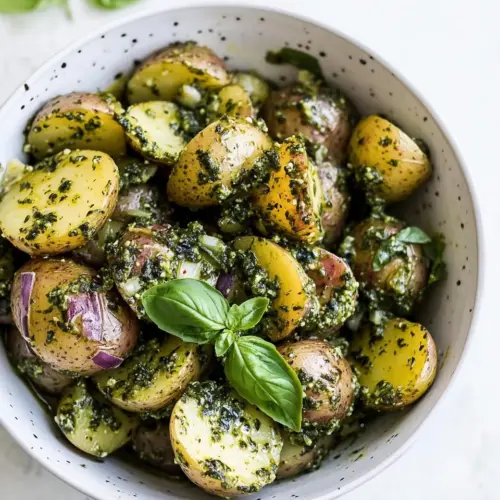
Carrot Top Pesto Potato Salad
Carrot Top Pesto Potato Salad is a creamy, bright twist on a classic side, combining tender baby potatoes with herbaceous carrot top and basil pesto. This easy weeknight side delivers nutty pine nuts, savory parmesan, and a lemony lift, making it perfect for picnics and potlucks. Make it to reduce waste and enjoy a flavorful, satisfying dish.
Equipment
- Pot
- Colander
- Food Processor
- Mixing Bowl
Ingredients
- 3 pounds baby yukon gold potatoes, or any baby potatoes! Boil or steam until tender to provide the hearty base and creamy texture for the salad; chop into bite-sized pieces and retain some skin for added flavor and nutrients. Absorb and showcase the carrot top pesto, balancing the herbaceous dressing while keeping the dish filling and comforting.
- 1 cups carrot top greens, rinsed and patted dry Chop finely and blend into a bright, herbaceous pesto that gives the salad its distinctive green, slightly bitter-sweet flavor; rinse to remove grit and pat dry to prevent a watery dressing. Pair with basil and oil to create a vibrant binder that lifts the potatoes and adds visual appeal.
- 1/2 cup packed fresh basil leaves Tear or chop before adding to the pesto to add sweet, aromatic herb notes and round out the carrot top’s sharper greens; pack tightly to ensure an impactful basil flavor. Complement the carrot tops and parmesan, enhancing freshness and depth in the dressing.
- 1/4 cup finely grated parmesan cheese Grate finely and stir into the pesto for savory umami and salty depth that helps bind the oil and greens; sprinkle additional parmesan over the finished salad if desired. Provide a classic Italian note that balances the brightness of the herbs and acidity of lemon.
- 2 garlic cloves, minced Mince finely and incorporate into the pesto to add pungent, aromatic warmth and a savory bite that cuts through the oil; cook briefly if a mellower flavor is desired. Enhance overall complexity and tie together the herbs, cheese, and nuts with a garlicky backbone.
- 3 tablespoons toasted pine nuts Toast lightly and pulse into the pesto for a rich, nutty flavor and creamy texture that helps emulsify the dressing and adds pleasant crunch. Use sparingly to avoid overpowering the greens while providing depth and a slightly buttery note.
- 1 teaspoon freshly squeezed lemon juice Squeeze fresh to brighten and balance the pesto with acidity that wakes up the flavors and prevents the oil from tasting flat; add incrementally to taste. Act as a counterpoint to the richness of the cheese and oil, enhancing overall harmony in the salad.
- 1/2 teaspoons salt Season to taste and incorporate into the pesto or salad to enhance overall flavor and bring out the natural sweetness of the potatoes; adjust depending on the saltiness of the parmesan. Help elevate all components without masking the herbaceous notes of the carrot tops and basil.
- 1/2 teaspoon freshly cracked black pepper Crack freshly to provide aromatic heat and a subtle peppery finish that enhances the pesto’s complexity; adjust quantity based on desired spiciness. Work with salt and lemon to create a well-rounded seasoning profile across the salad.
- 1/2 teaspoon crushed red pepper flakes Add sparingly to introduce a touch of heat and complexity, either mixed into the pesto or sprinkled on top for a gentle kick; balance with lemon and oil. Offer a layered spiciness that complements the earthy potatoes and bright herbs without overwhelming them.
- 1/2 cup olive oil Whisk or blend into the pesto to create a smooth emulsion that carries and coats the potatoes, providing richness and mouthfeel; choose extra virgin for best flavor. Help marry the cheese, nuts, garlic, and herbs into a cohesive dressing that clings to each potato piece.
Instructions
- Place the potatoes in a pot and cover them with cold water. Bring the water to a boil and cook the potatoes for 15 minutes, or until fork tender. Drain the potatoes and toss with the pesto. Toss in a handful of microgreens or arugula greens. You can serve this warm or cold!: The moment you submerge the potatoes in cold water, you set the stage for even cooking, which prevents mealy centers and broken skins. As the water warms slowly, the starches soften uniformly so the texture becomes tender yet intact. You'll see small bubbles gather along the sides before a simmer forms, and that gradual heat helps the skins stay attached. A typical error is starting with hot water, which can cause the outsides to overcook before the center is done, leading to a mushy result. Keep an eye for a gentle boil, and add a pinch of salt if you want to season from the inside out.
- While the potatoes boil, place the carrot tops, basil leaves, cheese, garlic, pine nuts, lemon juice, salt, pepper and pepper flakes in the bowl of your food processor and pulse and blend until small pieces remain. Stream in the oil with the processor running until the mixture is combined and smooth. Taste the pesto and season with additional salt and pepper if you’d like.: As the water comes to a rolling boil, the kitchen fills with a faint earthy aroma from the potatoes , and you may hear the quiet chatter of bubbling water. Time is a guide, so test with a fork after about 12 minutes; the fork should glide in with a slight resistance but not fall apart. The correct texture is tender yet cohesive, which allows the potatoes to hold sauce without breaking down. Overcooking is the common trap here, which yields a grainy, pasty mouthfeel instead of a plush bite. Drain promptly when they are done to avoid residual steaming that softens them further.
- Spoon the pesto over the potatoes, tossing well and using as much as you’d like. I start with about 1/4 cup and go from there. You can store the extra pesto in a sealed container in the fridge for a week and you can freeze it for up to 3 months!: Once drained, the hot potatoes are porous and ready to soak up flavor. Tossing while warm encourages the pesto to coat each piece, the heat releasing fragrant oils and making the sauce meld into pockets. You will notice a glossy sheen over the potatoes as the olive oil and cheese marry with the surface. A pitfall is adding too much pesto at once; start conservatively so the balance of herb, acid, and oil remains pleasant.
- Toss in a handful of microgreens or arugula greens: Adding greens introduces a crisp, peppery contrast to the tender potatoes , and the heat slightly wilts them for a pleasant texture. The aroma changes subtly, gaining fresh, green notes that lift the dish. When tossing, fold gently to prevent bruising the leaves, which can turn them soggy. If you skip this step or add too many greens, the salad can become dominated by raw bitterness rather than a balanced mix.
- You can serve this warm or cold: Serving warm gives the pesto a looser, more aromatic profile, while chilling the salad tightens the flavors and makes it ideal for picnics. Warm service creates steam that enhances the herb scent, and cold service yields a firmer, more compact texture. A common mistake is refrigerating immediately while the potatoes are piping hot, which can trap condensation and make the salad watery; let it come to room temperature first if you plan to chill it.
- While the potatoes boil, place the carrot tops, basil leaves, cheese, garlic, pine nuts, lemon juice, salt, pepper and pepper flakes in the bowl of your food processor and pulse and blend until small pieces remain: Working while the potatoes cook is efficient and ensures the pesto is fresh when the salad needs it. Pulsing creates texture, so you maintain tiny flecks of herb and nut for mouthfeel, rather than a completely homogenized paste. You will smell the bright, grassy notes of the carrot tops and the warm nutty scent from briefly toasted pine nuts as they break down, signaling readiness. Overprocessing can yield a pasty, overly uniform sauce that lacks character, so stop while you still see flecks.
- Stream in the oil with the processor running until the mixture is combined and smooth: Slowly adding olive oil while the machine runs creates an emulsion that gives the pesto a silky texture and ensures the flavors marry. The visual cue is a glossy, cohesive sauce that clings to a spoon. If you pour the oil too quickly, the mixture may separate and feel oily rather than integrated. If separation occurs, pulse in small amounts of water or another spoonful of fresh lemon juice to bring it back together.
- Taste the pesto and season with additional salt and pepper if you’d like: Tasting is essential because the brightness of the lemon and the saltiness of the parmesan can vary. Adjusting here fine tunes the balance so it enhances the potatoes instead of overpowering them. When you taste, think about overall harmony, adjusting acid, salt, or heat in small increments. A common error is over-salting; it's easier to add more, but impossible to subtract, so season cautiously.
- Spoon the pesto over the potatoes, tossing well and using as much as you’d like: Spoon and toss gently so each potato piece gets a glossy coating without getting saturated. The sensory cues are a fragrant herb aroma and a lustrous finish on the potatoes . Start with a modest amount and add more to taste, because the sauce is concentrated and you want balance. Avoid drowning the salad in oil, which can make the texture heavy and mask the herbaceous notes.
- I start with about 1/4 cup and go from there: My approach is measured, adding a small base amount and building the flavor profile, so nothing becomes dominating. This lets you tailor the dish to preference, whether you want it subtly herbed or boldly dressed. If you add too much at once, the salad can become oily or overly pungent, so proceed in stages and taste as you go.
- You can store the extra pesto in a sealed container in the fridge for a week and you can freeze it for up to 3 months: Proper storage preserves the fresh flavor, and freezing extends the pesto's life for future use. I spoon mine into ice cube trays for portioned freezing, which makes it easy to thaw only what I need. Keep in mind that refrigeration may darken the green slightly, which is normal, but the aroma and flavor remain robust. A mistake is leaving the pesto at room temperature for too long, which risks spoilage; always cool quickly and store appropriately.
Notes
- Use warm potatoes to help the pesto coat and partially melt into the surfaces for a more cohesive flavor.
- Pulse for texture instead of over-blending the herbs and pine nuts, so you retain small flecks that add visual interest and mouthfeel.
- Reserve a little pasta water style liquid by saving a tablespoon of the cooking water, it can be used to loosen the pesto if it becomes too thick.
- Toast nuts evenly by spreading them in a single layer and shaking the pan frequently, which prevents scorching and ensures a balanced nutty aroma.
- Portion pesto into ice cube trays for easy future use, each cube provides a measured amount that thaws quickly for vinaigrettes or tossed salads.
- Adjust lemon gradually, tasting as you go, since acidity brightens but can also dominate the delicate carrot top flavor.