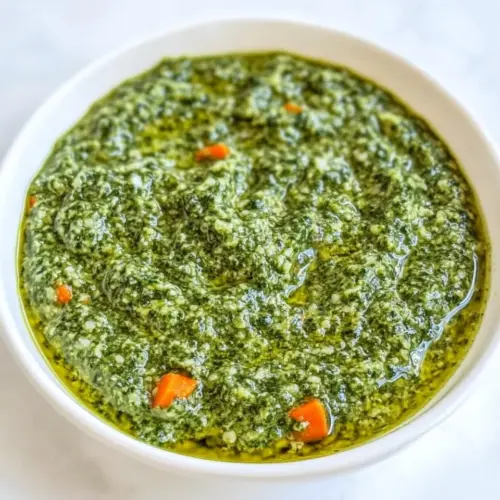
Carrot Top Pesto
Carrot Top Pesto is a bright, herbaceous sauce made from fresh carrot tops, toasted nuts, and parmesan cheese, emulsified with extra-virgin olive oil. It yields a creamy, nutty texture and vibrant green color, perfect for pasta, sandwiches, and grain bowls. Easy to make and sustainable, this recipe is a flavorful way to use whole vegetables and elevate simple meals.
Equipment
- Food Processor
Ingredients
- 2 cups carrot tops no stems Brighten the pesto with leafy carrot tops, providing a fresh, slightly bitter green flavor and vibrant color; blend thoroughly to avoid stringy bits and maximize the herbaceous profile.
- 1/2 cup basil leaves packed – no stems, optional Enhance aroma and add a sweet, peppery basil note when included; gently pack leaves to preserve essential oils and balance the carrot-top bitterness.
- 1 cup pine nuts or any other nut Enrich texture and add a rich, buttery mouthfeel using pine nuts or another chosen nut; toast lightly for deeper flavor and pulse to the desired coarseness.
- 1/2 cup parmesan cheese see notes to sub with nutritional yeast Introduce savory, umami depth with finely grated parmesan or replaceable nutritional yeast for a dairy-free option; stir in gradually to control saltiness and creaminess.
- 1 clove garlic Impart pungent, aromatic heat using a single garlic clove; mince or crush to release oils and blend thoroughly to distribute flavor evenly.
- 1/2 cup extra-virgin olive oil Bind and carry flavors with extra-virgin olive oil, adding silkiness and body; drizzle in while blending to emulsify and reach preferred consistency.
- 1/2 teaspoon salt Season and elevate overall taste with salt, enhancing natural flavors and balancing bitterness; adjust to taste and consider the saltiness of cheese when measuring.
- 1/4 teaspoon ground black pepper Add subtle heat and complexity with ground black pepper, finishing the pesto with a mild bite; sprinkle in small amounts and taste to avoid overpowering fresh herbs.
Instructions
- In a dry pan over low-medium heat (no oil), lightly toast the pine nuts or any other nuts you’re using. Remove from heat, allow to cool.: The moment the pine nuts hit the dry pan you will notice a soft toasty scent rising, sweet and warm like roasted butter. Listen for the light popping and shifting as they move, that tells you they are releasing oils. Toast them until they turn a delicate golden color, then immediately transfer to a plate to stop cooking, because residual heat can quickly take them from golden to burnt. This toasting step deepens the nutty flavor and helps the nuts break down creamier in the food processor , which makes for a silkier pesto. A common mistake is to walk away and let them darken, which adds bitterness. Cooling is crucial; if you blend while they are hot, the heat can warm the other ingredients and slightly alter the bright green color you want.
- Cut off the carrot tops and wash the leaves. Pat dry using a kitchen towel, and place in a food processor.: Handling the carrot tops gently preserves their bright color and reduces bruising, which keeps flavors fresh. After cutting them free from the stems, rinse thoroughly to remove grit, then spread them on a clean towel and pat dry so water does not dilute the sauce. When you add the leaves to the food processor , they should be mostly dry so the blades shear them efficiently rather than turning the mixture watery. If leaves are wet, the pesto can separate or seem thin. A frequent oversight is leaving too much moisture, which weakens the final texture and dulls the color.
- Place all of the ingredients except for the olive oil in the bowl of a food processor. Blend until completely broken down, scrape off the sides of the bowl as needed.: As the processor runs, you will hear the chopping evolve into a steady hum and see the mixture progress from coarse to grainy, then to a paste. Scrape the sides periodically to ensure even processing, because leaves and bits of parmesan cheese can cling to the bowl. Achieving a uniform, mostly smooth paste before adding oil helps the emulsion form more readily once the oil is introduced. The purpose here is to break down fibers and distribute flavors evenly, so patience matters. Avoid overworking though, as heat from the motor can warm the mix and darken the green. If the mixture sticks or seems clumpy, stop and scrape well to keep the texture consistent.
- Add the olive oil gradually with the food processor running until you get a slightly emulsified sauce. Thin out with extra oil or water if needed.: With the motor running, stream in the extra-virgin olive oil so it blends into a glossy, cohesive sauce. You will notice the sound of the blades change as the oil binds the paste into a smoother, silkier consistency and the scent will open into a rounded, fragrant profile. If the pesto seems too thick, add a little more oil or a splash of water to reach your desired viscosity, but go slowly to avoid making it overly loose. This gradual addition creates an emulsion that helps the pesto cling to pasta and vegetables, which affects mouthfeel and flavor delivery. A common pitfall is pouring oil too quickly, which can make the sauce separate or become too thin; patience yields a balanced, silky result.
Notes
- Swap nuts freely Use walnuts, cashews, or almonds if you do not have pine nuts; toasting each will bring out different flavor notes, and texture may vary slightly depending on oil content.
- Go nut free Replace nuts with toasted sunflower or pumpkin seeds to keep body and creaminess for those who need or prefer a nut free option.
- Make it vegan Substitute the parmesan cheese with nutritional yeast as noted, which adds savory depth without dairy; adjust salt because nutritional yeast has its own salty profile.
- Adjust salt mindfully Start with the recipe amount and taste after blending, especially if you use a salty parmesan cheese, increasing in small increments to avoid over salting.
- For brighter color Blanch the carrot tops briefly in boiling water then shock in ice, pat dry, and blend; this preserves vivid green tones though it slightly softens leafiness.
- Freeze for convenience Portion into ice cube trays and freeze, then pop cubes into jars for quick use; drizzle with a bit of extra-virgin olive oil before freezing to help texture on thawing.