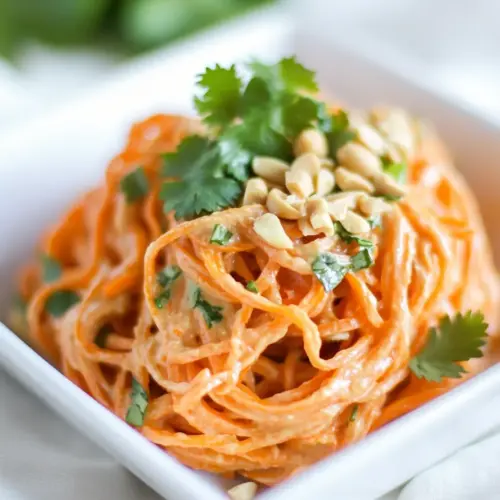
Carrot Noodles with Ginger Lime Peanut Sauce
Carrot Noodles with Ginger Lime Peanut Sauce is a creamy, zesty, and crunchy salad that feels indulgent yet light. Bright lime and warm ginger lift a silky peanut and coconut milk dressing that clings to crisp carrot ribbons, creating an easy weeknight meal or vibrant side dish that comes together in minutes, perfect for quick lunches and casual gatherings.
Equipment
- Vegetable Spiralizer
Ingredients
- 5 large carrots peeled and spiraled into noodles Provide thin, tender vegetable noodles that form the base of the dish and deliver a naturally sweet, crisp texture; spiralizing maximizes surface area for sauce absorption and creates a light, gluten-free pasta alternative. Use peeled carrots to ensure smoothness and consistent mouthfeel while gently massaging or lightly sautéing can soften them without losing their bright color.
- 1/3 cup roasted cashews Add a crunchy, nutty element that complements the peanut flavor and can be chopped or used whole as a garnish; roasted cashews also lend richness and subtle buttery notes to the overall texture. Toasting briefly before serving can intensify aroma and offer contrast to the silky sauce.
- 2 tbsp fresh cilantro finely chopped Contribute fresh, herbaceous brightness and a mild citrusy note when finely chopped and sprinkled over the finished dish; cilantro balances the richness of the nut sauce and adds visual green contrast. Stirring some into the sauce provides layered flavor while reserving a bit for garnish enhances aroma and presentation.
- 2 tbsp unsweetened creamy peanut butter or almond butter Provide creamy body and pronounced nutty flavor that forms the backbone of the sauce, binding liquids and seasonings into a smooth emulsion. Choose unsweetened creamy peanut butter or almond butter to control sweetness and texture, and whisk thoroughly with warm liquids to avoid lumps for a silky consistency.
- 4 tbsp coconut milk Add lush creaminess and subtle tropical sweetness that helps thin the peanut butter while enriching flavor; coconut milk creates a velvety sauce without dairy. Adjust amount to reach desired sauce thickness and use full-fat coconut milk for a richer mouthfeel or light coconut milk for a lighter sauce.
- 2 tbsp liquid aminos to taste Offer a savory, umami-packed salty note that replaces soy sauce for a gluten-free, slightly different flavor profile; liquid aminos season the sauce and enhance depth. Add gradually and taste as you go since its intensity varies by brand and it directly impacts overall saltiness.
- Pinch cayenne pepper Introduce concentrated heat that lifts the flavors with a warm, spicy kick without overwhelming the dish; a pinch of cayenne pepper brightens the sauce and complements ginger. Start small and adjust to preference, especially if serving to guests with varying spice tolerance.
- 2 large cloves fresh garlic finely chopped Provide pungent aromatic depth and savory bite when finely chopped; fresh garlic builds complexity and pairs exceptionally well with nut-based sauces. Lightly sautéing or briefly blooming in warm coconut milk can mellow raw sharpness while preserving its savory character.
- 1 tbsp fresh ginger peeled and grated Contribute zesty warmth and a bright, slightly spicy backbone when peeled and grated; fresh ginger adds aromatic lift and pairs with lime to create a vibrant flavor profile. Incorporate into the sauce to infuse heat and freshness, adjusting amount for desired gingery intensity.
- 1 tbsp lime juice Deliver bright acidity and citrusy lift that balances the richness of the peanut sauce and enhances other flavors; lime juice cuts through fat and brightens the overall dish. Add gradually and taste to achieve a lively but balanced tartness that complements the carrots and nuts.
- Kosher salt to taste Provide adjustable seasoning to enhance and unify flavors throughout the dish; kosher salt helps bring out sweetness in the carrots and depth in the sauce. Add sparingly and taste during preparation, remembering that other salty components like liquid aminos also contribute to overall saltiness.
Instructions
- Combine all ingredients in a small bowl and mix together until smooth and creamy.: Warm, nutty aromas will lift from the bowl as the peanut butter and coconut milk emulsify into a glossy sauce. Use a small whisk or fork and press the ingredients against the side of the bowl to break up any thick pockets of nut butter, creating a velvety texture. The sauce should smell of fresh lime juice and zesty ginger , with a faint roasted note from the cashews . If the sauce seems grainy, add another teaspoon of coconut milk and whisk vigorously to smooth it. A common mistake is adding salt or liquid aminos too quickly, which can make the dressing overly salty, so season gradually and taste as you go.
- Wash carrots well, peel them, and pat them dry.: The tactile ritual of rinsing and peeling releases the clean vegetal scent of the carrot and readies it for spiralizing. Use a vegetable brush under cool running water to remove any soil, then peel thinly to remove the outer skin. Pat each carrot dry with a towel so it feeds smoothly into the spiralizer without slipping. You should be able to hear a soft whisper as the blade bites the carrot , and the exposed flesh will look bright and moist. Avoid leaving wet carrot in the spiralizer, as excess water can make the noodles limp.
- Using your spiral slicer, make noodles out of all of the carrots. It will be more difficult to make the noodles once there is only a few inches of carrot left, so you can grate what’s left of the carrot.: As the spiralizer spins, the kitchen fills with a faint sweet aroma and ribbons of orange accumulate. Aim for consistent pressure so the noodles form evenly, producing long, delicate strands that will hold the sauce. If the carrot becomes difficult to spiralize when only a few inches remain, switch to a grater for the end piece to avoid scraping your knuckles. Visually, you want uniform, glossy noodles that look almost translucent in places where the blade thins them. A typical mistake is forcing the carrot too hard, which yields uneven, broken pieces rather than pretty ribbons.
- Place all carrot noodles into a large serving bowl. Pour the Ginger-Lime Peanut Sauce over the noodles and gently toss together (I use my hands for this part).: The last bits of carrot are denser and safer to grate manually, which gives you slightly shorter strands and fine shreds that still mingle well with the sauce. The texture contrast between spiralized ribbons and grated pieces can be pleasant, adding variety in each bite. When grating, be mindful of the sound, a consistent rasp that signals even pressure, and stop before you reach the core to avoid scraping. A common slip here is trying to get every last scrap from the carrot , risking knuckle nicks; leave a small nub if needed for safety.
- Serve with roasted cashews (or peanuts) and freshly chopped cilantro.: Tossing them in a roomy bowl prevents crushing and helps the noodles stay airy. You will notice a fresh, clean scent from the bundled ribbons, and their bright color makes the bowl visually inviting. Arrange them loosely so the sauce can coat individual strands rather than pooling at the bottom. If the noodles are crowded, they steam and lose crispness, so give them breathing room to retain that snappy bite.
- Pour the Ginger Lime Peanut Sauce over the noodles and gently toss together (I use my hands for this part): As the sauce hits the carrot , it should shimmer and cling, coating each strand in a silky sheen. Using your hands is sensory work, you can feel the temperature and texture, ensuring even distribution without crushing the noodles. The scent will become a harmonious mix of citrus, nutty cream, and warm ginger . If you over toss with a fork or spoon you risk bruising the ribbons, so gentle lifts and folds are ideal. A mistake here is adding too much sauce at once; start with most of it and reserve a little to adjust seasoning after tasting.
- Serve with roasted cashews (or peanuts) and freshly chopped cilantro: Finish with the crunchy cashews and aromatic cilantro scattered across the top so each bite has textural and fragrant contrast. The roasting brings out the cashews buttery notes, and the herb offers a peppery, citrusy lift. Visually, the green and tan against the orange noodles is striking and appetizing. If serving later, sprinkle toppings just before presenting to preserve their crunch and vibrancy; a common error is pre topping and watching the nuts soften.
Notes
- Swap nut butter thoughtfully If you prefer almond butter instead of peanut butter, expect a milder, slightly sweeter sauce. Almond butter tends to be less oily, so you may need to add an extra teaspoon of coconut milk to achieve the same silky texture. Taste as you go, because the natural sweetness will change how much lime juice and liquid aminos you need.
- Adjust heat level If cayenne is too intense, skip it and rely on freshly grated ginger for warmth. Alternatively, add a tiny pinch of cayenne at the end to better control the heat. Remember that heat builds as flavors meld, so start conservatively.
- Thinning the dressing For a looser dressing that coats rather than clings, stir in extra coconut milk or a splash of water. Add one teaspoon at a time until you get the desired pourable consistency, but avoid watering it down too much as it will lose body.
- Make it ahead You can prepare the sauce up to two days in advance and store it covered in the refrigerator. Bring it back to room temperature and whisk before using to reincorporate any separated oils. Do not toss the sauce with the noodles until just before serving to keep the carrot crisp.
- No spiralizer option If you do not have a spiralizer, grate the carrot on a box grater for fine shreds that still absorb the sauce well. The texture will be slightly different but still delicious, and the dish may feel a touch softer.