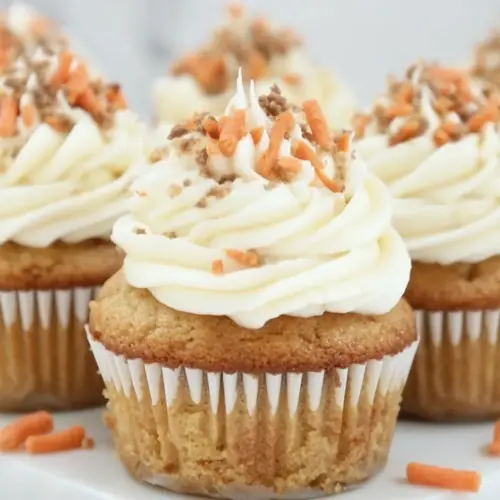
Carrot Cake Cupcakes
Carrot Cake Cupcakes are moist, warmly spiced treats with a creamy frosting and tender crumb. These easy cupcakes blend shredded carrots, cinnamon, and nutmeg into a soft cake topped with tangy cream cheese frosting, perfect for brunch or an easy weeknight dessert. Make a batch for gatherings, potlucks, or a simple family treat that always vanishes fast.
Equipment
- Muffin Tin
- Mixing Bowls
- Whisk
- Spatula
- Wire Rack
Ingredients
- 1 1/2 cups flour, all-purpose Combine to provide the primary structure and tender crumb for the cupcakes, offering balanced gluten content when paired with whole wheat flour. Sift before measuring to ensure even incorporation and avoid lumps for a smooth batter.
- 1 cup whole wheat flour Add to contribute whole-grain texture and deeper flavor while increasing fiber and nutritional value. Mix gently with all-purpose flour to maintain a light cupcake crumb without overdeveloping gluten.
- 1/2 cup granulated sugar Sweeten the batter with clean, sweet notes and help with moisture and aeration when creamed with oil and eggs. Measure accurately and avoid packing to maintain the intended sweetness level.
- 1/2 cup brown sugar Provide a richer, more complex sweetness and contribute to moistness and chew in the cupcakes. Work well with brown sugar's molasses to enhance caramel-like flavor in the final cake.
- 1 teaspoon baking soda Leaven to react with acidic components and create lift, producing a light and tender cupcake crumb. Distribute evenly through the dry ingredients to ensure consistent rising.
- 2 teaspoons baking powder Increase overall leavening power for a balanced rise and help stabilize the cupcake structure during baking. Combine with baking soda and mix thoroughly into the dry ingredients for best results.
- 1 teaspoon salt Enhance flavor balance and control overall taste intensity while supporting the chemical reactions of leaveners. Dissolve evenly into the dry mix to avoid salty pockets in the batter.
- 1 teaspoon ground ginger Warm and aromatic, brighten the batter with spicy ginger notes and complement the carrots and cinnamon. Use measured amounts to avoid overpowering the delicate cake flavors.
- 1/2 teaspoon nutmeg Add warm, nutty depth and subtly sweet spice to complement cinnamon and ginger in the spice profile. Grate fresh nutmeg when possible for the most vibrant aroma.
- 2 teaspoons cinnamon Provide the dominant warm spice character, pairing with ginger and nutmeg to create classic carrot cake flavor. Measure and blend into dry ingredients for even seasoning throughout.
- 1 cup oil Contribute moisture and richness while helping to carry flavors and create a tender mouthfeel in the cupcakes. Use a neutral-flavored oil for a light texture and consistent crumb.
- 4 large eggs Bind ingredients, add richness, and contribute to leavening and structure through coagulation during baking. Bring eggs to room temperature for better emulsification and volume.
- 1 teaspoon vanilla extract Enhance overall flavor with sweet, floral vanilla notes and help round out the batter's taste profile. Add with wet ingredients to evenly distribute its aroma.
- 3 cups shredded carrots Introduce fresh vegetable moisture, natural sweetness, and texture while supplying fiber and color to the cupcakes. Shred uniformly to ensure even distribution and consistent baking.
- 4 ounces cream cheese Provide tangy creaminess for the frosting or filling and contribute to a smooth, slightly tangy balance against the sweet powdered sugar. Soften to room temperature before whipping for a lump-free texture.
- 1/4 cup butter Add richness and creaminess to frostings while helping create a stable, spreadable consistency when creamed with sugar. Soften slightly to ensure smooth incorporation with cream cheese.
- 1 1/2 cups powdered sugar Sweeten and stabilize the frosting, dissolving into butter and cream cheese to create a smooth, spreadable icing. Sift if necessary to prevent lumps and achieve a silky finish.
- 1/2 teaspoon vanilla extract Deliver a secondary vanilla note specifically for the frosting, enhancing sweetness and aroma without overpowering. Add during frosting assembly for consistent flavor distribution.
- 1/2 cup chopped pecans optional Offer a crunchy, nutty optional element that contributes texture and flavor contrast to cupcakes or as a garnish. Toast lightly to deepen flavor before chopping and sprinkling on top.
Instructions
- Preheat oven to 350 degrees. Place cupcake liners in a muffin tin, or butter each tin and dust with flour, shaking off the extra.: Warm air rising in the oven creates even heat so the cupcakes rise uniformly, and the liners prevent sticking. You will notice a steady, gentle warmth when you open the oven, and the tin should feel evenly hot to the touch after a few minutes. This preheating step is crucial for consistent oven spring and a uniform crumb. A common mistake is not preheating long enough, which can cause dense, under risen cupcakes; always let the oven reach temperature before baking.
- In a large bowl, combine flours, sugar, baking soda, salt and cinnamon.: The dry mix should smell faintly sweet and spicy, and whisking incorporates air and breaks up lumps. You should see an even distribution of the brown sugar with the flours and a uniform powdery texture. This matters because even dispersion of leavening ensures consistent rising pockets in each cupcake. Avoid over whisking to prevent too much gluten development, which can make cupcakes tough.
- In a separate bowl, combine the oil, eggs, and vanilla. Whisk until well combined. Stir in carrots until everything is incorporated together well.: The wet mixture will look glossy and cohesive, with the oil suspending in the beaten eggs , and the shredded carrots evenly distributed. The aroma becomes slightly eggy and bright from the vanilla . Mixing the carrots into the wet ingredients coats them so they integrate smoothly into the batter, helping prevent clumping. A pitfall here is under mixing, which can leave pockets of dry flour, or overmixing, which can make the batter dense; stir gently until evenly combined.
- Fold the wet ingredients into the dry ingredients and mix well. Scoop into muffin tin, with muffin liners or by spraying a muffin tin. Fill about 2/3 of the way full.: As the wet and dry components meet you will see a transformation from powder to glossy batter studded with orange flecks of carrot . Folding preserves air while ensuring even texture, producing a batter that is thick but scoopable. Filling the cups two thirds prevents overflow while allowing room for rise. If you overfill, cupcakes can dome and spill over; underfill and they will be small and dry.
- Bake for 25-30 minutes. The cupcakes are done when the tops bounce back when lightly touched, or a toothpick comes out clean from the center.: During baking you will notice the kitchen filling with warm spice and carrot aroma, and the tops will turn a soft golden color. The bounce back is a tactile cue that indicates the internal structure set properly, and a clean toothpick confirms no raw batter remains. Pulling them out too early risks a gummy center, while leaving them too long dries them out; aim for that slight springiness.
- Cream together softened cream cheese and butter. Add powdered sugar and beat until smooth. Add vanilla and beat again. Stir in chopped pecans if using.: The frosting should turn glossy and velvety, with the cream cheese lending a gentle tang and the butter contributing silkiness. When you beat in powdered sugar , the texture firms to a spreadable consistency and the smell becomes sweet and rich. Adding chopped pecans introduces a nutty crunch if desired. Watch for overbeating, which can cause the frosting to become too loose or greasy; beat just until smooth.
- Once the cupcakes are cooled, spread each one with frosting. Enjoy!: Cooling is a sensory checkpoint, you should feel the cupcake top cool to the touch before frosting, or the frosting will slide. The finished cupcakes present a contrast of tender crumb and creamy frosting, and a gentle press of a fork will reveal a moist interior. A common error is frosting warm cakes, which melts the frosting and ruins the presentation; be patient and allow full cooling on a wire rack.
Notes
- Measure flours correctly by spooning into the cup and leveling with a knife to avoid dense cupcakes from packed flour.
- Room temperature eggs blend more uniformly with the oil, producing a smoother batter and better rise.
- Sift powdered sugar before adding to the frosting to ensure a silky, lump free texture that spreads easily.
- Allow cupcakes to cool fully on a wire rack to set the crumb and prevent frosting from sliding off warm surfaces.
- Store leftovers properly in an airtight container in the refrigerator for up to four days to preserve the frosting and crumb.