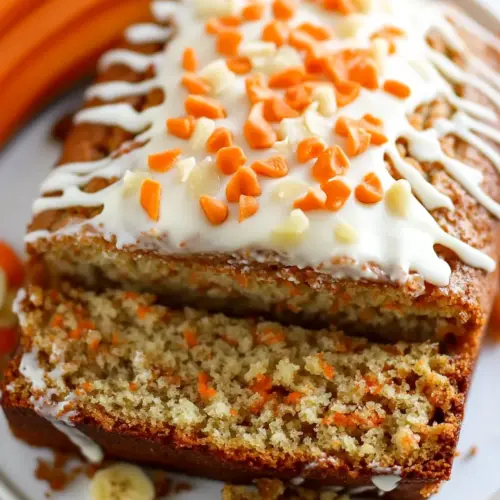
Carrot Cake Banana Bread
Carrot Cake Banana Bread is a moist, warmly spiced loaf that blends creamy mashed banana with finely shredded carrot for a tender, flavorful slice. Packed with cinnamon and a hint of nutmeg, this easy loaf is perfect for breakfasts, brunch, or gifting, and it improves overnight for richer taste. Make it for weeknight breakfasts or a cozy weekend treat, the reason to bake it is the comforting flavor and simple technique.
Equipment
- 9×5 Loaf Pan
- Mixing Bowls
- Whisk
- Spatula
- Oven
Ingredients
- 2 cups white, spelt, or oat flour (or try this Almond Flour Banana Bread) Provide structure and bulk to the loaf, absorbing moisture and giving crumb; choose white, spelt, or oat flour depending on desired texture and flavor, and follow cup measurement precisely for reliable results.
- 1 tsp baking soda Leaven the bread by releasing carbon dioxide when reacting with acidic components, helping the loaf rise and become airy; measure accurately to avoid over-expansion and an off taste.
- 1 tsp cinnamon Add warm, aromatic spice that complements banana and carrot flavors while enhancing perceived sweetness; use fresh-ground cinnamon for brightest flavor and mix evenly into dry ingredients.
- 3/4 tsp baking powder Contribute additional lift and lightness by producing gas during baking, balancing with baking soda to control crumb density; use the specified amount to prevent metallic or bitter notes.
- 3/4 tsp salt Enhance overall flavor balance and control sweetness while strengthening gluten slightly; salt also helps amplify other flavors and should be evenly incorporated.
- optional 1/8 tsp nutmeg Provide a warm, nutty aromatic accent when included, enhancing depth and complexity; use a small pinch to avoid overpowering the delicate banana and carrot profile.
- 1 1/2 cup mashed overripe banana (for banana free, try this Vegan Carrot Cake) Supply natural sweetness, moisture, and binding while contributing banana flavor and soft crumb; use overripe bananas for best sweetness and mash thoroughly for uniform distribution.
- 1/2 cup finely shredded carrot Add natural sweetness, subtle texture, and color with tender shreds that distribute evenly through the batter; finely shred carrots to prevent large fibrous pockets and to integrate moisture.
- 1/2 cup pure maple syrup, honey, or agave Sweeten the bread and contribute distinct flavor notes (maple, honey, or agave) while keeping the batter moist; choose based on dietary preference and dissolve into wet ingredients for even sweetness.
- 1/4 cup milk of choice or water Adjust batter consistency and contribute moisture without adding fat if using water, or add creaminess if using milk of choice; room temperature liquids blend more smoothly into the batter.
- 1/4 cup oil or additional water Provide tender crumb and richness while carrying flavor; when substituting with additional water, expect a leaner texture—use specified amount to balance fat and moisture.
- 2 tsp pure vanilla extract Impart a rounded, fragrant flavor that enhances the other ingredients and adds bakery-like aroma; measure carefully since vanilla is potent and best added to wet ingredients.
- optional crushed walnuts, coconut, etc. Offer optional crunch, flavor contrast, and textural interest when included; crushed walnuts, coconut, or similar mix-ins should be folded in gently to avoid overworking the batter.
Instructions
- Preheat oven to 350 F. Grease a 9×5 pan, or line with parchment. Combine dry ingredients in a bowl. If desired, you can add 1/2 cup crushed walnuts and/or a handful of shredded coconut. Whisk liquid ingredients—including carrot and banana—in separate bowl. Pour wet into dry, and stir to form a batter. Smooth into prepared pan. Bake on the center rack 45 minutes or until a toothpick inserted into the center comes out mostly clean. Let cool. Cover and refrigerate overnight. Taste and texture are much better the second day (and even better the third day as it gets sweeter). Leftovers can be sliced and frozen for up to a month. If you want to frost the bread, I included a few links to some frosting recipes above in the post, or you can use about 1/2 cup softened coconut butter, sweetened if desired.: As your oven warms, you will notice a faint, reassuring heat and perhaps the metallic click of the thermostat, a sign the environment for your loaf is becoming stable. Proper preheating ensures an even rise, because a cold start can cause the batter to spread before it sets. If your oven has hot spots, rotate the pan halfway through baking to avoid uneven browning. A common mistake is placing the pan in before the oven reaches temperature, which can yield a dense loaf, so always wait until the oven reads 350 F on a reliable thermometer.
- Grease a 9×5 pan, or line with parchment: Touch the pan and imagine how the batter will cling as it bakes; greasing or lining creates an easy release and protects the crust. Parchment gives a clean lift, while greasing adds a slightly crisper edge. If the bread sticks, it is usually because the pan was not prepared fully, so be generous with the lining or oil. Avoid over greasing in one spot which can fry the exterior; instead coat evenly.
- Combine dry ingredients in a bowl: As you whisk together the sifted flour , baking soda , baking powder , cinnamon, salt, and optional nutmeg, inhale the warm spice aroma that starts to bloom. Combining dry ingredients first ensures even distribution so every slice has uniform rise and flavor; otherwise you might get pockets of leavening or spice. A frequent error is to add wet to flour without mixing, which creates streaks and inconsistent texture, so take the extra minute to stir thoroughly.
- If desired, you can add 1/2 cup crushed walnuts and/or a handful of shredded coconut: When you fold in textural add ins, you will hear a soft rustle and feel the batter gain body. Toasted walnuts offer a deeper, toasty aroma, while coconut brings chew and tropical notes. Fold gently to avoid overworking the batter which can toughen the crumb. Overcrowding the loaf with mix ins can cause sinking, so measure additions and distribute them evenly.
- Whisk liquid ingredients—including carrot and banana—in separate bowl: As you mash the ripe bananas and whisk in the maple syrup , oil, milk, vanilla, and grated carrot , notice the glossy sheen of the liquid mixture and the gentle scent of vanilla and fruit. Doing this in a separate bowl ensures a homogenous wet phase that will blend smoothly into the dry ingredients. If your wet mix seems curdled or too thin, check your banana consistency; overly watery fruit can dilute the batter, so opt for thicker mash or slightly less liquid. The most common slip is insufficient mashing, leaving large banana chunks that sink.
- Pour wet into dry, and stir to form a batter: After combining, you will see the batter coalesce into a thick ribbon that falls slowly from your spatula, with a scent of cinnamon lifting from the bowl. Stir just until the last streaks of flour vanish to avoid overmixing, which develops gluten and yields a tougher loaf. If you overbeat, the crumb becomes elastic and chewy instead of tender, so stop when mixed. A sign of overmixing is a very dense, heavy batter and a compact finished loaf.
- Smooth into prepared pan: As you pour the batter, it should settle into the pan with a glossy surface and slight peaks from the spatula. Smooth the top for even rising, and knock the pan gently on the counter to release any trapped air bubbles. This step helps create uniform texture and prevents large holes. If the batter seems too stiff to spread, it may be overfloured or cold, so warm briefly and spread gently. Avoid tapping too hard or you will deflate the batter and reduce oven spring.
- Bake on the center rack 45 minutes or until a toothpick inserted into the center comes out mostly clean: The oven sound is steady and the aroma will intensify as sugars caramelize and the crust browns. Looking through the oven, the top should be golden and spring back slightly when pressed. The toothpick test is your safety net; a few moist crumbs are okay, because overbaking dries the loaf. A typical problem is removing the bread too early, resulting in a gummy center, so err on the side of a few extra minutes if unsure. If the top browns too quickly, tent with foil to prevent burning while the center finishes baking.
- Let cool: Once out of the oven, the loaf will give a comforting, warmed scent and a faint steam from the center. Cool in the pan for a short time and then transfer to a rack to prevent a soggy bottom as steam escapes. Cooling allows the crumb to set so slices hold their shape. Cutting too soon can make the loaf appear underbaked, as the interior continues to set while cooling, so be patient for at least 20 to 30 minutes before slicing.
- Cover and refrigerate overnight: Resting in the fridge helps flavors meld and the texture firm up, creating a more cohesive mouthfeel. The chilling firmsthe loaf slightly, making thin, neat slices easier, and the sweetness deepens overnight. A common oversight is skipping the rest and wondering why the texture is grainy; give it time and you will be rewarded.
- Taste and texture are much better the second day: After resting you will notice a mellowed sweetness and more integrated spice notes when you slice and taste. Texturally the crumb becomes moister and more velvety, which I prefer for serving to guests. If you plan to serve immediately, accept a slightly fresher, more separated crumb, but if possible wait to enjoy the best result.
- Leftovers can be sliced and frozen for up to a month: Freezing preserves freshness, and reheating briefly brings back near freshly baked character. Wrap slices tightly to avoid freezer burn and thaw overnight in the fridge or at room temperature for a couple hours. A pitfall is storing unwrapped slices which can dry out; always seal well.
- If you want to frost the bread, I included a few links to some frosting recipes above in the post, or you can use about 1/2 cup softened coconut butter, sweetened if desired: A thin layer of frosting adds creaminess and visual appeal, while coconut butter offers dairy free richness and a pleasant coconut aroma. Spread gently to avoid compressing the crumb, and allow frosting to set before stacking slices. Too much topping overwhelms the loaf and makes slicing messy, so moderate the amount.
Notes
- Choose your flour wisely, because different flours absorb moisture differently; white all purpose will create the lightest crumb, while spelt or oat flour may yield a denser, nuttier loaf. If using a whole grain alternative, consider a touch more liquid to keep the batter loose enough for a tender crumb.
- Check your leavening, freshness matters; expired baking soda or baking powder will reduce rise. Test baking soda by adding a little acid, like lemon juice, to see if it fizzes. If it does not, replace it to avoid flat bread.
- Don't overmix the batter, as vigorous stirring develops gluten which toughens the crumb. Stir only until the dry streaks disappear, then stop. If you see a dense batter, that is usually a sign of overmixing.
- Use ripe bananas, they bring the best flavor and natural sweetness, mashed to a mostly smooth consistency so they integrate evenly. If your bananas are not ripe, the loaf will taste less flavorful and may need extra sweetener.
- Adjust sweetness with syrup, maple syrup adds depth and a slight caramel note that pairs wonderfully with the carrot and cinnamon. If using honey or agave, note they vary in sweetness intensity and may alter the final taste slightly.
- Store properly, wrap cooled slices tightly and refrigerate or freeze to preserve moistness. For freezing, individually wrap slices so you can grab one at a time.
- Consider add ins sparingly, a half cup of nuts or coconut gives texture without overwhelming the batter, but too many mix ins can cause sinking or uneven baking.