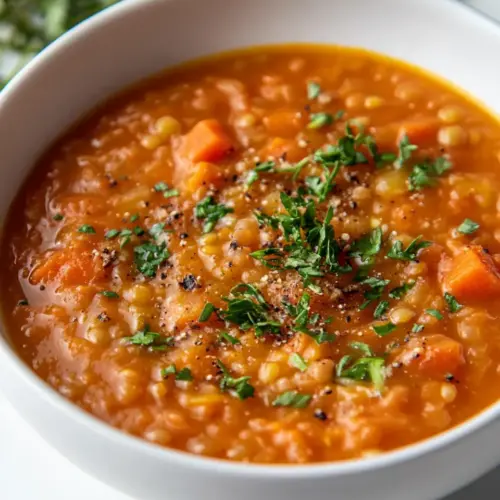
Carrot and Red Lentil Soup
Carrot and Red Lentil Soup is a creamy, comforting bowl that blends sweet carrot, tender red lentils, and smoky fire-roasted tomatoes. This easy weeknight dinner option is nourishing and budget friendly, delivering rich flavor with simple pantry ingredients. Make a big pot to enjoy lunches and cozy dinners all week long.
Equipment
- 6 to 8 quart soup pot
- Wooden Spoon
- Ladle
Ingredients
- 3 tablespoons olive oil or butter Enhance flavor and mouthfeel by sautéing or melting to gently cook aromatics; provides a silky base and helps distribute fat-soluble flavors throughout the soup. Choose olive oil for a lighter, fruity note or butter for richness and a creamier finish.
- 1 large sweet onion chopped (about 2 cups) Provide a sweet, savory backbone when softened; sweating develops natural sugars that add depth and balance to the soup. Chop into uniform pieces to ensure even cooking and release maximum flavor into the broth.
- 1 cup sliced carrots Contribute bright sweetness and body when sliced and simmered until tender; adds texture and natural sugars that complement the lentils and tomatoes. Cut to consistent thickness so carrots meld evenly into the purée or remaining chunks.
- 1 cup sliced celery Add subtle herbal, aromatic notes and gentle crunch that soften during simmering; celery supports the soup’s savory framework and enhances overall complexity. Slice evenly to integrate its flavor without overpowering the other vegetables.
- 3 -5 cloves garlic minced Introduce pungent savory notes when minced and briefly cooked to release oils; garlic boosts umami and aroma that lift the entire soup. Adjust quantity within the range to control intensity and avoid bitterness from overcooking.
- 8 cups vegetable broth or chicken broth Provide the liquid foundation and savory depth needed for simmering lentils and vegetables; choice of vegetable or chicken broth affects overall richness and dietary preference. Use measured amount to ensure proper cooking of lentils and balanced soup consistency.
- 15 ounce can fire-roasted tomatoes Add smoky acidity and tomato flavor from a canned source; fire-roasted tomatoes bring charred complexity and bright tomato notes that complement the lentils. Drain or crush as desired to control chunkiness and distribute tomato throughout the soup.
- 2 cups dried red lentils Supply body, creaminess, and protein while thickening the soup as they break down; red lentils cook relatively quickly and impart a velvety texture. Rinse if desired and monitor cooking time to prevent over-mashing or disintegration.
- 2 tablespoons tomato paste Concentrate and intensify tomato flavor when stirred in; tomato paste deepens color and adds umami and slight sweetness. Incorporate early in cooking to caramelize slightly and mellow its concentrated acidity.
- 1 tablespoon Italian seasoning Impart a blend of dried herbs and aromatic warmth when added; Italian seasoning brings oregano, basil, and other Mediterranean flavors that harmonize with tomatoes and vegetables. Sprinkle to taste during simmering to infuse the broth evenly.
- Salt and pepper Adjust seasoning levels to taste for balance and brightness; salt enhances sweetness and umami while pepper adds subtle heat. Season gradually during cooking and finish with additional adjustments before serving.
- Garnishes: Chopped parsley parmesan cheese Provide fresh herbal brightness and savory garnish options to finish the soup; chopped parsley adds color and freshness while parmesan contributes salty, nutty umami when sprinkled. Offer both for diners to customize flavor and texture at the table.
Instructions
- Chop all the vegetables for the soup.: Start by preparing your mise en place so everything goes in when it needs to, which keeps the cooking flow steady. As you chop the onion , carrot , and celery , notice the fresh vegetal scent and the sharpness from the onion that will mellow as it cooks. Uniform pieces ensure even cooking and prevent some bits from turning mushy while others stay underdone. A common mistake is cutting unevenly, which leads to inconsistent texture; take a few extra minutes to slice evenly and your pot will reward you with balanced bites.
- Set a large 6-8 quart soup pot over medium heat. Add the oil to the pot. Once hot, add the chopped onions, carrots, celery, and garlic. And sauté for 3-5 minutes until the onions are soft.: Preheating the pot warms the cooking surface so the oil or butter heats quickly and the aromatics sizzle on contact. You'll hear a gentle sizzle when the fat is ready, and that sound signals the beginning of flavor building. If you rush and add ingredients to a cold pot, they will sweat instead of sauté, yielding less flavor. Watch for the shimmer in the olive oil or the foaming edge of the butter as your cue.
- Add the vegetable broth, canned tomatoes, dried lentils, tomato paste, and Italian seasoning. Stir well to make sure the lentils don't stick together.: Heating the chosen fat first ensures it coats the pan and transmits heat evenly. The fat will shimmer if you used olive oil , or give a nutty aroma if you used butter . Add the chopped onions , carrot , celery , and garlic once the fat is hot. Sauté them until the onion is soft, stirring occasionally so they cook evenly and begin to caramelize slightly. If the pan smokes, lower the heat, because burned aromatics taste bitter and will affect the whole soup.
- Bring to a boil, then lower the heat if needed and simmer the soup for 20 to 25 minutes, stirring occasionally. You can partially cover the pot while cooking for less splatter.: As you cook, pay attention to sound and color; a gentle crackle and the widening of translucent onion layers indicate progress. The vegetables will release moisture and reduce, concentrating their flavor. This step creates a savory foundation that the rest of the soup builds on. Avoid overbrowning at this stage, because while some color adds depth, too much can make the base taste scorched.
- The soup is ready when the lentils are soft and the base has thickened. Taste, then salt and pepper as needed.: When you combine the liquids and legumes, you will notice steam rising and a bright tomato aroma. Stir thoroughly so the tomato paste and fire-roasted tomatoes dissolve into the broth and coat the red lentils , which prevents them from clumping. The initial stir is important because it distributes seasoning and heat; failing to stir can leave pockets where lentils stick and cook unevenly.
- Stir well to make sure the lentils don't stick together: As the soup warms, keep an eye on the surface and the pot edges. Gentle stirring prevents the red lentils from settling in a single area, and it helps any stuck bits on the bottom incorporate back into the liquid. You'll notice the broth beginning to take on a broader, creamier body as the lentils hydrate. A common oversight is infrequent stirring, which can cause lentils to scorch on the bottom, leaving an unpleasant taste.
- Bring to a boil then lower the heat if needed and simmer the soup for 20 to 25 minutes stirring occasionally: Bringing the pot to a brisk boil jump-starts the cooking, and then reducing to a simmer keeps a gentle motion that softens the red lentils without breaking them too violently. You should observe soft bubbling and a fragrant steam. Simmering rather than rapid boiling gives a smoother texture and prevents excessive evaporation. If the surface looks too active or the pot spits, reduce the heat because vigorous boiling can break apart lentils unevenly and create a grainy texture.
- You can partially cover the pot while cooking for less splatter: Covering partially traps steam and speeds softening while limiting splatter, which keeps your stovetop cleaner. The lid position affects evaporation and concentration of flavor, so if you want a thicker soup, leave the pot more uncovered. Be mindful that fully covering can lead to a watery finish if you do not finish with an open simmer to reduce excess liquid.
- The soup is ready when the lentils are soft and the base has thickened: You'll know the soup is done when the red lentils break down into a creamy matrix and the broth thickens slightly. Taste the texture and press a lentil between your fingers to check. The aroma should be a rounded blend of tomato and cooked vegetables, with a hint of the herbs. Overcooking can collapse the texture too far, making it gummy, so remove from heat once the desired silkiness is achieved.
- Taste then salt and pepper as needed: Seasoning at the end allows you to calibrate saltiness because the broth and parmesan cheese (if used as a garnish) add sodium. Taste a spoonful, adjusting with salt and pepper until the flavors sing. Under-seasoned soup will taste flat; over-salting is hard to fix, so add small amounts and taste repeatedly to avoid mistake.
Notes
- Cool completely before refrigerating — Let the soup come to room temperature before sealing it in an airtight container, which helps prevent condensation and preserves flavor. Store in the refrigerator for up to 4 to 5 days. When reheating, do so gently on the stovetop to maintain texture.
- Freezing method — Cool the soup fully before transferring to freezer proof containers. Wrapping the containers in aluminum foil offers extra protection from freezer burn. Freeze for up to 3 months, and thaw overnight in the refrigerator before reheating slowly.
- Reheating tips — Rewarm over low to medium heat, stirring occasionally. The soup may thicken in the fridge; add a splash of broth or water to bring it back to desired consistency, and finish with fresh chopped parsley or a sprinkle of parmesan cheese.
- Adjusting thickness — If the soup becomes too thick while simmering, add small amounts of warm broth until it loosens. Conversely, simmer uncovered briefly to concentrate flavors and thicken the base if it is too thin.
- Batch cooking advantage — This soup stores and reheats beautifully, making it ideal for meal prep. Prepare a double batch and freeze single portions for quick lunches that taste homemade.