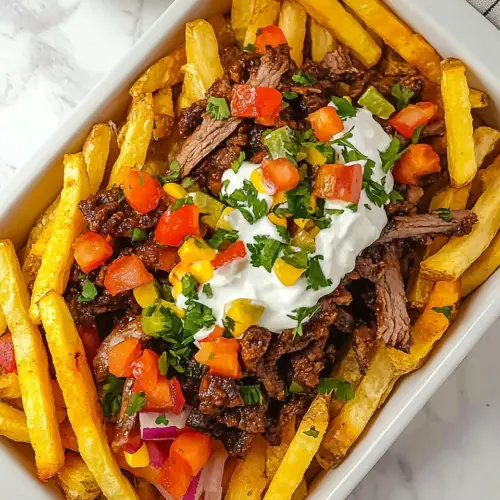
Carne Asada Fries
Carne Asada Fries are crispy baked fries piled with juicy, marinated skirt steak, melted cheddar, and fresh toppings. This easy weeknight dinner combines bold, tangy, and creamy elements for a crowd pleasing plate that caramelizes beautifully and keeps everyone coming back for more. Perfect for casual gatherings and summer nights, it delivers maximum flavor with minimal fuss.
Equipment
- Cast-Iron Skillet
- Indoor Grill Pan
Ingredients
- 1/4 cup low-sodium soy sauce Enhance savory depth and provide a salty, umami base for the marinade; balances acidity from citrus and helps tenderize the steak when combined with other liquids. Use low-sodium to control overall saltiness while preserving complex flavor that complements grilled meats.
- 1/4 cup fresh lime juice Brighten the marinade with fresh acidity and a zesty citrus note that helps break down muscle fibers to tenderize the skirt steak. Lime juice adds freshness that cuts through richness once the fries and toppings are combined.
- 2 tablespoons fresh orange juice Contribute subtle sweetness and fruity citrus complexity to the marinade, rounding out sharper lime notes and complementing brown sugar. Orange juice helps balance flavors and adds a milder acidity for tenderizing action.
- 1/4 cup canola oil Bind the marinade ingredients and promote even coating while adding a neutral fat that helps transfer heat and flavor during cooking. Canola oil prevents sticking and aids in searing the skirt steak for a crisp exterior.
- 1 1/2 tablespoons dark brown sugar Introduce molasses-like sweetness and a hint of caramel that balances the savory and acidic components of the marinade. Dark brown sugar also encourages caramelization on the steak during high-heat cooking.
- 1 clove garlic minced Deliver pungent, aromatic garlic flavor and savory depth that permeates the marinade; minced form ensures quick release of oils into the mixture. Garlic underscores the overall savory profile and complements the steak's char.
- 1/2 teaspoon ground cumin Provide warm, earthy notes and a subtle smoky undertone that pairs well with grilled beef and Mexican-inspired flavors. Ground cumin adds depth without overpowering the other marinade components.
- 1/2 teaspoon freshly ground black pepper Add sharp, aromatic heat and a fresh peppery finish to the marinade and finished dish; freshly ground black pepper offers more pronounced flavor than pre-ground varieties. Use to season the steak and balance richer elements like cheese and sour cream.
- Kosher salt to taste Season to personal taste and enhance flavor complexity across the dish; kosher salt helps draw out juices during cooking and improves overall seasoning. Add cautiously if using low-sodium soy sauce to avoid over-salting.
- 1 pound skirt steak trimmed Serve as the primary protein with robust beefy flavor and a long, flat shape ideal for quick searing and slicing against the grain; trimming removes excess fat for even cooking. Skirt steak soaks up marinade well and provides tender, flavorful slices for topping fries.
- 26 ounces frozen french fries Provide the crispy, starchy base of the dish and deliver substantial texture and crunch when baked or fried according to package directions. Frozen french fries offer convenience while holding up well under toppings and melted cheese.
- 2 cups freshly shredded cheddar cheese Contribute rich, melty, sharp flavor that blankets the fries and binds toppings when melted under heat; freshly shredded cheese melts more evenly and tastes fresher. Cheddar adds a classic, savory finish to the loaded fries.
- 1 roma tomato diced Introduce fresh juiciness, mild acidity, and a subtle sweetness that brightens the finished dish and cuts through richer toppings. Diced roma tomato also adds a colorful, refreshing contrast to the warm components.
- 1 -2 jalapeños sliced Inject spicy heat and crisp texture when thinly sliced; jalapeños add bright, vegetal flavor that can be adjusted for desired spice level. Use 1–2 to control heat intensity across the plate.
- 1/4 red onion chopped Provide a sharp, slightly sweet bite and crunchy texture when chopped finely; red onion adds aromatic layers and a pungent counterpoint to creamy and cheesy elements. Chopped red onion also contributes color and bite.
- 1/2 cup sour cream Add cool, tangy creaminess that mellows spice and binds other toppings while providing a smooth mouthfeel; sour cream can be dolloped or drizzled for balance. Use to temper heat from jalapeños and enrich each bite.
Instructions
- In a medium bowl, whisk the soy sauce, lime juice, orange juice, canola oil, brown sugar, minced garlic, cumin, and black pepper together. Season to taste with salt.: The aroma here is bright and savory, with citrus lifting the soy and the brown sugar giving a subtle back note of caramel, and whisking ensures the canola oil emulsifies into the acid so every surface of the skirt steak will pick up flavor. You should notice a glossy sheen on the marinade; that visual cue means it is well combined. Why this matters, I tell myself, is because an even marinade penetrates the meat consistently, avoiding overly salty pockets. A common mistake is skimping on stirring, which leaves oil separated and pockets of flavor, so take a few extra seconds to whisk thoroughly. If your marinade tastes too salty, add a touch more fresh orange juice or water to balance. The mixture should smell citrusy with a savory undercurrent from the soy sauce .
- Transfer the steaks to a gallon-sized Ziplock bag and pour the marinade over the steak. Squeeze out excess air from the bag and seal it. Massage the marinade over the meat until the meat is fully coated. Refrigerate for 2-10 hours, flipping the bag over often.: You will feel the marinade slick across the skirt steak as you massage it, and this hands on step helps distribute flavors into every nook. Refrigeration time allows the acid to gently tenderize the surface, while the sugar encourages slight caramelization when seared. Flip the bag occasionally so both sides soak evenly; uneven marinating often causes one side to be over seasoned. Avoid marinating beyond the recommended time, or the texture can become mushy. When I do this, I notice the steak develops a deeper color from the sugars, and the smell becomes intensely savory with citrus highlights.
- When ready to cook, remove the meat from the fridge 15-30 minutes before using. Before cooking the meat, wipe off the excess marinade with paper towels.: Bringing the skirt steak close to room temperature ensures it sears rather than steams, which gives you those desirable browned edges. Patting off excess marinade prevents flaring and burning in the pan and avoids steaming the surface, which would blunt the crust. The surface should look damp but not dripping, a cue that it will brown quickly. One common pitfall is tossing the steak straight from cold to hot, which can lead to uneven cooking. You should be able to see the meat’s grain clearly after patting it dry.
- Brush 1 teaspoon of canola oil over the skillet and heat it over medium-high heat until the pan is sizzling hot. Carefully place the steak in the pan and cook for a total of 6-8 minutes, or until you get a gorgeous char on both sides. Flip the meat over after 3 minutes or when the beef releases from the pan and cook the other side for about 3 minutes. The internal temperature should read 128-130°F on an instant-read thermometer.: Listen for that immediate sizzle as the skirt steak hits the pan, and watch the edges darken in moments, releasing a toasty, meaty aroma. Heating the skillet until it is truly hot is the secret to creating a good crust, which locks in juices. Use a thermometer to hit the precise target for medium rare, because visual cues alone can be misleading. A frequent error is overcrowding the pan, which drops temperature and results in steaming not searing; cook in batches if needed. As the steak sears, the smell should shift from raw meat to roasted, and the pan will develop fond that adds flavor to each slice.
- Transfer to a cutting board and let rest for 5 minutes. Cut the steak against the grain into strips. Set aside.: Resting the skirt steak lets the juices redistribute so they do not pour out when you slice, leaving the meat juicy and tender. Cutting against the grain shortens the muscle fibers and ensures each bite feels tender rather than stringy. I always slice with a sharp knife at a slight angle to present wider, more appealing strips. The common mistake is skipping rest, which causes a drier final result. When you slice, the interior should be rosy if cooked to the suggested temperature, and the aromatic seared exterior provides great contrast.
- Arrange the frozen fries on a sheet pan lined with parchment paper. Bake according to the package directions, about 10-15 minutes.: As the fries bake, the kitchen will fill with a warm, salty aroma and you should hear a light crackle as they reach crispness, which signals they are approaching perfect texture. Using parchment helps with cleanup and prevents sticking, while spacing the fries out encourages even airflow and browning. Avoid piling them in one area, since crowded fries steam and lose their crunch. I like to check color at the lower end of the time range and add a few extra minutes if they need more crisping. Visual cues are golden edges and an overall crisp surface.
- Once baked, top the fries with the cheese and bake for 5-7 minutes until the cheese has melted. Top with carne asada, tomato, jalapeño, and sour cream.: The moment the cheddar cheese begins to bubble and stretch, the plate becomes irresistible; the melted cheese glues the toppings to the fries while creating creamy pockets. After you pull the pan, scatter the warm carne asada so the beef warms the cheese and releases savory juices onto the fries. Finish with diced roma tomato , sliced jalape os , chopped red onion , and a drizzle or dollop of sour cream for contrast. A common error is adding toppings too early, which can overcook the fresh ingredients; add them right after the cheese melts. The final aroma will be a layered chorus of roasted meat, sharp cheese, and fresh citrus tang from the earlier marinade.
Notes
- Marinate smartly: Aim for 2 to 10 hours of marinating for the skirt steak, and flip the bag occasionally so the flavors penetrate evenly; beyond 12 hours the texture may suffer.
- Room temperature steak: Bring the skirt steak out of the fridge 15 to 30 minutes before searing so it cooks more evenly, preventing an overdone exterior and underdone center.
- Dry before searing: Wipe away excess marinade with paper towels to avoid flare ups and to ensure the steak forms a nice crust when it hits the hot skillet.
- Use a hot pan: Preheat your cast iron or grill pan until it is sizzling hot, this creates the signature char that adds smoky notes to the skirt steak.
- Freshly shred cheese: Shred the cheddar cheese from a block for better melting and texture compared to pre shredded varieties that contain anti caking agents.
- Timing for fries: Follow the frozen fry package as a baseline but watch for visual cues like golden edges and crispness; oven models vary so add a few minutes if needed.