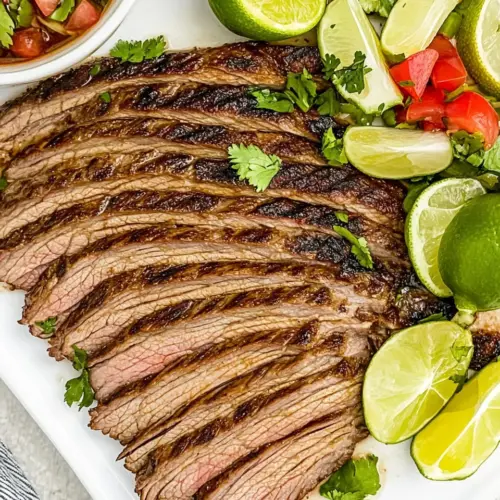
Carne Asada
Carne Asada delivers tender, citrus marinated steak with smoky seared edges and bright herb finish. This easy weeknight dinner is juicy, flavorful, and perfect for tacos, offering bold garlic, cumin, and lime notes. Quick to prep and crowd pleasing, it s a go to when you want a fast, festive meal that still tastes like you took your time. Make it for a simple gathering or casual dinner.
Equipment
- Gallon sized ziptop bag
- outdoor grill
- Oven
Ingredients
- 1/2 cup (120 ml) orange juice Provide a bright citrus base that tenderizes the meat and adds a sweet-tart flavor; combine with other liquids to make a balanced marinade and allow flank or skirt steak to soak for several hours for best results.
- 1/3 cup (80 ml) lime juice Lend sharp acidity that cuts through the richness and helps break down muscle fibers; use freshly squeezed lime juice in the marinade to boost tang and aroma without overpowering citrus sweetness.
- 1/4 cup (60 ml) extra virgin olive oil Add a fruity, peppery richness and help emulsify the marinade; drizzle extra virgin olive oil over the meat so flavors adhere and to keep the steak moist while grilling.
- 1/4 cup (60 ml) soy sauce or tamari Contribute savory umami and saltiness to deepen flavor; choose soy sauce or tamari to season and tenderize the steak while combining well with citrus and aromatics.
- 4 cloves garlic minced Introduce pungent, aromatic heat and savory depth when minced; rub or mix garlic into the marinade to infuse the steak with classic savory notes essential to carne asada.
- 1 teaspoon chili powder Deliver a warm, earthy spice and mild heat that complements the cumin and paprika; sprinkle chili powder into the marinade to build layered Mexican-inspired spice.
- 1 teaspoon ground cumin Bring an earthy, slightly smoky warmth that enhances beefy flavors; stir ground cumin into the mix to anchor the spice profile and add savory complexity.
- 1 teaspoon paprika Provide sweet-smoky color and mild warmth to the rub or marinade; add paprika for subtle sweetness and to enrich the steak’s exterior when grilled.
- 1 tablespoon brown sugar light or dark Impart a touch of caramelized sweetness to balance the acidity and salt; dissolve brown sugar in the marinade to round flavors and encourage browning during cooking.
- 1/2 cup chopped fresh cilantro Offer fresh herbal brightness and a hint of citrusy fragrance when chopped; fold cilantro into the marinade to infuse the meat with green, aromatic notes.
- 1 jalapeño seeded and minced Give a crisp, bright heat when seeded and minced; incorporate jalapeño into the marinade for controlled spice and a lively pepper flavor without too much heat.
- 1 1/2 – 2 pounds (675 g) flank steak or skirt steak Serve as the main protein with rich, beefy texture ideal for grilling; select flank or skirt steak and marinate thoroughly for tender, flavorful slices served thinly across tortillas.
- 1/2 teaspoon granulated sugar optional Add a touch of extra sweetness if desired to balance acidity; stir in granulated sugar sparingly to smooth sharp edges in the marinade without overpowering other flavors.
- Salt and pepper generously season Provide essential seasoning to build flavor from the start; generously apply salt and pepper to the steak before and after marinating to enhance natural beef taste and aid crust formation.
- Warm corn or flour tortillas Serve as warm, flexible vessels to enjoy the sliced steak and fillings; heat corn or flour tortillas just before serving to be soft and pliable for assembling tacos.
- Chopped fresh cilantro Garnish with bright herbaceous flavor and freshness on top of served tacos; sprinkle chopped fresh cilantro over sliced carne asada to enhance aroma and color.
- Diced white onion Add a crisp, sharp bite and mild sweetness as a topping; scatter diced white onion over the meat to provide textural contrast and savory snap.
- Sliced jalapeño Offer additional fresh heat and crunch when sliced; place sliced jalapeño on tacos to let diners adjust spiciness and enjoy peppery brightness.
- Lime wedges Provide a zesty finishing touch and extra acidity at the table; squeeze lime wedges over assembled tacos to brighten flavors and balance richness.
Instructions
- In a ziptop bag or a shallow dish, combine orange juice, lime juice, olive oil, soy sauce, minced garlic, chili powder, ground cumin, paprika, brown sugar, chopped cilantro, and minced jalapeño. Stir well to combine.: The bowl will smell intensely citrusy and garlicky as the oils lift the aromatics, and you should notice a slightly glossy texture to the liquid that indicates it will cling to the meat. Stirring thoroughly blends the salt from the soy sauce with the sweetness of the brown sugar , producing a marinade that both seasons and tenderizes. If you skip thorough mixing you risk uneven flavor pockets, so whisk until everything looks uniform. One common mistake is using bottled juices with added preservatives that change the flavor, so I prefer fresh juices when possible.
- Put the steak in the large sealable bag. Press out the air and seal the bag tightly. Massage the marinade into the meat and refrigerate for at least 2 hours, or overnight if time allows. Don’t go over 12 hours as the meat will become mushy rather than tender.: As the steak rests, the marinade will slightly perfume the meat and you ll feel the bag getting cooler to the touch. Massaging helps the liquid contact the entire flank steak , and refrigeration slows enzymatic breakdown so the texture remains pleasant. Over marinating is a real pitfall, as extended acid exposure can make the fibers collapse into a soft texture, so set a timer for two to twelve hours depending on your schedule. Avoid leaving it on the counter while marinating, which invites spoilage.
- Preheat the grill and prepare it for direct heat cooking over high heat. Clean and lightly oil the grill grates.: You want a screaming hot grill so the steak sears on contact and forms a deeply colored crust, and the sound should be an immediate, lively sizzle when the steak hits the grates. A clean, lightly oiled grate prevents sticking and fosters even browning. If your grill is too cool you will not get the Maillard reaction that creates those savory browned flavors, so wait until it is properly heated. A common error is adding oil to the steak instead of the grates which can cause flare ups; brush the grates lightly instead.
- Remove the steak from the marinade, shaking off the excess. Pat the steak dry with paper towels, and season with salt and pepper and sugar if using.: The meat should feel tacky but not dripping when you transfer it to a towel, and patting it dry restores the surface to a state that will sear instead of steam. Seasoning after drying ensures the salt and pepper adhere to the surface and contributes to a flavorful crust. Leaving too much marinade on the surface can cause excess smoke or burning and uneven charring, so blot thoroughly. Avoid over seasoning with salt, taste first if you used a lot of soy sauce in the marinade.
- Grill the steak for about 6-8 minutes per side for medium-rare, or to your preferred doneness.: On the grill you should hear a steady, bold sizzle and see deepening grill marks forming into a mahogany color, signaling proper caramelization. Use a thermometer to check for the right internal temperature, and remember carryover will raise the temperature slightly as it rests. If you cook too quickly at moderate heat you might not get a pronounced crust, so prioritize high, direct heat for the initial sear. Resist flipping constantly; one or two turns is enough.
- Turn on the broiler, and position your oven rack so the steak will be about 4 inches from the heating element.: When using the broiler you will get an intense, direct radiant heat similar to a grill, and you should see the surface darken rapidly, offering a roasted aroma and dark flecks. This method is great when outdoor grilling is not an option and it produces quick surface caramelization. Watch closely as broilers vary in intensity, and avoid walking away because broiling can go from perfect to charred in minutes. A common slip is placing the steak too far which reduces searing efficiency.
- Remove the steak from the marinade, shaking off the excess. Pat the steak dry with paper towels, and season with salt and pepper and sugar if using.: Under the broiler the top will blister and darken, and the scent will shift toward roasted, slightly smoky notes that are very appealing. These short, intense bursts of heat lock in juices while building a crust, but they require vigilance to prevent burning, so keep the oven light on and check frequently. If your steak is thick you may need additional time at a lower setting after broiling to reach internal temperature without excessive charring. Avoid using sugary marinades at full broil without monitoring, as they can burn quickly.
- Broil the steak for about 5 minutes per side, or to your desired level of doneness.: Cutting the steak to fit your pan ensures even contact and even cooking, which translates to consistent browning and doneness throughout. The cut edges will brown quickly and you will control portion size for searing. If you skip this and overcrowd the skillet, you ll trap steam and lose the crisp sear you are aiming for. A frequent misstep is slicing after cooking, which is fine, but pre cutting for skillet fit prevents uneven cooking across a single large piece.
- Before marinating, if your steak is too large to fit your skillet, slice it in half.: When using a pan, the same drying rules apply to ensure the sizzling sound is loud and immediate, promising a great crust. The seasoning after drying wakes up the surface flavors and supports caramelization. Too much moisture will cause the steak to steam rather than sear, so be thorough with paper towels and avoid wet pockets of marinade. Do not overcrowd the pan, or the temperature will plunge and prevent a proper sear.
- Once ready to cook, remove the steak from the marinade, shaking off the excess. Pat the steak dry with paper towels, and season with salt and pepper, and sugar if using.: The pan should emit a sharp sizzle when the meat touches it and the surface will quickly take on a deep brown crust; the aroma will shift from citrus to roasted, nutty notes. A cast iron pan retains heat well and promotes even browning, which is why I favor it for stovetop steaks. If the pan is not hot enough you will not achieve a proper crust, and if it is too hot you risk burning the exterior before the center cooks. Avoid adding cold meat straight from the fridge without tempering slightly.
- Heat a cast-iron skillet over high heat. Add a bit of oil to the pan – enough to coat the bottom lightly. Once the oil starts to shimmer or smoke slightly, carefully place the steak in the skillet.: During searing you will notice the edges tighten and juices begin to bead up on the surface, and the color will shift to rich brown with a slightly charred edge. Letting the steak sit uninterrupted develops the Maillard reaction which creates the savory flavors you want. A common error is frequent flipping which prevents proper crust formation, so allow 3 to 5 minutes per side depending on thickness. If juice pools excessively the pan may be overcrowded or underheated.
- Sear the steak for about 3-5 minutes on each side for medium-rare, or until your desired level of doneness. To avoid overcrowding the pan and ensure even cooking, cook each piece of steak separately if you had to cut it in half.: As it rests the internal juices redistribute and the meat relaxes, producing tender slices rather than a puddle of juices on your cutting board. The aroma will mellow into a rounded beefy scent that pairs well with the bright garnishes. Resting is non negotiable; cutting too soon causes significant moisture loss. A mistake is wrapping the steak too tightly which can cause trapped steam and sogginess, so tent loosely with foil instead.
- Allow the steak to rest on a sheet pan fitted with a wire rack for at least 5-10 minutes, tented with foil to keep it warm.: The slices should reveal pink centers if cooked to medium rare and the texture will be tender when cut across the fibers; the citrus and crisp onion provide contrast in every bite. Warm tortillas will cradle the steak and help the flavors meld, while lime kissed juices finish the taco with brightness. If you slice with the grain the meat will feel stringy and tougher, so always cut perpendicular to fibers. Over stacking tortillas can make them soggy, so keep them warm and serve alongside the steak.
Notes
- Smoky Finish Add a touch more paprika or use smoked paprika for a pronounced smoky note that mimics a grill if you are cooking indoors.
- Heat Level Keep the jalapeño seeds if you want extra heat, or substitute a milder pepper to suit sensitive palates.
- Herb Boost Increase the quantity of cilantro in the marinade for a greener, fresher finish that brightens the meat more dramatically.
- Sweet Balance Swap light brown sugar for dark if you prefer deeper molasses undertones which enhance caramelization.
- Alternate Soy Use tamari instead of regular soy sauce for a gluten free option and slightly richer umami.
- Pan Technique When searing in a skillet, allow the pan to get very hot and avoid overcrowding to ensure each piece gets a proper crust.