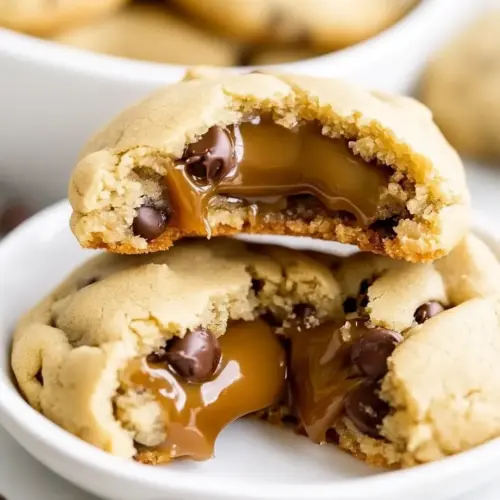
Caramel Stuffed Cookies
Caramel Stuffed Cookies are tender, chewy, and stuffed with molten caramel and pockets of melty chocolate, creating a luxurious texture contrast. These easy to follow cookies yield bakery style results, perfect for gifting or a cozy treat. Make them for a special occasion or an easy weeknight dessert, they are sure to impress.
Equipment
- Kitchen Scale (optional)
- Baking Sheet
- Stand mixer
- Cookie Portion Scoop
Ingredients
- 1 cup unsalted butter 226 grams, room temperature (2 sticks) Soften and cream to provide rich fat and structure; butter contributes tenderness, flavor, and helps create a tender crumb when beaten with sugars, yielding a soft cookie texture.
- 3/4 cup brown sugar 160 grams Add moisture and deep caramelized sweetness; brown sugar brings humidity and chewiness while enhancing flavor complexity and color during baking.
- 3/4 cup granulated sugar 150 grams Sweeten and aerate the dough; granulated sugar aids in creaming with butter to incorporate air, balancing sweetness and contributing to crisp edges.
- 2 large eggs 100 grams, room temperature Bind and enrich the dough while adding moisture and lift; whole eggs emulsify fats and proteins, helping create cohesion and structure in the cookie.
- 2 large egg yolks 28 grams, room temperature Concentrate richness and improve texture; extra egg yolks increase fat and emulsifiers for a silkier, more tender interior and enhanced mouthfeel.
- 1 tablespoon vanilla extract 12 grams Impart warm aromatic flavor and enhance perceived sweetness; vanilla rounds out flavors and complements both chocolate and caramel notes in the cookies.
- 2 1/2 cups all-purpose flour 300 grams Provide the primary bulk and gluten-forming proteins; all-purpose flour supplies structure and chew, interacting with leaveners to set the cookie shape.
- 1 1/2 cups cake flour 180 grams, see note Contribute a lighter texture and delicate crumb; cake flour reduces gluten formation for a softer, more tender cookie when combined with all-purpose flour.
- 2 teaspoons cornstarch 6 grams Tenderize the finished cookie by inhibiting gluten development; cornstarch adds a soft, smooth texture and helps produce a delicate bite.
- 1 teaspoon baking powder 4 grams Leaven gently to add slight lift and fine crumb; baking powder produces gas during baking for a light, slightly puffed cookie structure.
- 1 teaspoon baking soda 6 grams React with acidic components to create carbon dioxide and spread control; baking soda promotes browning and contributes to chewiness and proper rise.
- 1 teaspoon kosher salt 3 grams Enhance and balance flavor while controlling gluten strength; kosher salt brightens sweetness, supports leavening reactions, and deepens overall taste.
- 1 1/2 cups chocolate chips 255 grams Provide pockets of melted chocolate for flavor and texture contrast; chocolate chips deliver gooey, rich bursts throughout the cookies when baked.
- 9 (1-inch) baking caramels 85 grams, cut into 1/2-inch squares, Kraft recommended Offer concentrated sweet, chewy centers and accentuate caramel flavor; small diced baking caramels melt into soft caramel pockets that contrast with the cookie dough.
Instructions
- Preheat oven to 400°F. Line 2 baking sheets with parchment paper. Set aside.: The kitchen instantly warms with a toasty scent when the oven heats, and the parchment gives a smooth, nonstick surface that prevents caramel from gluing to the pan. You want the oven fully heated so cookies bake evenly, forming crisp edges while the centers remain soft. A common misstep is skipping parchment, which can lead to sticky messes if any caramel escapes. Check that racks are centered to allow even circulation of heat.
- In the bowl of a stand mixer fitted with the paddle attachment, cream the butter, brown sugar, and granulated sugar until light and fluffy, about 3-5 minutes.: As you cream, the mixture should lighten in color and feel aerated, with a soft, pillowy texture that indicates air has been incorporated for lift. The sound is a gentle whir, and the smell becomes sweet and buttery. Not creaming long enough yields a dense cookie, while overcreaming can make batter too soft. Stop once the mixture looks pale and slightly fluffy.
- Add in the eggs, egg yolks, and vanilla extract and mix until incorporated.: The batter will become silkier, glossy, and slightly looser as the eggs emulsify fats and sugars. You should see no streaks of egg white, and the aroma of vanilla will blossom. Adding cold eggs can cause the butter to seize and create lumps, so ensure ingredients are room temperature. Scrape the bowl so everything blends uniformly.
- In a separate bowl, whisk the flour, cake flour, cornstarch, baking powder, baking soda, and salt together. Add the flour mixture to the wet ingredients, little by little, beating lightly after each addition.: The dry mix should look evenly combined and pale. When incorporated gradually, the dough comes together without overworking gluten, preserving tenderness. The dough will feel slightly tacky but manageable; if you dump all the flour at once, you risk ending up with a tough, dry cookie. Stop mixing as soon as you cannot see streaks of flour.
- Add the chocolate chips and mix until just combined.: As the chocolate chips tumble into the dough, you will see little pockets of dark or milk chocolate dotting the surface. Mix gently so chips remain intact and the dough maintains a soft texture. Overmixing will crush chips and knead the gluten, changing the mouthfeel. Fold until distribution is even.
- Use a cookie scoop to gather a portion of the dough in your hand. You should have enough dough for 18 large cookies.: Scooping creates uniform portions so each cookie bakes at the same rate. The dough should be slightly sticky but hold together when scooped. If portions vary, some cookies will bake faster and end up overdone. Keep your scoop consistent and work quickly so the dough does not warm excessively in your hands.
- Make an indentation in the ball of dough. Take a caramel and place it in the well of the cookie dough. Pinch the dough to cover the caramel. Gently roll the dough between your hands to form a ball that completely covers the caramel. Place back on the baking sheet, leaving at least 2 inches between the cookies. Repeat until the cookie dough is gone.: Sealing the caramel fully is critical so it melts inward rather than leaking. When sealed well, the exterior looks smooth and you will not see any caramel seams. Pressing too hard can flatten the dough and reduce rise, while failing to seal results in caramel oozing and sticky sheets. Make sure seams are pinched tight and the ball feels taut.
- Place the cookie dough balls in the refrigerator to chill for 10 minutes.: Chilling firms the dough and prevents excessive spread, so the cookies bake with a nice dome and soft center. You will notice the dough becomes cooler and less tacky to the touch. Skipping this can create thin, flat cookies where the caramel risks leaking. If chilling longer, allow a minute on the counter before baking so they slice onto the sheet easily.
- Bake for 10-12 minutes, or until the edges are set and the middles are still soft. Remove them from the oven and press a few more chocolate chips onto the top of each cookie. Cool on a wire rack for 5-10 minutes and enjoy!: During baking you will hear a faint crackle and smell butter, sugar, and chocolate melding. The edges should look gently golden while the center remains slightly underbaked and jiggly, which yields a tender bite after cooling. A common error is overbaking until the center is firm, losing that gooey texture. Pressing extra chips after baking gives an attractive finish and a melty top when warm. Let cookies rest so the caramel sets just enough to enjoy without burning.
Notes
- Room temperature ingredients ensure smooth incorporation and even texture, so bring butter and eggs to room temperature before starting.
- Do not overmix after adding flour, as this activates gluten and can turn a tender cookie into a chewy one that overpowers the caramel.
- Chill briefly to prevent excessive spread and keep the caramel interior intact during baking.
- Use parchment on your baking sheets to protect against any caramel leakage and simplify cleanup.
- Uniform caramel pieces will melt evenly, so cut the caramels into consistent half inch squares for reliable results.
- Check ovens early because bake times vary, start checking at the lower end so toppings do not burn and centers remain soft.