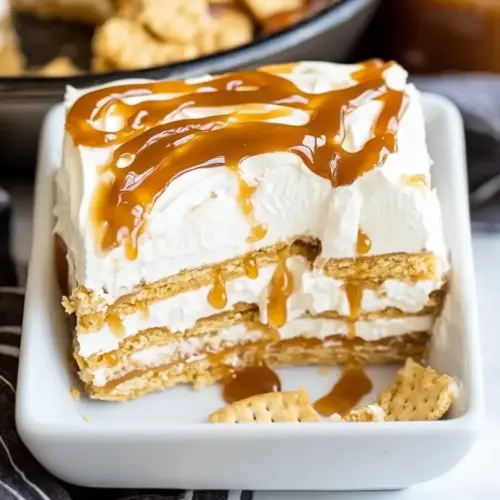
Caramel Ritz Cracker Icebox Dessert
Caramel Ritz Cracker Icebox Dessert is a creamy, crispy layered no bake treat with tangy cream cheese, airy whipped cream, and buttery crackers, finished with salted caramel sauce. This easy make ahead dessert is perfect for potlucks and weeknight celebrations, offering a craveable contrast of textures. Try it when you want an impressive but simple dessert that travels and stores well.
Equipment
- Hand Held Mixer
Ingredients
- 2 (8-ounce) packages cream cheese, room temperature Soften to room temperature and beat until smooth to create a rich, tangy base that adds creaminess and structure to the dessert.
- 1 cup sugar Sweeten evenly when creamed with the cheese, balancing tanginess while helping to achieve a smooth, spreadable consistency for the filling.
- 3/4 cup heavy cream Whip or fold in to add lush richness and lighten texture, contributing body and a silkier mouthfeel to the cheesecake-like layer.
- 1 teaspoon vanilla extract Flavor gently to enhance and round out the dairy notes, providing aromatic depth and balancing sweetness in the filling.
- pinch of salt Season sparingly to enhance the overall flavors and balance the sweetness, preventing the dessert from tasting flat.
- 64 Ritz crackers Layer or crumble to provide a salty, buttery crunch that contrasts the creamy filling and forms the classic icebox structure.
- 3/4 cup salted caramel sauce, plus more for drizzling on top Drizzle and fold through to introduce concentrated caramel flavor, adding sticky sweetness and a glossy finish to the dessert.
- 2 cups Cool Whip or freshly whipped cream Fold or pipe on top to add airy lightness and a cloud-like finish, creating visual appeal and a cool, creamy contrast to the crackers.
Instructions
- Place cream cheese in a large bowl and use a hand-held mixer to beat it until smooth and fluffy. Add sugar and beat until smooth.: The room temperature cream cheese should soften into a silky, lump free mass that smells slightly tangy and fresh when properly beaten. As you beat, you will hear the mixer hum steadily while the texture changes from tacky to velvety, and visually the surface becomes lighter and smoother; this is the cue to stop. This aeration matters because it ensures the filling is not dense, yielding a lighter mouthfeel after refrigeration. A common mistake here is working with cold cream cheese, which resists smoothing and leads to lumps; if you encounter resistance let it sit five to ten minutes and then try again. Scrape the bowl sides occasionally so no pockets of unworked cream cheese remain.
- Add heavy cream, vanilla, and salt and beat until thick and fluffy.: When you add the sugar , the mixture will initially look grainy but will become glossy and cohesive as the sugar integrates; the subtle sound changes to a quieter, creamier beat. This step is essential for dissolving the sugar so the texture is uniform and not gritty on the tongue. If you rush this step the filling can feel sandy, so take your time and watch for a smooth sheen. A typical pitfall is overbeating after the sugar is fully incorporated, which can warm the mixture; pause and check the texture to avoid overheating.
- Line an 8-inch square baking dish with plastic wrap. Arrange 16 Ritz crackers on the bottom.: Pour in the cold heavy cream , add the vanilla extract and a pinch of salt , then beat until the mixture holds soft peaks and smells fragrant. The aroma of vanilla will bloom and the mixture should look aerated with creamy peaks that gently fold over. This step creates the lightness that contrasts with the crackers, and whipping the cream with the cream cheese stabilizes the filling for slicing. A mistake to avoid is using warm cream which will not incorporate air well, resulting in a flat texture.
- Spread 1/3 of the cream cheese mixture on top of the crackers and then drizzle 1/4 cup of caramel sauce on top.: Lining the dish prevents sticking and makes removal simpler, and the slick plastic gives a glossy bottom to the dessert. When the plastic is neatly pressed into corners, it should cling without folds that trap air. This preparation step pays off at the end when you lift the whole dessert out for neat slices. Skipping the liner can make serving messy and difficult, so take the time to press the plastic smoothly into the pan.
- Repeat with another layer of crackers, then cream cheese mixture and 1/4 cup caramel sauce.: Place a single layer of Ritz crackers across the base so they sit edge to edge, creating a sturdy first layer; you will notice a crisp, slightly salty aroma as you lay them down. A uniform arrangement ensures even distribution of filling and caramel later. If the crackers overlap unevenly the dessert may have weak spots that tear when sliced, so take a moment to set them neatly.
- Repeat one more time.: After the base layer, smooth one third of the whipped filling evenly across the crackers with a spatula until you can no longer see the cracker edges. Then drizzle about 1/4 cup of salted caramel sauce in a ribbon across the filling; you will hear a soft splat as the sauce lands and see shiny amber streaks. This layering is what yields pockets of caramel that boost flavor in each bite. Avoid pouring too much caramel which can oversaturate the crackers, instead aim for a light, even drizzle.
- Place one last layer of crackers on top. Spread Cool Whip on top of crackers.: Add a second layer of Ritz crackers , then another portion of the whipped filling, smoothing it so the caramel can rest between layers. The repeated construction builds height and ensures each slice contains balanced components. When you press down lightly the layers should feel cohesive but not compressed into a paste. A frequent error is pressing too firmly, which eliminates the airy texture of the filling, so apply only gentle pressure.
- Cover with plastic wrap and refrigerate for at least 8 hours or overnight.: Build the final middle layers by repeating the cracker, filling, and caramel sequence. As you work the aroma of butter from the crackers and the sweet, toasted scent of caramel will combine into a comforting kitchen perfume. These repeated layers are important for structure and flavor distribution across the whole dessert. If you notice unevenness, adjust gently with a spatula rather than scraping aggressively, which can disturb lower layers.
- Serve drizzled with caramel sauce.: Finish with the final set of Ritz crackers and spread the Cool Whip or freshly whipped cream evenly across the top to create a smooth, snowy cap. The top should look clean and uniform, with a satiny sheen if using whipped cream. This soft top layer balances the denser middle and keeps the caramel from pooling on the surface. One common misstep is leaving the top uneven, which can lead to messy drips when slicing; take time to smooth it carefully.
- Cover with plastic wrap and refrigerate for at least 8 hours or overnight: Refrigeration is crucial, as it allows the crackers to soften slightly and the layers to set into a cohesive whole. You will notice the texture change from crisp to tender and the filling firms to hold slices. Plan ahead and allow at least eight hours or overnight for best results; insufficient chilling can produce sloppy slices. Avoid freezing, which can ruin the creamy texture and make the filling grainy upon thawing.
- Serve drizzled with caramel sauce: When ready to serve, lift the dessert from the dish using the plastic wrap, slice neatly, and finish with an extra drizzle of salted caramel sauce for glossy appeal. The warm, sticky caramel threads against the cool, creamy filling create a lovely contrast both visually and in flavor. A simple clean knife wipe between slices ensures neat presentation, and serving slightly chilled preserves the structure. Overheating before serving can soften the dessert too much, so keep it cool until just before plating.
Notes
- Soften cream cheese properly before beating, letting it sit at room temperature for about twenty to thirty minutes so it mixes smoothly without lumps.
- Stabilize whipped cream if you expect to serve the dessert many hours after assembly, by whipping to firmer peaks or folding in a small amount of confectioners sugar to help hold structure.
- Use a piping bag for caramel if you want precise drizzles, this gives controlled, even ribbons of salted caramel sauce across layers and reduces mess.
- Wrap the top loosely with plastic wrap to avoid imprinting on the Cool Whip or freshly whipped cream, preserving a smooth surface for presentation.
- Chill the serving knife in the refrigerator and wipe it between slices to achieve clean, neat bars with minimal sticking.