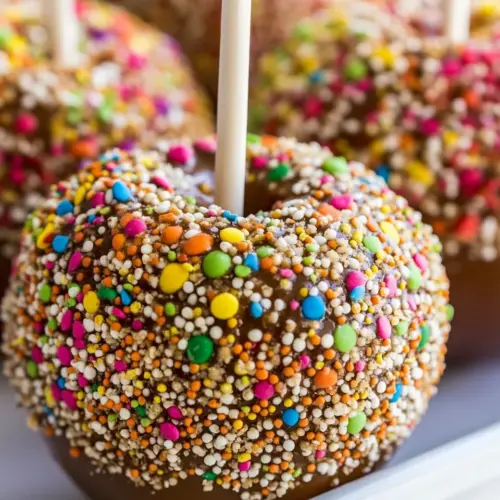
Caramel Apples
Caramel Apples are a classic fall treat, with a silky homemade caramel coating and crisp cold apples for contrast. This easy to follow recipe yields glossy, chewy caramel perfect for dipping and decorating, making it ideal for parties or a cozy weekend activity. Make a batch for an easy seasonal dessert everyone will love.
Equipment
- Heavy-Bottomed Saucepan
- Wooden Spoon
- Candy thermometer
- Parchment lined baking sheet
- Baking rack
- Caramel apple sticks
Ingredients
- 8 apples cold (see note 1) Select firm, cold apples to provide a crisp, juicy base that contrasts with sticky caramel; chilling helps the caramel set quickly and reduces slippage. Choose apples with sturdy stems for easy dipping and consider varieties like Granny Smith for tartness or Honeycrisp for balanced sweetness. Wash and thoroughly dry to ensure caramel adheres evenly.
- 1 3/4 cups heavy cream Heat heavy cream to add richness and smoothness to the caramel, creating a velvety texture and preventing crystallization. Incorporate gradually while cooking the sugar to control consistency and achieve a creamy, scoopable coating. Use full-fat cream for best mouthfeel and stability.
- 2 cups brown sugar packed Dissolve packed brown sugar to supply deep, molasses-like sweetness and color, forming the caramel’s backbone when cooked. Cook to proper temperature to develop flavor without burning, and its moisture helps produce a chewy but pliable final texture. Measure packed tightly to maintain recipe proportions.
- 1 cup light corn syrup Stabilize and soften the caramel with light corn syrup, which inhibits sugar crystallization and yields a glossy, smooth finish. Stir into the sugar mixture to improve elasticity and help the caramel set with a tender chew. Use light corn syrup for neutral flavor that won’t overpower the caramel.
- 1/4 cup butter (1/2 stick) Enrich the caramel with butter to add creaminess, shine, and a richer mouthfeel while contributing to a smoother texture. Add near the end of cooking to incorporate fat and enhance flavor without separating. Use unsalted or adjust salt separately if needed.
- 1/2 teaspoons salt Enhance overall flavor balance with salt, which brightens sweetness and deepens caramel notes while preventing cloying taste. Dissolve into the caramel near completion to evenly distribute and bring out other ingredients’ nuances. Adjust slightly to preference but keep modest for classic balance.
- 1/2 teaspoon vanilla extract Round out the caramel’s flavor with vanilla extract, imparting warm aromatic notes and a subtle complexity that complements the cooked sugar. Stir in off-heat to preserve volatile aroma compounds and maintain a fragrant finish. Use pure vanilla for best depth.
- Toppings such as toasted coconut, peanuts, or sprinkles Provide optional texture and visual contrast with toppings such as toasted coconut, peanuts, or sprinkles that customize each apple’s flavor and appearance. Press toppings onto freshly dipped caramel so they adhere before the coating fully sets, creating varied crunch or chew. Offer a selection to accommodate different tastes.
Instructions
- To prepare the apples, thoroughly rinse the cold apples, and wipe well to remove the wax coating. Remove stem. Using a caramel apple stick, carefully push the stick into the apple, about 3/4 of the way. Place apples on a parchment-lined baking sheet with a baking rack.: The first sensory cue is the cool firmness of the apples in your hand and the faint sheen from any wax you remove. Proper washing and drying lets the caramel adhere, and pushing the stick in most of the way gives a secure hold so the apple does not spin while dipping. You will feel resistance as the stick enters the core, then a reassuring firmness when it is seated correctly. A common mistake is forcing the stick in too aggressively so it punctures through the bottom, which weakens the apple. Take your time, and place the prepared apples on a rack so excess caramel can drip evenly.
- To make the caramel, in a large heavy-bottomed saucepan over medium heat, combine the heavy cream, brown sugar, corn syrup, butter, and salt. Stir constantly with a wooden spoon until butter is melted.: As the mixture warms you will notice the brown sugar dissolving and the aroma shifting to warm, toasty notes. The heavy cream and melted butter will fuse into a glossy base, and the sound is a gentle, steady simmer rather than a vigorous bubble. Constant stirring helps incorporate the ingredients and prevents hot spots that could burn the sugar. If you stop stirring you risk localized scorching that makes the caramel grainy or bitter. Use a wooden spoon or heatproof spatula and keep the flame moderate for an even cook.
- Using a pastry brush dipped in water, brush the sides of the pan and place a candy thermometer into the mixture, ensuring it does not touch the bottom of the pan. Without stirring, allow the mixture to cook until mixture reaches 235 degrees, about 20 to 25 minutes. Remove from heat and gently stir in vanilla. Do not over-stir. Allow mixture to cool and thicken, about 10 to 15 minutes.: The bubbling will transform visually from small, rapid beads to larger, slower bubbles as the temperature rises, and the aroma becomes deeper and more caramelized. Brushing down sugar crystals prevents recrystallization which would ruin the texture. A candy thermometer not touching the pan bottom gives an accurate reading; if it reads lower because of contact you may undercook. When the mixture hits 235 degrees you have reached the soft ball stage that yields a chewy but set caramel. After removing from heat the caramel will still be fluid but will thicken as it cools, and stirring in the vanilla extract after heat preserves its fragrance. One common error is stirring too vigorously at the finish which can introduce air and alter texture, so stir gently.
- To dip the apples, working one apple at a time, hold the apple by the stick, dip the apple into the caramel mixture, and thoroughly coat using a twirling motion. If using toppings, roll the apple into the topping.: You will feel the warmth of the caramel against the chilled apple, and the glossy coating will cling as you twirl. A steady, confident dip and twist ensures even coverage and prevents drips from concentrating on one side. Rolling in toppings immediately after dipping means they adhere while the surface is tacky. A typical mistake is letting the caramel cool too much before dipping, which results in a thick, clumpy coat that will not spread smoothly. Work methodically and keep a bowl of warm caramel gently heated if needed.
- Set apple on prepared baking sheet with rack, ensuring the apples do not touch. Cool slightly and serve immediately, or allow to sit until caramel hardens, about 45 minutes. Enjoy day of for best results.: Placing the dipped apple on a rack lets excess caramel drip away, and you will hear the faint settling sound as the coating relaxes. The visual cue to watch for is the caramel losing its glossy sheen as it cools and firming to the touch. Serving while slightly warm gives a pleasing chew, while waiting for full set provides a firmer bite. Avoid stacking or letting apples touch, because they may stick together. If you plan to store them, do so briefly and keep them upright to avoid deformation.
Notes
- Pick the right apple: Choose firmer varieties like Granny Smith or Honeycrisp to balance the sweetness and ensure the apple holds up when bitten into.
- Toast toppings: Lightly toast nuts or coconut to heighten flavor and improve crunch; spread them on a sheet and watch for golden edges.
- Set up a toppings bar: Arrange bowls of different toppings so guests can customize their own apples for a festive touch.
- Keep apples cold: Refrigerate the apples beforehand, because a colder core helps the caramel firm quickly and neatly.
- Rewarm carefully: If the caramel cools and thickens while you are dipping, return the pan to very low heat and stir until it loosens, but avoid boiling which can overcook the sugar.
- Wrap for gifting: Once set, wrap each apple in cellophane and tie with a ribbon for a charming homemade gift.