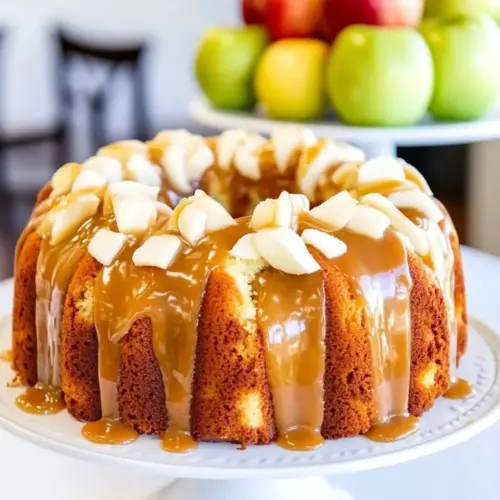
Caramel Apple Pound Cake
Caramel Apple Pound Cake is a dense, buttery cake studded with tart Granny Smith apple and finished with a silky caramel drizzle and tangy cream cheese icing. This moist, spiced dessert is perfect for fall gatherings, offering a balance of sweet and tart textures that make it ideal for sharing and for easy weeknight treats.
Equipment
- Bundt Pan
- Electric Mixer
- Mixing Bowls
- Saucepan
- Wire Rack
Ingredients
- 1 cup white sugar Provide sweetness and structure to the cake batter while helping to tenderize the crumb; white sugar dissolves easily and promotes even browning during baking. Use at room temperature for best integration with melted butter to create a smooth batter consistency.
- 1 1/4 cups firmly packed brown sugar, divided Add deep, molasses-like sweetness and moisture to the cake and caramel components; measure firmly packed to ensure accurate sugar weight and divide as specified for batter and topping. Brown sugar contributes flavor complexity and a chewier texture where used in glazes or fillings.
- 1 1/2 cups butter, melted Incorporate fat and moisture throughout the cake while supplying richness and a tender mouthfeel; melted butter blends quickly with sugars and eggs to create a cohesive batter. Use clarified or cooled melted butter to avoid curdling eggs and to maintain batter aeration.
- 4 large eggs Provide structure, leavening support, and emulsification to the batter while contributing richness and color; beat eggs with sugars to trap air for a lighter crumb. Add eggs one at a time and mix until uniform for best volume and stability.
- 1 teaspoon vanilla extract Enhance overall flavor with warm, sweet aromatic notes that complement apples and caramel; vanilla extract rounds out the sweetness and deepens the cake’s aroma. Add to wet ingredients to evenly distribute flavor without overpowering other spices.
- 3 cups all-purpose flour Form the primary dry framework of the cake, supplying gluten and bulk to hold the batter together; all-purpose flour balances tenderness and structure for a classic pound cake texture. Sift or whisk with leaveners to ensure even distribution and prevent lumps.
- 2 teaspoons baking powder Provide lift and a light crumb by releasing carbon dioxide when activated in the batter; baking powder helps counterbalance the dense nature of pound cake ingredients. Measure accurately and ensure freshness for reliable rising during baking.
- 1 1/2 teaspoons apple pie spice Contribute a warm, spiced apple character throughout the cake that complements chopped apples and cinnamon; apple pie spice is a blend that adds complexity and seasonal flavor. Use as directed to avoid overpowering other subtle flavors in the batter.
- 1 teaspoon kosher salt Balance sweetness with subtle salinity and enhance other flavors in the cake; kosher salt strengthens gluten development and aids in overall taste perception. Dissolve salt into the wet ingredients to ensure even seasoning in the finished loaf.
- 2 cups peeled and finely chopped Granny Smith apple Provide fresh, tart fruit texture and bright acidity to contrast the sweet, rich cake and caramel; finely chopped Granny Smith apples add moisture and pleasant bite. Peel and chop uniformly so pieces distribute evenly and cook through during baking.
- 2 teaspoons ground cinnamon Add warm, aromatic spice that deepens apple and brown sugar flavors; ground cinnamon pairs well with apple pie spice and enhances perceived sweetness. Sprinkle into batter or use atop for a pronounced cinnamon note without added moisture.
- Pecan halves for garnish Offer an attractive, crunchy garnish that contrasts with the soft cake and sticky caramel; pecan halves provide nutty flavor and visual appeal when arranged on top. Toast lightly to intensify flavor before placing on the cooled cake for best texture.
- 1 cup packed light brown sugar Create a deeply caramelized, sweet component for glazes or caramel sauces with concentrated molasses notes; packed light brown sugar melts smoothly into sauces and batters. Use measured and packed to achieve intended sweetness and texture in the topping.
- 1/2 cup half-and-half Add creaminess and help create a pourable texture in caramel sauce or glazes; half-and-half lightens heavy sauces while contributing dairy richness. Warm gently before combining with sugar to prevent temperature shock and ensure smooth incorporation.
- 1/2 stick butter Contribute concentrated butterfat to sauces and frostings for richness and sheen; a half stick of butter (about 4 tablespoons) helps emulsify and finish glazes. Melt or soften according to the recipe step to incorporate evenly without separation.
- 1/8 teaspoons salt Enhance flavor balance and control sweetness in sauces or frostings with a pinch of salt; a small amount accentuates caramel and cream cheese elements without making the dish taste salty. Dissolve fully into warm mixtures to distribute flavor evenly.
- 2 teaspoons vanilla extract Provide additional aromatic complexity and depth in the caramel or frosting components with a second measure of vanilla; using vanilla at multiple stages layers the flavor profile. Add to warm mixtures or to cream cheese frosting for a pronounced vanilla presence.
- 1 (8-ounce) package cream cheese, softened Add tangy richness and creamy body to the frosting, contributing to smoothness and stability; softened cream cheese blends with confectioners' sugar to produce a luscious topping for the pound cake. Keep at room temperature to prevent lumps and ensure a silky consistency.
- 2 1/4 cups confectioners' sugar Supply fine sweetness and contribute to the creamy, pipeable texture of the frosting while helping stabilize cream cheese; confectioners' sugar dissolves easily for a smooth finish. Sift before use to remove lumps and achieve a glossy, even frosting.
- 1/3 cup whole milk Thin and loosen frostings and glazes while adding milkfat for mouthfeel; whole milk helps adjust consistency to desired spreadability and richness. Add gradually to reach the preferred texture without making the frosting too runny.
Instructions
- Preheat oven to 350 degrees and spray a bundt pan with nonstick cooking spray with flour.: When you open the oven and smell its steady warmth, that steady dry heat prepares the pan so the batter starts setting immediately on contact. Coating the bundt pan with a spray that includes flour creates a thin barrier that helps release the cake cleanly and preserves the bundt's detail. A common mistake is to skimp on the coating, which can cause sticking at the edges; take the extra moment to spray thoroughly and tap out any excess flour. You'll notice a faint toasted scent as the oven reaches temperature, and the consistent 350 degree environment ensures even browning without overcooking the outside before the center sets.
- In a large bowl, beat together the white sugar, 1 cup light brown sugar, and melted butter with an electric mixer at medium speed.: The combined aroma of melted butter and sugars is warm and slightly toffee like as the mixer works; this base mixture is crucial because it dissolves the sugars into the fat, creating a uniform matrix that traps air when eggs are added. Beating at medium speed prevents over aeration while ensuring smooth incorporation. Avoid overheating the butter before combining, as scalding can change texture; lukewarm melted butter mixes best. If the mixture seems grainy, continue mixing briefly until it smooths out, which indicates the sugars have started to emulsify with the fat.
- Add eggs one at a time, scraping down sides of bowl between additions.: You will hear the mixer shift tone as each egg folds in, and the batter will look progressively smoother and glossier. Scraping the bowl is key because it keeps pockets of unmixed ingredients from forming, and it ensures even aeration which leads to consistent crumb. A frequent oversight is rushing and adding eggs too quickly, which can cause uneven texture; add them slowly and watch the batter regain a silky sheen after each addition. Proper incorporation yields a batter that clings slightly to the beater, signaling readiness for the next step.
- Beat in the vanilla extract.: As the small splash of vanilla extract hits the bowl, it releases a floral, rounded aroma that brightens the entire mixture. Vanilla functions as a flavor amplifier, so even a teaspoon changes how the sugars and fruit will be perceived later. Blend briefly to distribute the scent evenly, and avoid overmixing which could start to deflate the batter. If the smell is faint, you've likely undermixed the batter slightly, so a short additional beat will marry the flavor without compromising texture.
- In a medium bowl, whisk together the flour, baking powder, apple pie spice, and salt. Gradually add to sugar/egg mixture, beating until combined.: The dry mix smells of warm spice and gives structure when incorporated. Whisking aerates and removes lumps, so when you add it in gradually the batter remains smooth and avoids clumping. Gradual addition prevents gluten overdevelopment, which keeps the cake tender instead of tough. Watch for visual cues: the batter will change from glossy to slightly matte as the flour disappears, indicating proper assimilation. Overmixing here is a common error that yields a heavier cake, so stop as soon as streaks are gone.
- In a medium bowl, toss together apples, remaining brown sugar, and cinnamon.: Tossing the diced Granny Smith apple with brown sugar and cinnamon releases fragrant, caramel like juices and lightly macerates the fruit so it stays moist and flavorful inside the cake. The mixture should glisten with sugar coating and smell warmly spiced. If you notice watery liquid forming, the apples were cut too finely or sat too long; drain slightly before layering to prevent sogginess. This step builds concentrated apple pockets that create contrast against the cake.
- Spoon 1/3 of batter into prepared pan. (Batter will be thick and you may need to spread it with a rubber spatula or lift the pan and drop it on the counter to get the batter to spread.): Dropping the pan gently helps the thick batter settle and eliminates air pockets, and the batter should look dense and slightly glossy as it levels. Use a rubber spatula to coax it into the grooves of the bundt so apples will distribute evenly. A common problem is under filling or piping all batter unevenly, which produces a lopsided cake; make sure each layer is roughly equal and the batter reaches into corners. You might hear a soft thud as air escapes, and the batter will flatten and adhere to the pan surface.
- Spoon 1/2 apple mixture on top of batter and repeat layers, finishing off with a third layer of batter.: The apple layer should sit like a jewel studded layer against the batter, offering visible flecks of cinnamon and sugar. As you repeat layers, distribute the apple mixture evenly to avoid clumping in one section, which would leave other slices without fruit. The assembled cake should look balanced, with apple pockets peeking through the top batter. If you see too much liquid seeping, dab with a paper towel to keep the batter from becoming overly moist in spots.
- Bake for 50 to 60 minutes, or until firm to the touch on top. Let cool for 10 minutes in pan and then turn cake out onto a wire rack.: While baking you will notice the kitchen filling with a warm, spiced aroma and the top turning a golden caramel color. The cake is ready when the center springs back slightly to the touch and a thin skewer comes out with a few moist crumbs. Cooling for 10 minutes helps the cake stabilize so it releases cleanly from the bundt; rushing this can lead to breakage. When you invert onto the wire rack, listen for a soft sigh as steam escapes, and allow complete cooling before glazing to prevent the toppings from sliding off.
- FOR THE CARAMEL DRIZZLE: Mix brown sugar, half-and-half, butter, and salt in a small, heavy-bottomed saucepan. Cook over medium-low heat, whisking continuously, until mixture starts to thicken nicely, about 5 to 8 minutes. Remove from heat and stir in vanilla extract.: The caramel will change from grainy sugar to a glossy, syrupy texture as the brown sugar dissolves into the half and half and butter . Whisking prevents scorching and promotes a smooth emulsion; you want a sheen and a ribbon like slow pour when it thickens. If you overcook it, the sauce will harden too much as it cools, so remove from heat at the right syrupy stage. Adding the vanilla extract off heat preserves its aroma and ties the caramel to the cake flavors.
- FOR CREAM CHEESE Icing: Use an electric mixer to beat together the cream cheese and confectioners' sugar until smooth. Beat in milk and 1/4 cup of the caramel drizzle.: The cream cheese and confectioners sugar should become silky and lump free, smelling slightly tangy and sweet. Adding milk adjusts consistency so the icing drips slowly but does not run off entirely, and folding in a portion of the caramel brings harmony between the glaze and the cake. If the icing becomes too thin, add a touch more confectioners sugar to regain body; if too thick, a teaspoon of milk loosens it without losing stability. The finished texture should ribbon off a spoon.
- Spoon Cream Cheese Icing on cake so that it drips down the sides. Spoon Caramel Drizzle on top of Icing. Garnish with pecans.: The final plating is tactile, as the warm caramel mingles with the cool cream cheese glaze, creating ribbons that cling to the cake ridges, and the pecan halves add a crisp, toasty finish. Take care when applying the caramel if it is still hot, as it will melt the icing excessively; slightly warm is ideal so it pools without running off. Arrange the pecan halves evenly for balance, and let the glaze set briefly before slicing so each piece holds its shape. Serve at room temperature for the best melding of textures and flavors.
Notes
- Bring eggs to room temperature — Cold eggs can cause the batter to seize or mix unevenly, so set them out about 30 minutes before starting to ensure smooth incorporation.
- Measure flour properly — Too much flour is a common reason pound cakes turn out dry; spoon into the measuring cup and level off with a knife rather than scooping.
- Use tart apples — Granny Smith apple holds its texture and provides the acidity needed to cut through the richness of the cake and caramel.
- Watch the caramel temperature — Cook the caramel over medium low heat and remove it when it thickens to a syrupy consistency to avoid a gritty or overly hard sauce.
- Reserve some caramel for icing — Stirring a small amount into the cream cheese icing ties the topping and drizzle together, creating flavor continuity.
- Do a toothpick test — Insert a skewer into the thickest part; a few moist crumbs indicate doneness and prevent over baking which dries the cake.