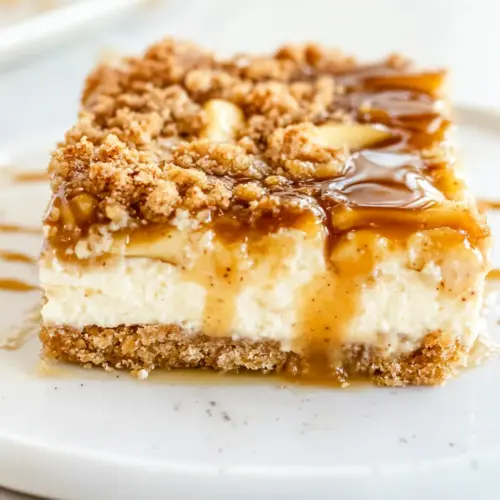
Caramel Apple Cheesecake Bars
Caramel Apple Cheesecake Bars are creamy, spiced, and perfectly layered with a buttery crust, tart apples, and a crunchy oat crumble. This easy dessert feels decadent while remaining approachable for busy bakers, making it a great choice for fall gatherings and holiday tables. Make it ahead for clean slices and a stress free finish that will impress everyone.
Equipment
- 9×13 baking dish
- Food Processor
- Mixing Bowls
- Hand mixer or stand mixer
- Offset Spatula
Ingredients
- 15 g graham crackers Crushed to form a crisp base layer and provide a slightly sweet, toasty texture that contrasts with creamy fillings. Use finely ground crumbs to ensure even pressing and a stable crust for the bars.
- 3 tablespoons granulated sugar Sprinkled into the crust or filling to add sweetness and aid in caramelization during baking, creating light crunchy bits. Measure carefully to balance overall sweetness with other sugars in the recipe.
- 8 tablespoons salted butter, melted Melted and mixed with crumbs to bind the crust together while imparting a rich, buttery flavor and tender mouthfeel. Ensure fully melted for even distribution and press firmly into the pan for structure.
- 3 Granny Smith apples, peeled, cored, chopped Chopped and sautéed or tossed with sugar to create tender, slightly tart apple pieces that add fresh fruit texture and bright flavor. Choose firm apples to maintain shape and provide a contrast to the creamy cheesecake layer.
- 1 tablespoon lemon juice, fresh squeezed Squeezed over apple pieces to prevent browning and to add a bright acidic note that enhances overall fruit flavor. Use fresh lemon juice for best acidity and clean citrus aroma.
- 1/4 cup granulated sugar Added to the cooked apples to sweeten them and help create a syrupy, tender filling with balanced tartness. Adjust amount based on apple sweetness to avoid overpowering the cheesecake.
- 3 tablespoons brown sugar Stirred into the apple mixture to add deep molasses notes and a warm sweetness that complements brown butter or spices. Pack firmly when measuring for consistent flavor intensity.
- 1 teaspoon apple pie spice or pumpkin pie spice Sprinkled into the apple mixture to introduce warm, aromatic spice notes that evoke classic autumn flavors and enhance the fruit's natural sweetness. Use a blend that matches desired spice intensity and adjust to taste.
- 1/4 teaspoon salt Added to the fruit or dough to enhance overall flavor balance and to help control sweetness while highlighting the spices and apples. Use fine-grain salt for even distribution and improved taste perception.
- 24 ounces cream cheese, softened Softened and beaten until smooth to form the creamy, tangy base of the cheesecake layer that provides richness and structure. Ensure room temperature to avoid lumps and to facilitate incorporation with other ingredients.
- 1 1/4 cup powdered sugar Sifted into the cream cheese to sweeten the filling while promoting a silky texture and preventing grittiness. Add gradually while mixing to achieve desired sweetness and consistency.
- 1/3 cup sour cream, room temperature Stirred into the filling to add tangy richness and a velvety finish that lightens the texture of the cream cheese. Bring to room temperature for smooth blending without curdling.
- 1 1/2 teaspoons vanilla extract Added for warm, floral flavor and aromatic depth that complements the creamy filling and apples; it also rounds out the sweetness. Use pure extract and measure carefully to avoid overpowering the mixture.
- 3 large eggs, room temperature Beaten in one at a time to help emulsify the filling and provide structure, creating a smooth, set cheesecake that holds together when sliced. Use room temperature eggs for best integration and minimal curdling.
- 1/2 cup all purpose flour Folded into the filling to provide a bit of structure and to absorb moisture, helping the cheesecake set without becoming gummy. Sift or whisk to remove lumps before incorporation for an even texture.
- 1/2 cup granulated sugar Measured into the filling to add sweetness and contribute to the classic cheesecake sugar profile, balancing the tang of cream cheese. Combine thoroughly for consistent sweetness throughout the bars.
- 1/2 cup brown sugar Blended into the crumble or topping to add a deeper, caramel-like sweetness and a hint of chewiness when baked. Use packed measurement for accurate sweetness contribution.
- 1/3 cup old fashioned oats Mixed into the streusel topping to introduce a nutty, chewy texture and to help bind the crumble pieces together while toasting in the oven. Choose old-fashioned oats for sturdy flakes and satisfying bite.
- 1 teaspoon baking powder Added to the dry crumble ingredients to provide lift and lightness, helping the topping bake to a slightly crisp texture without becoming dense. Ensure freshness for reliable leavening performance.
- 1 1/2 teaspoon apple pie spice Sprinkled into the batter or topping to intensify warm spice notes, echoing the apple filling and creating cohesive autumnal flavor throughout the bars. Use a measured teaspoon for balanced spice presence.
- 1/2 teaspoon salt Incorporated to enhance the overall seasoning and to bring out flavors from both sweet and savory elements while balancing sweetness. Use sparingly to avoid over-salting delicate components.
- 6 tablespoons unsalted butter, melted Poured into the crumble mixture to bind dry ingredients, add rich creaminess, and help the topping brown evenly with a tender mouthfeel. Melt fully and cool slightly to prevent premature melting of other components.
- 1/2 cup caramel sauce Drizzled over the finished bars or layered between filling and topping to introduce sweet, buttery caramel flavor and an attractive glossy finish. Warm slightly for easy pouring and even coverage.
Instructions
- Preheat oven to 350°F. Line a 9×13 baking dish with parchment paper or lightly spray with nonstick cooking spray. Set aside.: The kitchen fills with warmth and that initial scent of baking begins to lift your mood, which helps you feel confident as you assemble the bars. Make sure the oven racks are centered to promote even heat circulation; an oven thermometer can confirm accuracy because many ovens run hotter or cooler than the dial suggests. A common mistake is placing the pan too close to the top element, which can brown the topping unevenly, so position the pan in the middle. Listen for no sounds here other than the oven fan, and visually confirm the temperature before inserting the pan.
- Crush the graham crackers in a food processor or by placing in a large ziploc bag and crushing with a rolling pin. Make sure the crumbs are very fine. Transfer to a large bowl.: When you crush the graham crackers , you should end up with very fine crumbs that smell faintly sweet and toasty, which gives the crust a more cohesive texture. Use a food processor for consistency, or a ziploc bag and rolling pin for a rustic approach; either way, press until there are no large shards. If crumbs are too coarse the crust may crumble when sliced, so take a little extra time to refine them. Avoid overworking by only crushing until fine, and you can tap them through a sieve if needed.
- Stir in the sugar and then drizzle in the melted butter. Stir until thoroughly combined.: The granulated sugar and melted butter should be mixed until the crumbs feel evenly moistened and glossy, which indicates proper binding. The mixture should clump slightly when you squeeze it between your fingers. If it falls apart, add a touch more butter, a half teaspoon at a time, until it holds. A frequent issue is adding too much butter, which makes the crust greasy; if that happens, stir in a few extra crumbs to rebalance.
- Press the crumbs into the bottom of the prepared pan forming an even layer. Cover with plastic wrap and place the crust in the freezer while preparing the remaining layers.: Firmly press the crumb mixture into an even layer across the bottom of the pan so the crust bakes compact and holds slices together. I like to use the bottom of a measuring cup to press for a uniform surface. Cover with plastic wrap and chill in the freezer so the crust sets quickly, preventing it from becoming soggy when the cheesecake is poured on. If pressed unevenly, the cheesecake may bake with thin spots, so check the thickness across the pan.
- In a medium bowl, combine the chopped apples and fresh lemon juice and toss together. Add the granulated sugar, brown sugar, pumpkin pie spice and salt. Stir together until all the ingredients are evenly incorporated. Set aside.: The chopped apples tossed with fresh lemon juice should look glossy as the acid keeps them bright, and you should hear a slight snap when you bite into a piece. Toss thoroughly so every piece is coated, then add the sugars, spice, and salt. Allowing them to sit for a few minutes helps the sugar start drawing out juices, creating a tender but not mushy filling. Over-mixing can break down the apples, so stir gently.
- Place the softened cream cheese and sugar in a large mixing bowl and then, using a hand or stand mixer, beat on medium speed until well combined, about 2 minutes. The mixture should be smooth and creamy.: When you beat the softened cream cheese with powdered sugar , aim for a smooth, airy texture that shimmers slightly under light, about two minutes on medium speed. Start scraping the bowl to ensure no lumps remain, because cold bits lead to a curdled appearance after baking. If the mixture seems grainy, keep beating until smooth; rushing this step often leaves small pockets of unincorporated cheese.
- Add the sour cream and vanilla extract and mix on low speed just until combined.: Folding in the sour cream and vanilla should mellow the batter into a silkier, slightly glossy cream, which helps the cheesecake set to a tender consistency. Mix on low speed to integrate without over-aerating. Overmixing here can introduce too much air, leading to cracks, so combine just until uniform.
- Add the eggs and mix on low speed just until incorporated, do not overmix. Set aside.: Incorporate the room temperature eggs on low speed, adding them gradually so the batter stays smooth and cohesive; the mixture will become more fluid but should remain rich. Room temperature eggs blend more seamlessly, preventing streaks and reducing the chance of curdling. A common pitfall is beating too fast, which traps air and can cause the cheesecake to puff and then sink.
- In a medium bowl combine all purpose flour, granulated sugar, brown sugar, oats, baking powder, cinnamon, nutmeg and salt. Whisk to combine.: Whisk together all purpose flour , granulated sugar , brown sugar , oats , baking powder , apple pie spice , and salt until evenly distributed, creating a fragrant, spiced mix. This step ensures each bite of crumble has balanced sweetness and spice. If you skip thorough whisking, pockets of leavening or spice can concentrate in spots, producing uneven flavor.
- Add the melted butter and stir with a fork until crumbly. Set aside.: Stir the warm but not hot butter into the dry mix with a fork until the texture becomes coarse and clumpy, resembling damp sand. The crumbs should hold together when pinched, which signals the right moisture level. If the mixture feels dry, add a teaspoon of additional melted butter; if too wet, fold in a little extra oats. Overworking the dough can create dense lumps, so mix gently.
- Remove the crust from the freezer. Pour the cheesecake layer over the crust and use an offset spatula to spread evenly.: The cheesecake batter should be poured onto the chilled crust and smoothed with an offset spatula until it forms a glossy, even layer. The surface will look satiny and should spread easily without pulling crumbs up from the crust. If the batter is lumpy, it may indicate the cream cheese was not fully softened, so pause and blend until smooth before pouring.
- Spoon the apple mixture over the cheesecake layer using a slotted spoon.: Using a slotted spoon to transfer the apple mixture prevents excess liquid from soaking into the cheesecake, keeping the layers distinct. Arrange the apples in an even layer so each bar has fruit in every bite. If you pour the juices directly, the cheesecake can become soggy, so drain slightly if the apples seem very juicy.
- Spoon the crumb topping evenly over the apple layer.: Scatter the prepared crumb topping across the apples so you get a uniform sprinkle that bakes into golden clusters. The contrast of the browned crumble and glossy cheesecake creates visual appeal. Avoid pressing the crumbs down, as leaving them loose ensures a crisp finish; pressing can produce a dense, doughy topping.
- Bake for 35 to 45 minutes or until the sides are set and the middle has a very slight jiggle.: As the bars bake, watch for the sides to set and the center to show a slight jiggle, a gentle wobble that indicates creaminess without being runny. The aroma will shift to deeper caramel and spice notes, and the topping should take on a golden hue. If baked much longer the filling may overcook and crack, so start checking at 35 minutes and use visual cues rather than time alone.
- Remove from the oven and allow to cool completely. Transfer to the fridge and chill for 6 hours or overnight.: Cooling at room temperature lets the residual heat finish the set gently, preventing cracks and preserving a velvety texture. After they are fully cooled, refrigerate for at least six hours or overnight to firm up so you can slice clean squares. Cutting too soon is a common error, leading to sloppy slices, so be patient and chill thoroughly.
- Cut into squares and serve with a generous drizzle of caramel sauce.: The final presentation includes a generous drizzle of caramel sauce which should be glossy and slightly warm when poured, creating an inviting sheen and extra sweetness that complements the tart apples . Serve chilled or slightly cool to maintain structure. If the caramel is too hot, it will melt the topping, so let it cool to a warm pourable state.
Notes
- Use firmer apples for texture Make sure the Granny Smith apples are crisp and firm so they hold shape during baking, offering a pleasant contrast to the creamy layer.
- Adjust spice level Increase or decrease the apple pie spice to suit your taste, remembering that a little goes a long way when combined with brown sugar.
- Chill overnight for best slices Refrigerating the bars overnight makes slicing professional looking, because the filling firms and the layers bind together.
- Warm the caramel slightly before serving Gently warm the caramel sauce so it pours smoothly, but avoid overheating which can make it too runny and cause soggy bars.
- Press crust firmly Use the bottom of a measuring cup to compact the crumb crust evenly, which keeps the base intact when cutting squares.