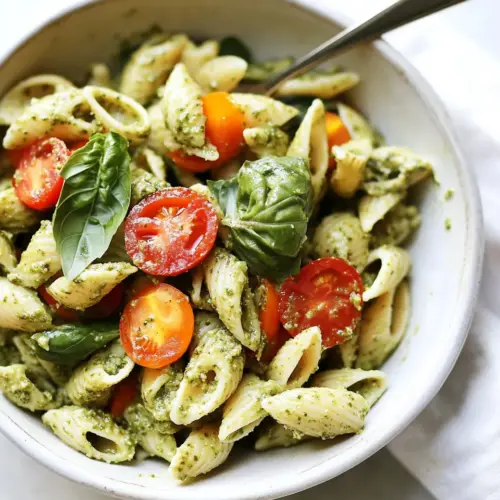
Caprese Pesto Pasta Salad
Caprese Pesto Pasta Salad is a creamy, bright pasta salad that combines fresh basil, peppery arugula, and tangy cherry tomatoes with tender gluten free pasta and soft mozzarella. This easy weeknight dinner or crowd pleasing side delivers vibrant, herb forward flavor with a satisfying nutty depth, perfect for summer gatherings or potlucks. Make it to enjoy a fuss free, flavorful meal that tastes like a celebration.
Equipment
- Food Processor
- Large Bowl
- Pot
- Colander
Ingredients
- 1 cup arugula or baby spinach Provide a peppery, leafy base that brightens the salad and adds a tender texture; can be used whole or roughly chopped to distribute flavor evenly throughout the dish.
- 1/2 cup basil Add a fragrant, herbaceous note that forms the backbone of the pesto; leaves should be packed when measured to ensure balanced basil flavor.
- 1/3 cup walnuts Contribute a rich, slightly bitter nuttiness and creamy texture when blended into pesto; toasting lightly enhances aroma and depth without overpowering other flavors.
- 1 clove garlic Impart pungent, savory sharpness that elevates the pesto’s flavor profile; mince or press finely to release its oils for maximum impact.
- 1/4 teaspoons ea salt more to taste Season the pesto with a measured amount of salt to enhance brightness and balance; adjust to taste after combining with pasta and other salad components.
- 1/4 teaspoon black pepper more to taste Introduce mild heat and depth through freshly ground black pepper; add incrementally and taste to achieve the desired level of warmth.
- 2 tablespoons lemon juice Deliver bright acidity that lifts the pesto and ties flavors together; freshly squeezed lemon juice is recommended for the best, clean citrus notes.
- 1/8 teaspoon red pepper flakes more to taste Provide a touch of spicy warmth that complements the basil and cheese; add sparingly and adjust to personal heat preference.
- 1 tablespoon grated parmesan optional Lend savory umami and a slightly salty, nutty complexity when grated into the pesto; optional but recommended for a classic Italian flavor profile.
- 1/4 cup extra-virgin olive oil more as necessary when blending Bind and emulsify the pesto while adding fruity richness; pour steadily while blending to achieve a smooth, glossy consistency and adjust quantity as needed.
- For Pasta Salad Serve as a section header in the ingredient list to indicate components used specifically for assembling the pasta salad portion of the recipe; not an edible component.
- 12 ounce gluten-free pasta cooked Form the main bulk of the salad, offering a comforting, starchy base that absorbs pesto; cook until al dente, then cool slightly before tossing to prevent wilting.
- 8 ounces small mozzarella balls ciliegine or bocconcini, halved Bring creamy, mild pockets of dairy throughout the salad that contrast with the acidic tomatoes; halving ensures even distribution and better texture in each bite.
- 2 pints cherry tomatoes halved Add juicy sweetness and acidity that balance the richness of the cheese and pesto; halving cherry tomatoes increases surface area for dressing absorption.
- 1 cup roasted red peppers diced Provide smoky-sweet flavor and tender texture that complements fresh vegetables; dice into uniform pieces so the roasted peppers mix evenly with other salad ingredients.
- 1/3 cup marinated artichokes chopped Introduce tangy, slightly earthy bites with tender texture that marry well with pesto and cheese; chop into small pieces for consistent flavor in each forkful.
- 3/4 cup fresh basil sliced thin Offer a concentrated fresh basil flavor that reinforces the pesto and brightens the salad; slice thinly to release aroma and distribute herbaceousness uniformly.
- 1 teaspoon Italian seasoning Contribute a savory herb blend that supports Italian flavors throughout the dish; sprinkle in moderation and taste, as dried seasonings are more concentrated.
- 1 teaspoons ea salt more to taste Season the pasta salad with salt to enhance all components and balance acidity; add gradually and taste before final adjustments.
- 1/4 teaspoon red pepper flakes more to taste Add a subtle kick of heat within the salad to mirror flavors in the pesto; distribute evenly for consistent spice without overwhelming other ingredients.
- 1/4 teaspoon ground black pepper more to taste Provide a finishing layer of warm, earthy spice and mild heat that ties the salad together; freshly ground black pepper offers immediate aromatic lift.
Instructions
- Place all pesto ingredients except for extra-virgin olive oil in a food processor or high speed blender. Pulse a few times until coarsely chopped. While machine is going, slowly pour in extra-virgin olive oil until you have reached a thick and creamy sauce. Taste and adjust seasoning as needed. Set aside until ready to use.: The moment you start pulsing, you will notice the herbs begin to break down releasing a fresh, green aroma that fills the kitchen. As the leaves and walnuts chop, listen for the change in sound from a coarse rustle to a smoother whir, which signals the texture is moving toward a paste. This early breakdown is crucial because it helps the garlic and lemon juice marry with the herbs, creating a cohesive flavor base. A common mistake is overfilling the processor, which leads to uneven chopping and a chunky pesto. If that happens, stop and scrape down the sides, then pulse again to even the texture.
- Add cooked pasta, mozzarella, cherry tomatoes, roasted red peppers, marinated artichokes, basil, Italian seasoning, sea salt, red pepper flakes, ground pepper to a large bowl.: When the mixture smells peppery and green, and you see small flecks of basil and arugula suspended in the nuts, you have reached the right point to start incorporating oil. The coarse stage retains pleasant texture in the pesto and prevents it from turning into something too oily. If you pulse too long, the pesto can become pasty, losing the bright herbaceous pop. A quick pulse, then a pause to check both smell and look, will keep things lively and textured.
- Add in the pesto and mix until well combined. Taste and adjust seasoning as needed. Store in the refrigerator until ready to serve!: As you drizzle the extra-virgin olive oil , observe how the mixture smooths out and glistens, signaling emulsification. The slow stream is essential to form that silkiness; if you add oil too quickly, the sauce can separate and become oily. Aim for a consistency that coats the back of a spoon without pooling. If the pesto seems too thick, add a little more oil in very small amounts, tasting as you go so the balance of acid and salt remains harmonious.
- Taste and adjust seasoning as needed: This tasting step is where the pesto comes alive, you will notice how salt intensifies the herbs and lemon juice brightens the finish. Sample for salt, pepper, and acidity, and tweak with tiny increases rather than big jumps. Over salting is a common error, and it is harder to correct once it happens. If you overshoot on salt, add a squeeze of lemon juice or a small handful of fresh greens to mellow it.
- Set aside until ready to use: Letting the pesto rest allows flavors to mellow and integrate, yielding a deeper, rounded taste when tossed with warm pasta . Keep it covered to prevent oxidation which can dull its color and aroma. If you notice the surface darkening, simply stir the deeper, greener sauce back to the top before using. A frequent oversight is leaving it uncovered in the fridge which reduces the vibrant appearance and aroma.
- Add cooked pasta, mozzarella, cherry tomatoes, roasted red peppers, marinated artichokes, basil, Italian seasoning, sea salt, red pepper flakes, ground pepper to a large bowl: The sensory payoff begins when you combine everything, the warm pasta releasing steam and coaxing the aromas from the other ingredients. You will see glossy tomatoes, flecks of green basil, and the creamy sheen of halved mozzarella pearls. The heat from the pasta helps open the flavors of the marinated vegetables, making the mixture smell savory and inviting. To avoid a soggy salad, ensure the pasta is well drained and not sitting in excess water, which can dilute the dressing.
- Add in the pesto and mix until well combined: As you fold in the pesto, notice how it clings to the pasta and tints the bowl a soft green, bringing aroma and flavor into every crevice. Use gentle but thorough strokes so the mozzarella does not break apart and the tomatoes retain their shape. The goal is an even coating where each bite has the right balance of herb, acid, and creaminess. A common mistake is adding too much pesto at once, resulting in an overly oily salad, so start with less and adjust to taste.
- Taste and adjust seasoning as needed: Once combined, take a careful spoonful and note how the elements interplay. You are looking for brightness from the lemon juice and tomatoes , savory depth from the pesto and marinated artichokes , and a gentle heat from the red pepper flakes. If something feels muted, a pinch of salt or a quick squeeze of lemon can lift the entire bowl. Avoid overdoing pepper or salt; small corrections work best.
- Store in the refrigerator until ready to serve: Chilling helps the flavors settle and makes the salad refreshingly cool for serving. Place it in a covered container to preserve aroma and texture. When you take it out, let it sit at room temperature for a few minutes so the olive oil loosens, bringing back vibrancy. A frequent misstep is storing it with excess liquid at the bottom, so give it a final gentle stir before serving to reincorporate any separated dressing.
Notes
- Toast nuts for depth Lightly toast the walnuts in a dry skillet over medium heat until fragrant, this develops richer flavor, but remove them as soon as they smell toasty to prevent bitterness.
- Control pesto texture Add the extra-virgin olive oil slowly while blending to create a creamy emulsion, too much oil at once can separate the sauce and make it greasy.
- Anchor with warm pasta Toss the pesto with warm, not hot, pasta so the noodles absorb flavor without wilting the fresh herbs.
- Adjust seasoning last Because jarred and marinated items can be salty, season after combining everything to avoid over salting the whole dish.
- Serve slightly chilled or room temperature The salad tastes best when not ice cold, let it sit for a few minutes after refrigeration so the flavors bloom.