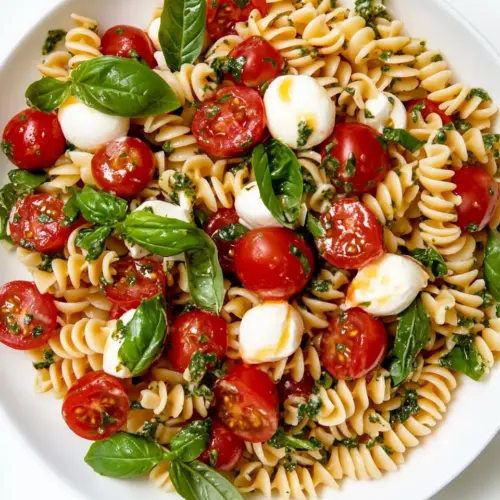
Caprese Pasta Salad
Caprese Pasta Salad is a bright, creamy, easy summer dish that combines al dente pasta, juicy tomatoes, and soft mozzarella with a tangy balsamic and lemon dressing. It makes a delightful easy weeknight dinner or a crowd friendly side that stays fresh at room temperature. Make it for casual gatherings when you want big flavor without fuss.
Equipment
- Large Pot
- Colander
- Large Bowl
- Small Bowl
- Whisk
Ingredients
- 8 ounces dried pasta such as farfalle or fusilli Cook until al dente to provide the base and primary texture for the salad; choose shapes like farfalle or fusilli to hold dressing and ingredients well. Rinse briefly with cold water after draining to stop cooking and cool for salad assembly.
- 1/3 cup extra-virgin olive oil Provide a rich, fruity fat that emulsifies with vinegar and lemon to coat the pasta and distribute flavor evenly. Whisk with garlic and Italian seasoning to create a simple, flavorful dressing that enhances all other components.
- 1/4 cup balsamic vinegar Add a tangy, slightly sweet acidity that balances the olive oil and brightens the overall flavor profile. Drizzle gradually while tasting to achieve the right dressing intensity without overpowering the tomatoes or mozzarella.
- 1 lemon juiced Bring a bright, citrusy acidity that lifts flavors and adds freshness to the dressing; squeeze directly to capture fresh juice and avoid bottled substitutes' bitterness. Combine with olive oil and balsamic to create a balanced vinaigrette for the salad.
- 1 clove garlic minced Infuse pungent, savory notes when minced and mixed into the dressing, providing aromatic depth and a subtle bite. Mincing finely helps distribute the garlic evenly so it complements tomatoes and mozzarella without dominating.
- 1 teaspoon Italian seasoning Contribute an herby, aromatic blend that adds classic Italian flavor and complexity to the dressing and salad. Sprinkle in and adjust to taste to ensure the seasoning complements basil and tomatoes without overwhelming delicate mozzarella.
- Salt and pepper to taste Season to taste to enhance and balance the salad's flavors, bringing out sweetness in tomatoes and cutting richness from oil and cheese. Add gradually and taste as you go to avoid oversalting, finishing with a few grinds of pepper for brightness.
- 1 pint grape tomatoes halved Provide juicy, sweet-tart bursts of flavor and fresh color when halved, acting as a primary component of the Caprese profile. Toss gently with dressing so they remain intact and release some juices to mingle with the pasta and cheese.
- 8 ounces mozzarella pearls Contribute creamy, milky bites that echo the classic Caprese combination and add protein and texture to the salad. Fold in gently so the pearls retain shape and soak up dressing while contrasting with tomatoes and pasta.
- 1/4 cup fresh basil leaves thinly sliced Add fresh, aromatic herbaceousness and a bright green contrast when thinly sliced; sprinkle over at the end to preserve flavor and color. Tear or chiffonade lightly to release oils that marry with the dressing and elevate the salad's finish.
Instructions
- Bring a large pot of salted water to a boil. Add the pasta and cook until al dente, about 8-10 minutes. Drain and rinse with cold water to stop the cooking process.: The kitchen fills with a clean steam aroma as the water nears rolling boil, and properly salted water seasons the pasta from the inside out, which makes a huge difference in the final flavor. You will see small bubbles racing across the surface, and the pot should be large enough so the pasta moves freely. A common mistake is under salting, which yields bland pasta , so add enough salt until the water tastes like seawater. If you skip this the final salad will need more seasoning, but patching that up later can be tricky.
- In a small bowl, combine the extra-virgin olive oil, balsamic vinegar, lemon juice, minced garlic, Italian seasoning, salt, and pepper. Whisk until the ingredients are well mixed.: As the pasta cooks you will notice its color change and the scent will become gently wheaty; test a piece at the low end of the time range to check for a slight chew. Al dente means it should resist slightly when you bite into it rather than falling apart, which helps the salad hold texture. Overcooking creates a soft, gluey mouthfeel and prevents the dressing from clinging properly, so watch the time closely and taste early.
- In a large bowl, combine the cooled pasta, grape tomatoes, mozzarella pearls, and sliced basil. Drizzle the dressing over the salad and toss gently to coat. For the best flavor, let the salad sit for about 15 minutes before serving.: Rinsing cools the pasta immediately and removes surface starch so the pieces do not clump together, giving you a clean, separate bite in each forkful. You will feel the temperature drop and see steam disappear as the cold water hits the hot pasta . Skipping the rinse can leave the pasta sticky and cause the dressing to adhere unevenly, so be sure to rinse until the pasta is cool to the touch.
- In a small bowl, combine the extra virgin olive oil, balsamic vinegar, lemon juice, minced garlic, Italian seasoning, salt, and pepper: Mixing the dressing releases bright citrus and herb aromas, and whisking emulsifies the extra virgin olive oil with the acidic components so the dressing coats ingredients evenly. As you whisk you will notice the dressing take on a glossy sheen and a balanced scent. One trap is over whisking cold oil to the point it separates upon sitting; whisk until just combined and taste for seasoning, adjusting sparingly.
- Whisk until the ingredients are well mixed: The dressing should look unified with no streaks of oil or acid, and the garlic should be evenly distributed so every bite has subtle savory notes. You will sense a gentle perfume of garlic and citrus that signals balance. If the dressing tastes too sharp add a touch more extra virgin olive oil , but avoid masking the acidic brightness which is crucial for contrast.
- In a large bowl, combine the cooled pasta, grape tomatoes, mozzarella pearls, and sliced basil: As you toss these elements the colors pop visually, and the aroma of fresh basil will rise. The cooled pasta provides a neutral base while the grape tomatoes and mozzarella add juiciness and creaminess. A common mistake is tossing while the pasta is still hot, which can soften the mozzarella and wilt the basil , so ensure the pasta is cool first for crisp textures.
- Drizzle the dressing over the salad and toss gently to coat: The sound is barely audible, just a soft shuffle as the ingredients meet the dressing, and visually you should see a light sheen on the pasta and produce. Toss gently so the mozzarella pearls remain intact and the basil does not bruise. Over mixing can break the delicate ingredients, while under mixing leaves uneven flavor pockets, so aim for a gentle but thorough motion.
- For the best flavor, let the salad sit for about 15 minutes before serving: Resting allows the dressing to penetrate the pasta and vegetables, melding the acidity and oil into a cohesive taste profile, and the aromas will mellow into a harmonious whole. During this time the salad cools to room temperature and the textures set. A typical error is serving immediately, which can feel disjointed; a short rest deepens the flavor without losing freshness.
Notes
- Pick the right pasta shape Choose shapes like farfalle or fusilli so the dressing clings and you get a mix of textures in every bite.
- Use quality olive oil A fruity, fresh extra-virgin olive oil will elevate the dressing dramatically compared to a bland oil.
- Balance acidity carefully Start with the stated lemon and balsamic vinegar amounts and adjust if needed, tasting as you go so you do not overpower the salad.
- Keep ingredients cold until assembly Chilled mozzarella and tomatoes help the salad maintain bright texture and prevent the cheese from becoming too soft.
- Make ahead with care Assemble up to a day ahead but wait to add the dressing until just before serving to avoid soggy texture.