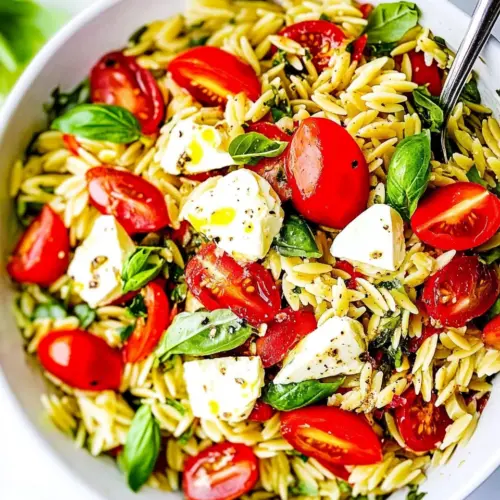
Caprese Orzo Salad
Caprese Orzo Salad is a creamy yet bright pasta salad that combines tender orzo, herbaceous pesto, juicy grape tomatoes, and pillowy fresh mozzarella for an easy weeknight dinner or picnic ready side. The lemon juice and basil lift the flavors, while an optional balsamic glaze adds sweet tang, making it a crowd pleasing summer dish you will want to make again and again.
Equipment
- Large Pot
- Colander
- Large Bowl
- Spoon
Ingredients
- 8 oz orzo pasta, kosher salt for boiling the pasta Cook to al dente and season the boiling water with kosher salt to enhance the orzo's flavor; drain and cool slightly before tossing so it absorbs dressings without becoming mushy. Provide a tender, pasta-base texture that carries pesto and juices from tomatoes throughout the salad.
- 1/2 cup pesto Blend or stir in to coat the orzo and other components, offering concentrated herb, garlic, and olive oil flavors that bind the salad together. Give a creamy, aromatic backbone that complements the tomatoes and mozzarella while adding depth.
- 1 pint grape tomatoes, halved Halve to release juices and increase surface area so they mingle with the pesto and lemon; use ripe, firm grape tomatoes for bright acidity and sweet bursts. Add fresh color, moisture, and a juicy contrast to the creamy mozzarella and pasta.
- 8 oz fresh mozzarella pearls, or chopped fresh mozzarella Tear or chop into bite-sized pieces so each forkful gets creamy, mild cheese that balances the pesto and tomatoes; choose fresh mozzarella pearls or hand-chopped fresh mozzarella for texture. Provide a rich, milky element that softens the acidity and elevates mouthfeel.
- 1/4 cup chopped fresh basil Chop finely to distribute fresh herbal brightness across the salad, adding fragrant, slightly peppery notes that complement basil in the pesto if present. Serve mixed in and sprinkled on top to reinforce the classic Caprese flavor profile.
- 1 tablespoon lemon juice Squeeze fresh to brighten and lift flavors with a clean citrus tang; combine with pesto and kosher salt to adjust overall seasoning. Add a lively acidity that balances richness and ties the components together.
- Kosher salt and freshly ground black pepper, to taste Season to taste with kosher salt and freshly ground black pepper to calibrate the salad's overall balance; add gradually and taste as you go. Ensure each element—pasta, pesto, tomatoes, and mozzarella—comes through clearly without being bland or overly salty.
- Balsamic glaze, for drizzling, optional Drizzle sparingly for a sweet, tangy finish that adds visual contrast and a punch of concentrated flavor; use optionally to taste at serving. Enhance presentation and provide a complementary sweet acidity to the savory and herbal components.
Instructions
- Bring a large pot of water to a boil and add a big pinch of salt. Cook orzo to al dente, according to package directions. Use a colander to drain and rinse with cold water. Transfer to a large bowl.: The first sensory clue is the rolling boil sound and the steam rising from the pot, which signals the water is hot enough to cook orzo pasta evenly. Salting the water seasons the pasta internally, which matters because the dressing is light. Avoid adding the pasta before the water is vigorously boiling, as this can make the grains clump and cook unevenly. A common mistake is under salting the water, resulting in bland pasta that cannot be fixed later. If you hear only a gentle simmer, raise the heat until the water is actively bubbling for several seconds to ensure consistent cooking.
- Add the pesto and stir until the orzo is well coated. Add the tomatoes, fresh mozzarella, lemon juice, salt, and pepper. Stir until well combined. Taste and add more salt and pepper, if necessary.: Al dente orzo pasta should feel tender but with a slight tooth when you bite it, and you may notice a firmer center if you cut a piece. The ideal mouthfeel prevents a mushy salad after mixing, preserving textural contrast with the tomatoes and mozzarella. Overcooked orzo tends to become gummy and will absorb too much dressing, making the dish heavy. A tip is to start tasting the pasta a minute or two before the package time to catch the perfect doneness.
- You can place in the refrigerator to chill or serve at room temperature. When ready to serve, drizzle with balsamic glaze, if desired.: When you drain the orzo pasta , you'll hear the water cascade through the colander, and rinsing with cold water stops the cooking instantly and cools the grains so they do not steam and continue to soften. This step also removes surface starch, keeping the salad from becoming gluey. Skip the rinse only if you plan on serving the salad warm immediately, otherwise the retained heat will overcook the orzo. A frequent slip up is skipping the rinse and ending with a clumpy texture.
- Transfer to a large bowl: Moving the pasta into a roomy bowl gives you space to fold ingredients without spillage, and you should hear the soft shuffling sound of orzo as you tip it in. A large bowl prevents over mixing, which can break the pasta grains. If you use a bowl that is too small, you risk crushing the orzo pasta and muddying the texture. Make sure the bowl is dry and free of lingering soap scent, which can affect flavor.
- Add the pesto and stir until the orzo is well coated: As you stir in the pesto , you should see the orzo turn glossy and take on a green tint, and the aroma of herbs will become more pronounced. Coating distributes flavor so every bite tastes balanced. If not mixed thoroughly, pockets of plain pasta will feel bland. Avoid vigorous stirring that breaks the grains, instead use gentle folding motions to evenly distribute the sauce.
- Add the tomatoes, fresh mozzarella, lemon juice, salt, and pepper: When the grape tomatoes and fresh mozzarella hit the bowl, you will notice a burst of color and a fresh scent from the tomatoes. The lemon juice brings a bright note that livens the whole mix, and the freshly ground black pepper adds a subtle heat. Add seasoning gradually and taste as you go; overdosing on acid or salt can throw the balance off. A common error is adding unmeasured lemon juice, which can make the salad tangy rather than balanced.
- Stir until well combined: As you fold the components, pay attention to the way the textures meld the creamy mozzarella with the slightly chewy orzo pasta and juicy tomatoes. The sound is quiet, and you should aim for an even dispersion of ingredients so each forkful has a mix of elements. If you under mix, flavors cluster and the overall experience suffers. Be gentle to avoid breaking the pearls of mozzarella into an indistinct mass.
- Taste and add more salt and pepper, if necessary: Tasting is a sensory checkpoint where you assess salt, acid, and herb balance. Adjustments should be small; a little salt brightens flavors, while a touch more lemon juice or pepper can correct flatness. Over seasoning is difficult to reverse, so make incremental changes. Some cooks skip tasting and end up with a bland or over seasoned dish, so always sample before serving.
- You can place in the refrigerator to chill or serve at room temperature: Chilling mutes some flavors but tightens the salad, which can be refreshing on warm days, while serving at room temperature highlights aromas and makes the pesto more pronounced. If refrigerating, cover the bowl to prevent the edges from drying and let it sit for at least 30 minutes so flavors marry. The most common misstep is refrigerating for too long, which can dull the brightness and change the texture of the fresh mozzarella .
- When ready to serve, drizzle with balsamic glaze, if desired: The final drizzle of balsamic glaze adds a glossy finish and a tangy sweet counterpoint that can make the salad feel finished and restaurant worthy. A little goes a long way, so apply sparingly in a thin zig zag for visual appeal and balanced flavor. Heavy application will dominate the delicate tomato and cheese notes. If you want a subtler effect, you can offer the glaze on the side so guests add their own.
Notes
- Use fresh pesto when possible: Fresh pesto provides brighter herbal notes and a fresher aroma than jarred, though good quality jarred pesto works well in a pinch.
- Adjust pesto quantity to taste: Start with less and add more after tasting so the herb and oil do not overwhelm the tomatoes and mozzarella.
- Choose firm ripe tomatoes: Firm yet ripe grape tomatoes prevent excess liquid in the salad and provide perfect bursts of sweetness.
- Chill briefly before serving for potlucks: If transporting, a short chill helps the salad hold together and keeps ingredients fresh.
- Drain mozzarella thoroughly: Pat or strain the fresh mozzarella to avoid watering down the dressing and diluting flavor.
- Squeeze lemon last: Add a touch of fresh lemon juice at the end and taste, it will brighten without taking over when balanced carefully.