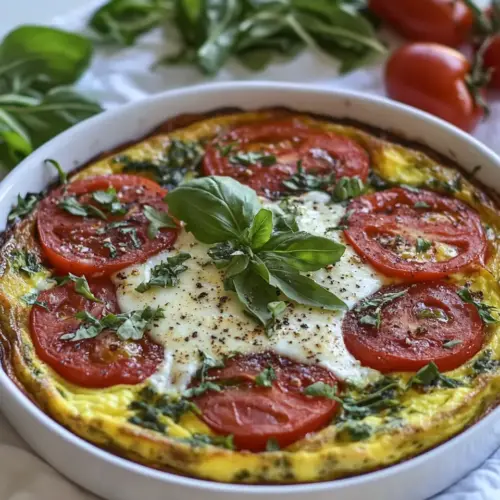
Caprese Frittata with Arugula
Caprese Frittata with Arugula combines creamy eggs, milky mozzarella, and bright basil with peppery arugula for a fresh, easy weeknight dinner or relaxed brunch. This custardy frittata is golden edged, broiled to lightly brown the cheese, and finished with a glossy balsamic reduction for a perfect balance of sweet and tangy. Make it when you want simple, impressive flavor.
Equipment
- 10-inch cast iron skillet
- Mixing Bowl
- Whisk
Ingredients
- 10 large eggs well beaten Whisk thoroughly to incorporate air and provide the main structure and protein for the frittata; beaten eggs set during cooking to form a tender, custardy base. Use large eggs for consistent texture and flavor, seasoning them well to carry the herbs and fillings throughout the dish.
- 1/3 cup half & half Enrich gently to add creaminess and a silkier mouthfeel to the egg mixture; half & half lightens the texture without making the frittata greasy. Measure precisely to maintain balance so the eggs set properly while remaining moist.
- 1/2 teaspoons ea salt Season carefully to enhance overall flavor and balance savory elements without overpowering; a modest amount of salt brings out the sweetness of tomatoes and the creaminess of cheese. Sprinkle into the egg mixture and taste as you go to avoid oversalting.
- 1/2 teaspoon Herbs de Provence or Italian Seasoning Season subtly to contribute aromatic, herbaceous notes and a hint of Mediterranean character; herbs de Provence or Italian seasoning adds complexity and complements basil and garlic. Blend into the eggs so the dried herbs rehydrate and infuse their flavor during cooking.
- 1/4 teaspoon red pepper flakes optional Spice lightly to introduce a touch of heat and bright contrast against rich cheese and eggs; red pepper flakes awaken the palate when used sparingly. Add optionally to the egg mixture or sprinkle atop before baking for a controlled kick.
- 3 cloves large garlic minced Mince finely to distribute pungent, savory flavor evenly throughout the frittata; garlic provides depth and enhances the other ingredients when gently cooked. Sauté briefly if desired to mellow sharpness, then mix into the eggs for integrated aroma.
- 2 heaping handfuls arugula or baby spinach Toss loosely to add a peppery, fresh green element that wilts quickly into the eggs; arugula or baby spinach contributes color, nutrients, and a slight bite. Add near the end of cooking or fold into the egg mixture so leafy greens retain some texture without overwhelming moisture.
- 1/2 cup fresh basil leaves thinly sliced Slice thinly to impart bright, aromatic basil flavor and a fresh, slightly sweet note that complements tomatoes and mozzarella; thin basil ribbons distribute herbaceousness evenly. Fold into the warm frittata just before serving to preserve fragrance and color.
- 2 medium heirloom tomatoes thinly sliced Slice evenly to provide juicy, acidic bursts and fresh, summery flavor; heirloom tomatoes contribute moisture and a vibrant taste contrast to rich eggs and cheese. Lay tomato slices atop or within the frittata for both visual appeal and balanced acidity.
- 2 ounces mozzarella balls sliced into 1/4-inch thick rounds, about 4 Slice into rounds to deliver creamy, milky pockets of melted cheese that enrich the frittata; fresh mozzarella balls offer a soft texture and mild flavor that pairs well with basil and tomatoes. Arrange slices evenly so each portion gets a bit of gooey cheese when warmed.
- Balsamic reduction for serving Drizzle sparingly to add concentrated sweet-tart acidity and a glossy finishing touch that elevates the dish; balsamic reduction balances richness and brightens flavors. Serve alongside or lightly over the finished frittata for contrast and presentation.
Instructions
- Lightly oil a 10-inch cast iron skillet with olive oil (I pour a dollop of oil in the center and use a paper towel to smear it over the full surface). Beat the eggs, half & half, sea salt, and red pepper flakes together in a mixing bowl until smooth and very well combined. Set aside until ready to use.: As the oil warms it should shimmer faintly and spread easily across the pan, producing a glossy surface that prevents sticking and promotes even heat transfer. The slight scent of olive oil will become more pronounced as the skillet heats, and this base layer helps the garlic and greens release their aromas. A frequent mistake is overheating the oil until it smokes, which can create a bitter note, so maintain medium heat when prepping. If your skillet is unevenly oiled, parts of the frittata may cling, so take an extra moment to coat the surface thoroughly with a paper towel.
- Add 2 tablespoons of olive oil to the oiled skillet and heat over medium. Once hot, add the garlic and saute until fragrant, about 2 to 3 minutes. Add the arugula and basil and continue cooking, stirring frequently, until wilted, about 2 minutes.: When you whisk these together you should see a homogenous pale yellow mixture with small bubbles that indicate air has been incorporated, which aids a light texture. The mixture should smell creamy with a hint of spice from the red pepper flakes, and it should pour smoothly without streaks of unblended white. Under mixing can leave the texture uneven, while over mixing is less harmful but can incorporate too much air and change the set, so aim for a velvety consistency. Use a large bowl so you can stir without spilling.
- Pour the egg mixture into the skillet and gently stir to distribute the greens. Allow this mixture to cook untouched for 3 minutes.: Allowing the egg mixture to rest briefly lets any stray bubbles settle, resulting in a more uniform bake and a creamier interior. During this pause the flavors marry slightly, so the salt and herbs start to distribute. A common oversight is leaving the mixture too long at room temperature, which can be risky in warm kitchens; keep it nearby and proceed to the next steps within a few minutes.
- Arrange the heirloom tomato and mozzarella slices on the surface of the eggs (Note: it’s fine if the slices sink a bit). Continue cooking until the edges of the frittata have set up, about 12 to 16 minutes.: When the oil shimmers and a drop of water sizzles on contact, the pan is ready. This is the moment the garlic should hit the pan so it releases fragrance and sweetens without burning. If the oil is too cool the garlic will sweat and not develop flavor, if it is too hot the garlic will brown and become bitter. Adjust the flame so the oil glistens and the skillet maintains a steady medium heat.
- Turn your oven on the high broil setting and move one of the racks to the shelf that’s second closest to the top. Place the frittata under the broil and cook until mozzarella is golden-brown, about 1 to 2 minutes.: You will notice the aroma deepen as the garlic softens and becomes translucent, but do not let it take on color. The sound is a gentle sizzle, not a violent pop, and the kitchen fills with a warm, savory perfume. If you miss this cue and the garlic turns golden, remove it immediately to prevent bitterness. Stir frequently to ensure even cooking and to avoid hotspots that brown quickly.
- Remove the frittata from the oven and allow it to cool at least 15 minutes before cutting into slices and serving.: The greens will collapse and darken slightly, releasing a vegetal scent that pairs beautifully with the garlic. You should see steam rising as the water content evaporates and feel lighter resistance when stirring. Overcooking will leave the greens limp and darker, so stop when they are still vibrant and fragrant. Excess moisture at this stage can make the eggs watery, so be sure the greens have shrunk appreciably.
- Serve with arugula salad and a drizzle of reduced balsamic vinegar.: As the mixture hits the warm pan you will hear a soft sizzle and see the edges start to set. Swirl the pan or use a spatula to nestle the greens evenly, but avoid excessive movement so the eggs can form a stable base. This contact with the hot surface begins the gentle coagulation that creates the tender custard, so steady movement and attention to even distribution matter. A common error is stirring too aggressively, which prevents the frittata from developing a proper edge and can cause uneven cooking.
- Allow this mixture to cook untouched for 3 minutes: During this short rest the perimeter will firm and pull slightly away from the pan, creating a cue that the bottom has set. You will hear fewer sizzling noises and see tiny bubbles appearing toward the center. Resist the urge to peek too often, as lifting the pan cover or moving the mixture can extend cooking time and disturb the set. If the center remains too loose after the first interval, give it another minute rather than increasing the heat abruptly.
- Arrange the heirloom tomato and mozzarella slices on the surface of the eggs: When you place the tomato and mozzarella , their juices and moisture integrate with the top layer, creating beautiful pockets of flavor and an attractive presentation as they warm. You may notice some slices sink slightly, which is fine and expected, it actually helps meld the toppings into the custard. Avoid overcrowding the surface; too many slices can prolong cooking and prevent the top from setting uniformly.
- Continue cooking until the edges of the frittata have set up, about 12 to 16 minutes: You will observe the edges become noticeably firmer and lightly puffed, while the center should still jiggle subtly when you gently shake the pan. This slow, even cook develops a creamy texture inside while creating a stable rim. Rushing this step by raising the heat can create a rubbery texture and an over browned exterior, so be patient and monitor the jiggle rather than relying solely on time.
- Turn your oven on the high broil setting and move one of the racks to the shelf that’s second closest to the top: The broil gives the top a quick, intense burst of heat so the mozzarella browns and the surface gains color without overcooking the interior. You should see a clear difference in surface texture within a minute or two, a toasty golden hue forming on the cheese. Keep the oven door slightly ajar if your oven permits and watch closely to prevent burning, as broilers vary widely in intensity.
- Place the frittata under the broil and cook until mozzarella is golden brown, about 1 to 2 minutes: The cheese will bubble and take on a warm, nutty aroma as it bronzes, and that small window of time makes a dramatic visual and flavor difference. The sizzle will be short lived, and the top should look lusciously caramelized rather than charred. A common pitfall is leaving it too long, which turns the cheese dry and can introduce a bitter taste, so stand by the oven and remove it at the first sign of golden color.
- Remove the frittata from the oven and allow it to cool at least 15 minutes before cutting into slices and serving: Cooling helps the custard finish setting so the slices hold their shape, and it allows flavors to settle and meld. You will notice the texture firming slightly and becoming easier to slice cleanly without the filling oozing. Cutting too soon yields loose wedges and a messier presentation, so patience here makes a difference in both texture and appearance.
- Serve with arugula salad and a drizzle of reduced balsamic vinegar: The finishing drizzle adds concentrated sweetness and acid that brightens the creamy mozzarella and eggs , and a side of fresh arugula echoes the peppery notes in each bite. The balsamic reduction should be glossy and sticky, applied sparingly to avoid overpowering the delicate balance. Over saucing can hide the fresh tomato and basil flavors that define this dish.
Notes
- Swap the dairy — Use whole milk or non dairy milk if you prefer a lighter texture, which will slightly reduce richness but keep the custard tender.
- Greens alternative — Substitute baby spinach if you want a milder flavor than arugula, folding it in the same way after wilting to maintain moisture balance.
- Cheese adjustment — If fresh mozzarella is very wet, drain and pat dry, or use a firmer mozzarella that browns more readily under the broiler.
- Serving style — Serve warm or at room temperature, both work well, but cooling slightly before slicing improves presentation and texture.
- Seasoning tip — Add the herbs sparingly, taste the egg mixture before cooking, and adjust the salt to complement the salty cheese and tomatoes.