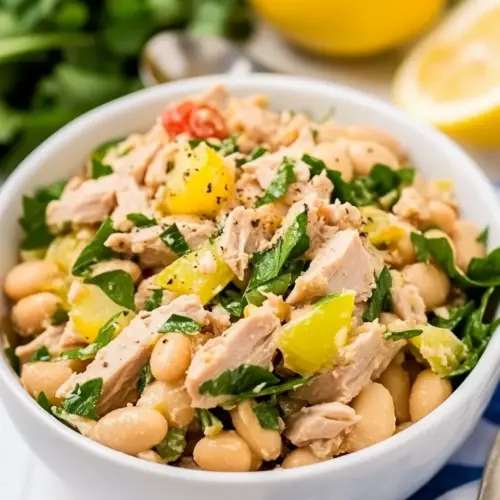
Cannellini Bean Salad
Cannellini Bean Salad is a creamy yet bright mix of tender beans, flaky tuna, and tangy peperoncini, dressed in lemon and olive oil. This easy summer salad is perfect as a light lunch or a shareable side, offering satisfying protein and bold, fresh flavors for an easy weeknight dinner or picnic. Make it for its simplicity and lasting appeal.
Equipment
- Colander
- Mixing Bowl
- Whisk
- Paper towels
- Knife
- Cutting Board
Ingredients
- 2 T fresh-squeezed lemon juice (or more) Add brightness and acidity to the salad, balancing richer components and helping to meld flavors; adjust quantity to taste for desired tang.
- 1 T peperoncini juice (brine from the jar of peperoncini) Provide a tangy, slightly spicy brine that enhances umami and complexity; use measured amount to contribute subtle heat and salinity.
- 5 T extra-virgin olive oil Contribute richness and mouthfeel, carrying and coating flavors while adding a fruity, peppery note; whisk with acids for a cohesive dressing.
- salt and fresh ground black pepper to taste Season and enhance overall flavor profile by amplifying other ingredients and balancing acidity and fat; sprinkle and taste as you go.
- 1 can (15.5 oz.) Cannellini beans (or use any type of white beans) Supply creamy texture and mild, nutty flavor while adding protein and fiber; drain and rinse if desired to control saltiness before folding in.
- two 5 oz. cans tuna packed in olive oil, drained Deliver hearty, savory protein with a rich, oily texture that complements beans and peppers; drain excess oil to control dressing consistency.
- 1 cup sliced Peperoncini peppers (more or less to taste) Introduce piquant heat and crisp, vinegary bite that contrasts creamy beans and tuna; slice to preferred thickness and adjust amount for desired spice level.
- 1 cup chopped parsley (more or less to taste) Add fresh, herbaceous brightness and color while lifting heavier elements; chop to release oils and distribute evenly throughout the salad.
Instructions
- Put the beans into a colander placed in the sink, rinse well with cold water (until no more foam appears) then let beans drain (or blot dry with paper towels if you’re in a hurry!): As you rinse the beans , listen for the gentle patter of water and watch the cloudy foam wash away, a sign the canning liquid is leaving. The cold rinse firms the skin and cools the interior, preserving a pleasant, slightly firm bite. If you blot them dry, you ll notice a satin sheen rather than a soggy surface, which helps the dressing adhere. Doing this prevents a watered down salad, a common pitfall when canned beans are left un-rinsed. Make sure they drain fully so the dressing isn t diluted, and avoid vigorous squeezing that can mash the beans.
- Whisk together the lemon juice, Peperoncini brine, and olive oil, then add salt and fresh ground black pepper to taste. (I used a generous amount of pepper, but not much salt.): As you whisk, the mixture will emulsify into a slightly thickened dressing that glistens under the light, and you ll smell citrus and tangy brine rising up. The acid from the lemon juice brightens flavors while the olive oil smooths them, creating balance. Season gradually because the brine carries salt already, and over salting is the usual mistake here. If the dressing separates, whisk again or give it a quick shake before dressing the salad to restore harmony.
- Combine the drained beans with 2-3 T of dressing and let marinate (in a bowl big enough for the whole salad) while you prep the other ingredients.: The brief marinate allows the beans to absorb flavor without becoming mushy; you ll notice the beans take on a slight sheen and a subtle tang. That first embrace with the dressing builds a base layer of seasoning so later additions don t sit on top as isolated flavors. Avoid over marinating which can cause beans to collapse and turn pasty. Give them time, but not so long that they lose their texture.
- Drain olive oil from the tuna and discard.: After draining, the tuna should flake easily and hold some shape, releasing a savory perfume. Removing excess oil prevents the salad from becoming greasy, while still keeping enough of the tuna s natural richness. A common error is leaving too much oil which can coat the beans and dull the bright notes of the dressing. Use a gentle hand when draining to keep the tuna tender.
- Wash parsley, spin dry or dry with paper towels, then finely chop.: Fresh parsley looks vibrant when properly dried and chopped, giving off a green, herbaceous scent. Finely chopping helps the herb disperse so each forkful gets a hint of freshness. If the parsley is wet, it will water down the salad and dilute the dressing, so make drying a priority. Avoid large ragged pieces which can overpower delicate bites.
- If you're using whole peperoncini cut off stem end and discard, drain peperoncini in a colander, squeeze out seeds and discard seeds, and finely chop or slice.: Cutting into Peperoncini releases a sharp, vinegary aroma and a touch of heat that fills the air. Removing seeds moderates spice and prevents occasional fiery pockets. Slice or chop to your preferred size so the peppers integrate smoothly. A common mistake is leaving whole pieces that dominate a forkful, instead aim for even distribution for consistent flavor.
- Sliced Peperoncini Peppers(affiliate link), so I just measure out the amount I want, which was a full cup for this salad.: When you measure out a full cup, the visual cue of a heaping pile helps you balance pepper to bean ratio. The peppers should look vibrant against the pale beans . If using more or fewer, trust your palate, but remember that the peppers bring both acidity and heat, so small changes make a noticeable difference. Avoid packing them too tightly into the cup measure which can lead to unexpectedly intense pepper presence.
- Mix the drained tuna into the marinating beans.: As you fold the flaked tuna into the beans , listen for a soft shuffling sound and watch the tuna break into tender flakes that nestle among the beans. Folding gently preserves the texture of both elements and ensures even distribution. Being heavy handed can turn the mix into an indistinct mash, so use a light touch. The tuna s savory notes will marry with the dressing, enriching the overall flavor profile.
- Add chopped parsley and chopped or sliced Peperoncini and gently combine.: Adding the chopped parsley and Peperoncini introduces bright color and contrasting textures. As you gently combine, the salad will take on a lively look with flecks of green and red throughout. This final gentle mix helps coat everything with dressing without breaking the beans apart. Avoid over stirring which can create a uniform paste rather than a composed salad.
- Add additional dressing until the salad seems wet enough to you.: Tasting as you add is key; the right level of dressing makes the salad glossy and speaks to balance. The salad should feel lively on the palate, not cloying or dry. Err on the side of less, as you can always add more. A common pitfall is saturating the salad which masks the individual flavors. Aim for a thin, even sheen across the ingredients.
- Season to taste with additional salt and fresh ground black pepper if desired, and serve.: Final seasoning should be done after a taste test, because the ensemble may have absorbed salt from the brine or the tuna. Fresh ground black pepper adds a fragrant finish, and a small sprinkle of salt can amplify flavors without being noticeable as salt. Over seasoning at this stage is irreversible, so proceed incrementally. Serve either chilled or room temperature based on your preference.
- This can be served room temperature or chilled.: Serving temperature changes perception; chilled will feel more refreshing while room temperature brings out aromatics. If you chill, allow it to sit out a few minutes before serving so the flavors bloom. A mistake is serving straight from refrigerator and not allowing aromatics to soften, which can mute the salad s nuances.
- This salad will stay good in the refrigerator for a day or two, and would be great for a lunch salad.: Stored properly, flavors continue to meld and the texture remains pleasing for a short period. Keep it in an airtight container to preserve freshness. Avoid keeping it much longer, as the beans may begin to break down and the peppers can lose their snap. Use within two days for best quality.
Notes
- Measure the acid carefully, start with the stated lemon juice and add more only after tasting to maintain bright balance without overpowering the beans.
- Use the peperoncini brine sparingly, because it s concentrated; a little goes a long way toward seasoning and acidity.
- Dry your parsley well, wet herbs dilute the dressing and can make the salad watery, so use a salad spinner or paper towels.
- Drain tuna thoroughly, remove excess oil so the salad does not become greasy, while still keeping the tuna moist and tender.
- Dress in stages, add a portion of dressing to the beans first to let them absorb flavor, then finish with more to achieve the desired sheen and mouthfeel.