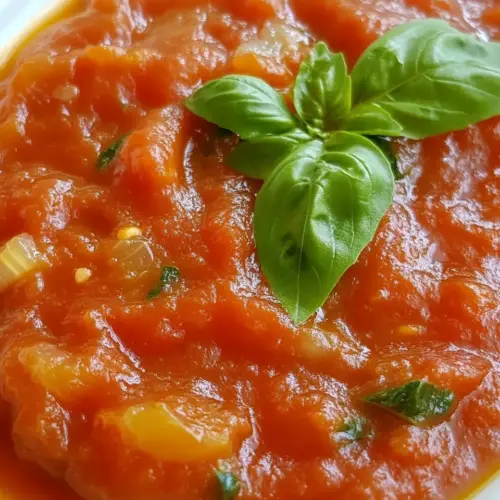
Candied Tomato Sauce
Candied Tomato Sauce is a jammy, herb kissed tomato sauce with concentrated sweet and savory notes. Creamy yet rustic, it transforms simple pasta into an easy weeknight dinner or a special weekend meal. Bright herbs and slow roasting create depth and aroma, making it worth preparing ahead for richer flavor.
Equipment
- Oven
- Cookie Sheet
- Food Processor
Ingredients
- 12 ripe Roma tomatoes Provide body and natural sweetness by roasting or candying the tomatoes until concentrated; they form the sauce’s base and supply both texture and flavor while releasing natural pectins that help thicken without added thickeners.
- salt Enhance and balance overall flavor by seasoning during cooking to control acidity and bring out the tomatoes’ natural sweetness; use sparingly at multiple stages to taste and prevent over-salting.
- 1 tsp fresh thyme Add a subtle earthy, floral note when stripped from stems and finely chopped into the sauce; thyme complements tomato acidity and deepens savory complexity without overpowering.
- 1 tsp fresh oregano Contribute a warm, slightly peppery herbal depth when minced and stirred into the sauce; oregano pairs with tomato and thyme to create a Mediterranean herb profile that supports umami.
- olive oil spray Facilitate light, even browning and prevent sticking when lightly sprayed before roasting or caramelizing; using a spray allows minimal oil for crisp edges without saturating the tomatoes.
- 2 tbsp fresh basil, chopped Introduce bright, fresh aromatic lift when chopped and stirred in near the end of cooking; basil provides a fragrant finish and a contrasting green freshness to the candied tomato sweetness.
Instructions
- Preheat oven to 325°.: The kitchen fills with a warm, anticipatory scent as you set the oven, creating an even, low heat that slowly teases sugars out of the tomatoes . You should feel a gentle warmth rather than intense heat around the oven door, and this lower temperature prevents the outsides from burning before the centers concentrate. Listen for silence from the oven after the initial click, it should hum steadily. A common mistake is cranking the heat up, which leads to uneven caramelization and charred edges instead of the desired candied texture.
- Slice tomatoes in half.: Cutting the tomatoes exposes the inner flesh so moisture can evaporate and sugars can concentrate. The cut surfaces will glisten and begin to darken as they roast, and you can already smell a lightly sweet aroma. Use a sharp knife to get clean halves, because jagged cuts can bruise the fruit and release excess liquid prematurely. Avoid slicing into too small pieces, which can overcook and dry out.
- Season with salt, basil, oregano and thyme.: Right after slicing, the sprinkle of salt draws out moisture while the herbs begin infusing their oils into the fruit. The surface should look lightly dusted rather than drenched, and you may notice the herbs clinging to the tomato flesh. This early seasoning builds flavor layers that deepen during roasting. Over seasoning at this point can make the sauce abruptly salty, so err on the light side and adjust after pureeing.
- Spray a cookie sheet with olive oil spray and place tomatoes cut side up.: Arranging the tomatoes cut side up allows the centers to retain some moisture while the rims reduce and caramelize. The light film of olive oil helps blister the skin and prevents sticking, creating those crusty bottoms described in the bake. You should hear a faint sizzle as the tray enters the hot oven, an encouraging sound that signals caramelization will occur. Using too much oil will cause shallow frying rather than slow roasting, so keep the coating minimal.
- Bake 2 hrs until skin gets wrinkled and crusty on the bottom and moist in the center.: Over the course of baking, aromas intensify and the kitchen will smell richly herbaceous and sweet. Visually, the skins will pucker, and the bases will take on a darker, almost jam like hue. Touch is helpful here, the flesh should feel soft but not watery. A frequent error is removing the tomatoes too soon, when they are merely softened rather than concentrated, which leads to a thinner, less flavorful sauce.
- Puree the tomatoes in a food processor.: As you blend the roasted tomatoes , the sound transitions from a loud whirl to a smoother hum, and you will see the sauce transform into a glossy, velvety texture. The heat helps the flavors meld during pureeing, producing a cohesive mouthfeel. If you prefer a chunkier texture, pulse a few times rather than fully liquefying. Overprocessing can make it too thin and silky if you were aiming for rustic body.
- If it is too thick, you can thin with pasta water.: Adding a splash of starchy pasta water loosens the sauce and allows it to cling to noodles beautifully, thanks to the dissolved starch. The sound of the sauce ladled into a hot skillet and stirred with water is comforting, and you will see it loosen while still coating the back of a spoon. A mistake to avoid is using plain water from the tap, which lacks the binding starch and can make the sauce taste diluted, rather than silkier.
- Serve over your favorite high fiber pasta and grated cheese.: When the sauce meets hot pasta , steam rises carrying the herb and tomato notes, and you will hear a light, satisfying slurp as it is twirled. The contrast of warm sauce and cool grated cheese creates pleasing textural and temperature interplay. Be mindful not to overload the pasta plate, as too much sauce overwhelms the noodle texture. Serving immediately preserves the fresh basil aroma and the saucy gloss.
Notes
- Roast longer for a jammy concentrate If you want an even thicker, almost spreadable sauce, extend the roasting time by an extra 20 to 30 minutes while keeping the same low oven temperature. The aroma will intensify and sugars will caramelize further. Watch for any signs of burning at the edges, and rotate the tray if your oven has hot spots.
- Keep it chunky for rustic texture Pulse the roasted tomatoes briefly in the food processor rather than fully pureeing, so you retain bits of softened flesh and skin which add body and a homemade feel to pasta or bruschetta. This approach also shortens blending time and preserves more individual herb pockets within the sauce.
- Use pasta water to perfect consistency Instead of thinning with plain water, stir in a few tablespoons of warm starchy pasta water to loosen the sauce. The starch helps it cling to noodles and creates a silkier mouthfeel without diluting flavor. Start with small amounts and adjust until the sauce coats the spoon comfortably.
- Make ahead and rest to deepen flavor Store the sauce in the fridge overnight to allow flavors to marry; the following day the herb and tomato notes will taste more unified. Reheat gently on the stovetop to preserve texture and aroma, avoiding rapid boiling which can dull freshness.
- Finish with fresh basil for brightness Add the chopped basil just before serving, so the heat releases the oils without destroying the herb's aroma. This keeps the final dish fragrant and lively, contrasting the deeper roasted notes of the sauce.