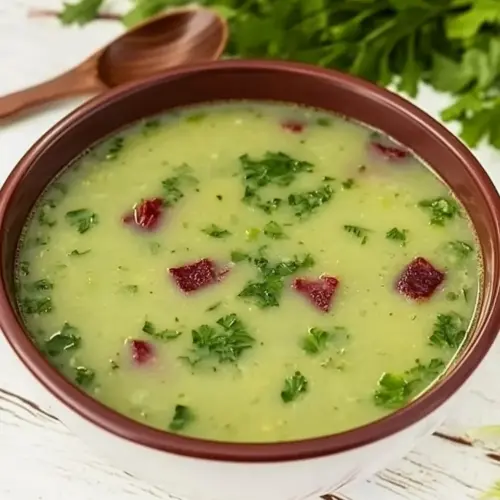
Caldo Verde
Caldo Verde is a creamy, rustic Portuguese green soup made with puréed potatoes, savory sausage, and ribbons of tender collard greens. This easy weeknight soup is comforting, aromatic, and quick to pull together, offering bright olive oil finish and simple pantry ingredients. Make it for chilly evenings when you want something satisfying yet elegant to share.
Equipment
- Large Pot
- Immersion Blender
- Slotted Spoon
Ingredients
- 1/2 pound linguiça, chouriço, or Spanish chorizo, sliced into 1/4 to 1/2 inch rounds Sliced into 1/4 to 1/2 inch rounds and browned to release spicy, smoky oils that flavor the broth and add hearty texture to the soup.
- 1/4 cup extra virgin olive oil Used to create a silky base and carry flavors; added early to gently infuse the pan and soup with rich, fruity fat for depth.
- 1 large yellow onion, chopped Chopped finely and softened to develop sweet aromatics that balance the sausage and potatoes; sweated until translucent to build the flavor foundation.
- 4 cloves garlic, minced Minced and cooked briefly to provide pungent, savory aroma that enhances overall complexity; added after the onion to avoid burning and to meld with other aromatics.
- 8 cups quality chicken broth Simmered as the primary cooking liquid that concentrates flavors from the sausage, aromatics, and potatoes; chosen for a clean, savory backbone to the soup.
- 4 medium yellow potatoes such as Yukon Gold, peeled and cut into small cubes Peeled and cubed to thicken the broth as they break down while simmering; contribute creamy texture and mild, buttery taste characteristic of the dish.
- 1 pound collard greens (can substitute kale), thick stems removed, leaves cut into ultra thin slices (not chopped) Cut into ultra thin slices to provide tender, slightly bitter greens that brighten the soup; added near the end to preserve color and delicate texture.
- 1 teaspoon ea salt Measured to season and lift all components; dissolved into the broth to enhance natural flavors without overwhelming the dish.
- 1/4 teaspoon freshly ground black pepper Freshly ground to add a sharp, warm counterpoint that heightens savory notes; sprinkled to taste for balanced seasoning.
- extra olive oil for serving Drizzled at serving to add a final glossy sheen and fruity finish; used sparingly to amplify aroma and mouthfeel without altering core flavors.
Instructions
- Heat the oil in a large pot over medium heat, add the sausage and fry for 3-4 minutes. Use a slotted spoon to transfer the sausage to a plate (leaving the sausage drippings in the pot) and reserve until serving.: The pan will sizzle gently as the sausage hits the warm oil, releasing a fragrant, spiced steam that tells you the fats are rendering. You want the edges of the rounds to develop a light golden color, with some caramelized bits clinging to the pan. This browning creates Maillard notes that later flavor the broth. If the sausage steams instead of browns, the heat is too low, so raise it slightly; avoid cooking until the slices become hard, which makes them chewier and less pleasant to bite.
- Add the onions to the pot and cook them until soft and translucent, 2-3 minutes. Add the garlic and cook for another minute. Add the chicken broth, potatoes and salt, bring to a boil, reduce the heat and simmer, covered, for 15-20 minutes until the potatoes are tender. Use an immersion blender to puree the potatoes (you can decide whether to puree all or part of them). Add the kale and simmer for another 2-3 minutes until the kale is wilted and tender. Add salt and pepper to taste.: Softening the onion in the leftover drippings draws out sweet, mellow flavors that become the base of the soup. You should see the onions turn glossy and lose their raw opacity, and you may hear a faint gentle sizzle as moisture cooks away. Because this step builds foundational flavor, do not rush it by turning the heat too high, or you risk browning and changing the character of the broth. A common misstep is undercooking the onion, which leaves a sharp bite in the finished soup.
- Ladle the soup into bowls and add a few slices of the reserved sausage. If desired, drizzle each serving with some additional olive oil. Serve with some crusty or rustic bread.: As you add the minced garlic , a quick fragrant burst will rise, warm and slightly sweet. Cook just until that aroma lifts, about a minute, since garlic can quickly go from fragrant to bitter. Stir constantly during this brief window to distribute the garlic evenly and prevent burning, which would impart an acrid note.
- Add the chicken broth, potatoes and salt, bring to a boil, reduce the heat and simmer, covered, for 15 to 20 minutes until the potatoes are tender.: When the chicken broth joins the pot the aroma will deepen, and soon you will see small rolling bubbles as it comes to a boil. Covering the pot traps steam and speeds the cooking of the cubed potatoes . You are looking for the potatoes to be completely tender when pierced with a fork, signaling they are ready for blending. If potatoes are underdone, the purée will feel grainy; overcooking risks them falling apart too much before blending, though that is less serious here.
- Use an immersion blender to puree the potatoes (you can decide whether to puree all or part of them).: The immersion blender will transform the broth from clear to velvety, marrying the starchy body of the potatoes with the stock. Puree until you reach a silky consistency, or leave some chunks for a more rustic mouthfeel. While blending, keep the blender head fully submerged to avoid splatter. A key error is over-blending at high speed which can become gluey; pulse gently to control texture.
- Add the kale and simmer for another 2 to 3 minutes until the kale is wilted and tender.: As the thinly sliced collard greens hit the hot soup they will darken and soften quickly, releasing an earthy scent. The short simmer preserves a slight bite without toughness, integrating the ribbons throughout the soup. If you add the greens too early they may overcook and become limp, losing pleasant texture, so time this step close to serving.
- Add salt and pepper to taste.: Tasting here is crucial, because the blended potatoes , chicken broth , and reserved sausage have each contributed saltiness. Adjust gradually, tasting between additions, and finish with a few cracks of freshly ground black pepper for brightness. A common pitfall is over-salting, so err on the side of slightly under-seasoned, as adjustments can still be made at the table.
- Ladle the soup into bowls and add a few slices of the reserved sausage.: As you ladle, notice the creamy sheen on the surface and how the thin green ribbons float and curl. Placing a few of the browned sausage rounds on top adds texture contrast and visual appeal. If you add them too early they will lose their crisp edges, so reserve them for the finish. Avoid cramming too many slices into each bowl, which can overpower the soup.
- If desired, drizzle each serving with some additional olive oil.: The final drizzle of extra virgin olive oil releases a fragrant perfume and creates a glossy finish that brightens every spoonful. Use sparingly and taste, because a small amount goes a long way. A mistake is using a low quality oil that masks delicate flavors rather than enhancing them.
- Serve with some crusty or rustic bread.: The gentle crunch and tactile contrast of a torn piece of warm bread makes the soup feel complete, soaking up the broth and carrying flavor to each bite. If your bread is too soft it will disintegrate quickly, so choose a rustic loaf or crusty roll to enjoy the contrast.
Notes
- Sauteed Sausage Swap: Use linguiça, chouriço, or Spanish chorizo as listed, and adjust frying time to render flavor without drying slices. Each sausage choice will shift smokiness and spice, so taste the pan drippings before proceeding to judge salt levels.
- Broth Upgrade: If available, use homemade chicken broth or a rich stock to deepen the base; a gelatinous homemade stock yields more body and mouthfeel than most store bought options.
- Greens Choice: Substitute kale if you prefer a slightly more assertive green; make sure stems are removed and leaves sliced ultra thin so they wilt evenly and avoid toughness.
- Texture Control: Purée only half of the potatoes for a rustic texture with creamy body and soft chunks; this gives a pleasing mouthfeel and prevents a completely uniform soup.
- Finish With Oil: Always drizzle a little extra virgin olive oil at the end to lift aromatics and add a luxurious sheen; it is a small step with a big payoff in flavor perception.