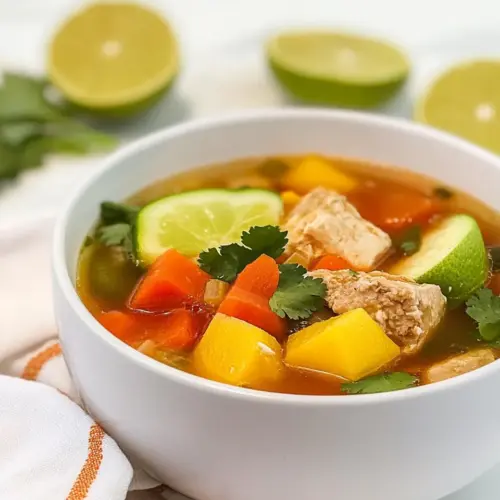
Caldo Tlalpeno
Caldo Tlalpeno is a smoky, comforting Mexican chicken soup with tender shredded chicken, hearty chickpeas, and bright finishes of avocado and lime. This easy weeknight dinner combines savory chicken broth and a touch of chipotle for warming depth, making it a cozy, flavorful meal to share. Make it for a nourishing family supper or when you want a bowl that tastes like home.
Equipment
- Large Pot
- Separate pot
- Ladle
Ingredients
- 6 cups chicken broth Simmer to build the soup's savory base, providing a rich, comforting broth that carries all flavors; use low-sodium if you want more control over saltiness and simmer briefly after adding other components to meld tastes.
- 1 large chicken breast Poach to add tender, protein-rich meat that soaks up the broth; shred or cube after cooking to disperse texture and make the soup hearty and satisfying.
- 1 tablespoon olive oil Heat to sauté aromatics and brown the chicken if desired, contributing a subtle caramelized flavor and preventing sticking; use a neutral oil and moderate heat to avoid burning.
- 1 medium white onion diced Sauté to release sweet, savory notes that form the aromatic foundation; dice finely to distribute evenly and cook until translucent to mellow raw sharpness.
- 2 cloves garlic minced Mince to infuse a pungent, aromatic punch throughout the broth; add early in the sautéing stage to bloom flavors and avoid bitter burnt garlic.
- 1 chipotle pepper in adobo sauce finely chopped Chop finely to impart smoky, spicy heat and complex flavor from adobo; adjust quantity to control smokiness and add during sautéing or with the tomatoes for even distribution.
- 1 cup diced tomatoes Dice to introduce bright acidity and body, helping to balance the smoky chipotle and rich broth; add with other vegetables to cook down slightly while preserving some texture.
- 1 cup sliced carrots Slice to provide sweet, tender vegetable bites that complement the soup's heartiness; add early enough to become fork-tender but maintain some structure.
- 1 cup chopped green beans Chop to contribute a fresh, crisp vegetable element with a slight snap, adding variety in texture; add with other vegetables so they cook through without becoming mushy.
- 1 cup cooked chickpeas Add cooked to boost protein and fiber while lending a creamy, nutty texture; stir in toward the end to warm through without breaking apart.
- 1/2 cup chopped fresh cilantro Chop to give a bright, herbal finish that lifts and brightens the soup's flavors; fold in near the end to preserve color and fresh aroma.
- 1 avocado diced Dice to provide a cool, creamy contrast that mellows heat and adds richness; add just before serving so avocado retains shape and freshness.
- 1 lime cut into wedges Cut into wedges to supply zesty acidity that balances richness and elevates flavors; squeeze over individual bowls to taste and avoid pre-mixing to keep juice fresh.
Instructions
- In a large pot, add the chicken breast to the chicken broth and bring to a boil. Reduce heat to simmer and cook until chicken is fully cooked and tender, about 30 minutes. Remove chicken, shred it, and set aside. Reserve the pot of broth.: The kitchen will fill with a comforting, meaty steam as the chicken broth warms and starts to simmer, a sign the flavors are loosening from the meat. You want to see a steady rolling motion in the liquid but not a violent boil, because vigorous boiling can toughen the chicken breast and cloud the broth. A common mistake here is cranking the heat too high, which leads to a scummy surface; skim gently if foam appears, and reduce to maintain gentle movement so the broth stays clear and the meat remains tender.
- In a separate pot, heat olive oil over medium heat. Add onions and garlic, sauté until translucent. Stir in chipotle pepper and diced tomatoes and cook for 5 minutes.: As the pot simmers, you will notice faint bubbles and a deepening aroma of roasted meat. The chicken breast should feel firm yet yield easily when tested with tongs or a fork. The reason for a gentle simmer is to extract collagen and flavor without drawing out too much moisture, preserving juicy shredded meat. Avoid the mistake of rushing by increasing heat, which makes tough fibers; patience here rewards you with silkier texture.
- Add carrots, green beans, and chickpeas to the pot. Pour in the broth and bring to a simmer. Cook until vegetables are tender, about 20 minutes. Add shredded chicken back to the pot and heat through.: When you lift the chicken breast from the broth the meat should pull apart into tender shreds with little resistance, releasing savory steam and a faint sweetness. Shredding by hand keeps irregular pieces that soak up broth beautifully, and setting it aside prevents overcooking. A pitfall is shredding while the meat is still too hot to handle safely; let it cool briefly so you can shred without tearing the meat into tiny bits.
- Ladle soup into bowls. Garnish with fresh cilantro, diced avocado, and a wedge of lime.: The reserved liquid has concentrated flavor from the cooked chicken breast , appearing aromatic and slightly glossier. Keep it at a gentle simmer so it does not reduce too fast and become overly salty. If you notice an overly intense saltiness, adding a small splash of water and tasting can recalibrate the balance.
- In a separate pot, heat olive oil over medium heat: The oil will shimmer and thin as it warms, releasing a delicate nutty scent from the olive oil . Heating to medium ensures the fat melts aromatics without burning. If the oil smokes, lower the heat; smoking indicates excessive temperature and will introduce a harsh flavor to the sauté.
- Add onions and garlic, sauté until translucent: As you cook the diced onion diced , it will soften and become translucent, giving off a sweet, gentle aroma. Add the minced garlic minced once the onions are nearly soft so the garlic releases fragrant oils without charring. Stir frequently to prevent sticking, and watch closely because burnt garlic turns bitter and will spoil the base.
- Stir in chipotle pepper and diced tomatoes and cook for 5 minutes: When the chopped chipotle pepper in adobo sauce finely chopped hits the pan the air will take on a smoky, peppery note, and the diced tomatoes will begin to soften and release bright juices. Cooking them briefly concentrates flavors and melds the smoky heat into the aromatic base. Make sure to stir to avoid hot spots; uneven cooking can cause tomatoes to stick and slightly char, which changes the intended flavor.
- Add carrots, green beans, and chickpeas to the pot: Dropping in the sliced carrots , chopped green beans , and cooked chickpeas introduces color and textural contrast, and you will hear a gentle sizzle as they hit the hot pan. This step is important because the vegetables start releasing their sweet juices which marry with the tomato mixture, creating a layered palate. Avoid crowding the pot which can steam instead of sautéing; give them a moment to mingle with the aromatics before moving on.
- Pour in the broth and bring to a simmer: As the reserved chicken broth returns to the pot it will thin and unify the sautéed mixture, filling the room with a rounded savory steam. Bring to a gentle simmer so flavors meld and the vegetables cook through without disintegrating. A mistake to avoid is boiling vigorously, which will break down the vegetables and make the broth cloudy.
- Cook until vegetables are tender, about 20 minutes: You want the carrots to be fork tender but maintain a slight bite, and the green beans to remain bright and not mushy. Taste periodically to judge doneness, because overcooked vegetables will make the texture one dimensional. If the broth reduces too much during this time, top up with a splash of water to maintain the intended liquid level.
- Add shredded chicken back to the pot and heat through: Returning the shredded chicken warms its fibers and allows it to absorb the seasoned broth, adding meaty depth to each spoonful. Stir gently so the strands integrate without breaking apart. Avoid reheating on high heat for too long, which can dry the chicken ; a brief warm through keeps it succulent.
- Ladle soup into bowls: The act of ladling releases a fragrant steam that carries the layered aromas to your nose, and you should see a clear, amber broth alive with vegetables and shredded chicken . Serve promptly so the textures remain as intended; letting it sit too long will soften the garnishes and dilute some brightness.
- Garnish with fresh cilantro, diced avocado, and a wedge of lime: Finish each bowl with chopped cilantro , diced avocado , and a wedge of lime cut into wedges . The herbaceous cilantro and creamy avocado provide contrast while the lime adds lively acidity. Add these just before serving to preserve their texture and vibrancy, because prolonged contact with hot broth will wilt the cilantro and soften the avocado excessively.
Notes
- Control the salt early, start with a low sodium chicken broth and taste as you cook so you do not oversalt when liquids reduce during simmering.
- Temper the heat, add the chopped chipotle pepper in adobo sauce finely chopped gradually; its smoky intensity can dominate if added all at once.
- Preserve textures, stagger the addition of vegetables so firmer items like carrots cook longer and quicker items like green beans stay slightly crisp.
- Finish with freshness, always add chopped cilantro and diced avocado right before serving to maintain color and texture contrast.
- Keep the broth clear, maintain a gentle simmer and skim any foam early to keep the liquid bright and clean in appearance.