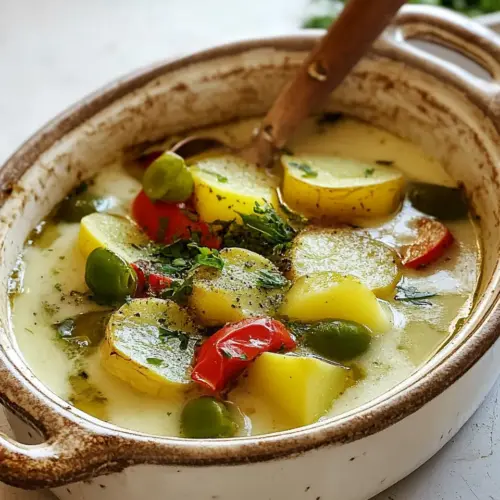
Caldo de Queso Con Papas
Caldo de Queso Con Papas is a creamy, smoky Mexican soup featuring tender potatoes, roasted peppers, and soft diced queso fresco. This easy weeknight dinner delivers comforting textures and bright tomato notes, perfect for chilly winter evenings. Make it for family dinners when you want a warming bowl that is simple to prepare yet deeply satisfying.
Equipment
- Large Pot
- Broiler or gas flame
- Mixing Bowl
- Knife
- Ladle
Ingredients
- 4 Anaheim or poblano peppers roasted and cut into strips Roasted and sliced to impart a smoky, mildly spicy flavor that complements the broth; strips add texture and visual interest while contributing gentle heat from the skins.
- 2 tablespoons olive oil Used to gently sauté aromatics and provide a smooth cooking medium; oil helps transfer heat evenly, coaxing flavors from the onion and peppers while preventing sticking.
- 1 white onion chopped Chopped to release sweet, savory aromatics that form the flavor base; cooking the onion softens its bite and adds depth to the soup’s broth.
- 1 pound potatoes peeled and diced Peeled and diced to create tender, starchy chunks that thicken the soup slightly as they cook; potatoes provide hearty body and absorb surrounding flavors.
- 6 cups low-sodium chicken broth Poured in to create the liquid foundation of the soup, delivering savory, umami-rich flavor and simmering the vegetables until tender.
- 1/2 pound Roma tomatoes peeled and diced Peeled and chopped to contribute bright acidity and a fresh, slightly sweet note that balances the richness of the cheese and broth.
- 1/2 cup low-fat milk Added in a small amount to lend creaminess and mellow the broth without overpowering; milk smooths texture and integrates flavors.
- 1 pound queso fresco cheese diced Diced and folded in to add salty, crumbly creaminess that softens in the heat; cheese contributes a mild tang and traditional character to the dish.
- Crushed red pepper flakes to taste (optional) Sprinkled sparingly to introduce adjustable heat and a touch of chili flavor; flakes allow diners to customize spiciness to taste.
Instructions
- Roast the peppers over a gas flame or broiler until the skin has blackened. Place them in a bowl, cover to steam, then peel, seed, and cut into strips.: You will notice an immediate aroma of char and a deepening color as the skins blister and blacken, signaling the release of smoky oils. After charring, place the peppers in a bowl and cover them to steam for about 10 minutes, this makes the skins loosen and peel away easily. Why this matters, the steam helps separate the burnt skin from the flesh so you retain the smoky flavor without bitterness. Sensory cues include the sound of small pops from the skin and a toasted scent that fills the kitchen. A common mistake to avoid is leaving them under the broiler too long, which can lead to a burnt, bitter taste instead of pleasant smokiness. When peeling, use your fingers to gently rub off the loosened skin, and remove seeds if you want milder heat.
- In a large pot, heat the olive oil over medium heat and sauté the onions until translucent. Add the diced potatoes and chicken broth, then bring to a simmer.: As the peppers steam, you'll feel the bowl warm and see condensation form, an indicator they are ready to peel. The flesh underneath should be soft and fragrant, with glossy, smoky notes. Removing seeds reduces bitterness and unpredictable heat pockets, creating consistent bites when you add strips to the soup. A common pitfall is not letting them steam long enough, which makes peeling sticky and tedious. Use a small paring knife to split and remove tough stems, then slice into even strips for uniform texture in the final dish.
- Cook the potatoes in the simmering broth until tender, about 20 minutes.: As the olive oil warms, it will shimmer slightly, and you will smell a gentle fruitiness. Add the chopped white onion and stir until it softens and becomes translucent, releasing sweet aromatics into the pan. This softening step mellows sharp onion flavors and creates a savory base that melds with the broth. You may hear light sizzling as the onion sweats; that sound should be steady but not aggressive. Avoid browning the onion too quickly, which can add a bitter edge. If they begin to brown, reduce the heat and add a splash of broth to cool the pan.
- Add the peeled and diced Roma tomatoes, roasted pepper strips, and milk to the pot. Let it simmer for a few more minutes.: When you add the diced potatoes to the pot, you'll notice the color contrast and the mild earthy aroma they bring. Pour in the chicken broth , which should cover the potatoes by about one to two inches. Increase heat until small bubbles appear at the surface and then lower to maintain a gentle simmer. Simmering rather than boiling ensures the potatoes cook evenly without breaking apart. The gentle bubbling sound and a steady steam plume are your cues. A frequent error is boiling too hard, which can turn the potatoes fluffier and cause them to disintegrate, making the soup too starchy.
- Place the diced queso fresco in serving bowls. Ladle the hot soup over the cheese, allowing it to melt slightly. If desired, top with crushed red pepper flakes. Serve with warm tortillas or crusty bread.: During this time the broth will take on a slightly clouded appearance as starches leach from the potatoes , and the kitchen will smell heartier. Test tenderness by piercing a cube with a fork, it should slide off easily but the piece should still hold its shape. This texture balance is important for mouthfeel; you want soft but not mushy. If pieces are cooking unevenly, check that they are similar sizes and that the simmer is consistent. Overcooking leads to too-soft pieces and a thicker, less textured soup, while undercooking leaves unpleasantly firm potatoes .
- Add the peeled and diced Roma tomatoes, roasted pepper strips, and milk to the pot: At this stage, adding the peeled, diced Roma tomatoes brightens the broth with a fresh, slightly acidic lift, and the roasted strips contribute smoky depth. The addition of low fat milk will soften flavors and create a gentle creaminess without heaviness. When you stir these in, you should hear a subtle change in the simmer, and the aroma should be more complex, with sweet tomato notes balancing the roast. Adding milk too early or at high heat risks curdling, so lower the heat before stirring it in. A common mistake is neglecting to peel the tomatoes, which can leave bits of skin floating in the soup.
- Let it simmer for a few more minutes: Allowing the pot to rest on low heat for several minutes lets the flavors marry, and the broth will slightly thicken as starches continue to integrate. You will notice a melded aroma where smoke, broth, and tomato coexist. Keep the simmer gentle and stir occasionally to prevent settling. This pause also ensures temperatures even out before serving. Avoid prolonged boiling here as it can break down the delicate added ingredients and mute the freshness of the Roma tomatoes .
- Place the diced queso fresco in serving bowls: Preparing the bowls with diced queso fresco first creates a lovely contrast between cool, soft cheese and piping hot soup. The cheese pieces will begin to soften just from residual heat, and when the hot broth is ladled over, they create creamy pockets that feel luxurious against the tender potatoes . Be mindful that some cheeses can melt away completely, but with queso fresco you should retain pleasant chew and a milky finish. A misstep here is adding too large cubes that take longer to soften, or too small ones that almost disappear.
- Ladle the hot soup over the cheese, allowing it to melt slightly: As you pour the simmering soup, the steam will lift and the cheese will soften at the edges, producing a delicate melt rather than complete dissolution. This interaction is textural gold, combining warm broth, softened cheese, and tender potatoes . You will see slight curdling on the surface where cheese meets heat, which is desirable here. Avoid dumping the pot in one motion, instead ladle slowly to control how much cheese melts; this preserves some texture contrasts in each spoonful.
- If desired, top with crushed red pepper flakes: Sprinkling crushed red pepper flakes at service adds a bright, immediate heat that lifts the bowl. The flakes contrast with the creamy elements and empower each bite with a little kick. Offer them as optional at the table so diners can personalize their spice level. A common mistake is overapplying them too early, which can overwhelm the smoky and savory notes of the soup.
- Serve with warm tortillas or crusty bread: The act of tearing warm tortillas or bread and dipping into the soup enhances the communal, comforting quality of the meal. Texturally, it provides a chewy or crusty counterpoint to the tender potatoes and soft queso fresco . Serve immediately while the soup is hot to enjoy the melting cheese effect. Reheating later will change the texture of the potatoes slightly, so fresh service is best.
Notes
- Try different peppers Replace Anaheim or poblano peppers with milder or hotter peppers to adjust smoke and heat, roasting them the same way to keep that charred depth.
- Adjust milk for creaminess Use whole milk instead of low fat milk for a richer finish, adding it at low heat to keep the soup smooth and silky.
- Control the salt Start with low sodium chicken broth and salt at the end, tasting after the cheese melts to avoid over seasoning.
- Make it chunkier Leave some larger potato pieces if you prefer more bite, cutting a portion into bigger cubes before simmering.
- Streamline prep Roast peppers in advance and store peeled strips refrigerated to save time on busy nights, then rewarm gently before adding to the pot.
- Serve at the table Offer crushed red pepper flakes and extra diced queso fresco so guests can customize heat and creaminess per bowl.