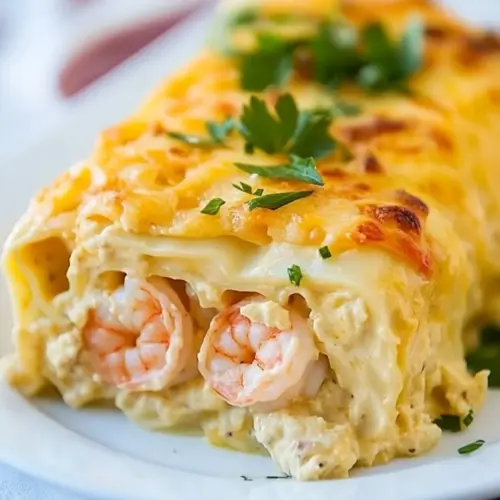
Cajun Shrimp Lasagna Roll Ups
Cajun Shrimp Lasagna Roll Ups combine spicy Andouille sausage, tender shrimp, and creamy cheese sauce into a unique, comforting pasta bake. With a golden, bubbling top and a velvety interior, this easy weeknight dinner delivers bold Cajun flavor without fuss. It’s a crowd pleasing dish that looks impressive and tastes irresistible, the perfect reason to try it tonight.
Equipment
- Large Nonstick Skillet
- Medium Saucepan
- Casserole Dish
- Whisk
Ingredients
- 1 tablespoon olive oil Sauté briefly in a skillet to develop flavor and serve as the aromatic fat for browning other ingredients; provides a healthy base and helps carry the spices throughout the dish. Adds subtle fruitiness and helps prevent sticking while simmering fillings or sauces.
- 1 cup diced Andouille sausage Brown evenly to render fat and impart smoky, savory depth; contributes hearty texture and authentic Cajun character to the filling. Enhances the overall umami profile and pairs well with the shrimp and spices for a robust filling.
- 1 medium onion, diced Sweat gently until translucent to release natural sweetness and build a savory foundation for the sauce; offers texture and balances spicy elements. Works with garlic and sausage to create a layered aromatic base for the roll-up filling.
- 3 garlic cloves, minced Mince finely and cook briefly to release pungent, aromatic oils that boost savory complexity; complements onions and sausage for a well-rounded flavor base. Adds bright, aromatic notes that enhance the seafood and cheese components.
- 1 1/2 pounds medium shrimp, peeled and deveined Sear quickly until just opaque to keep tender texture while absorbing seasonings; serves as the primary protein and pairs with the andouille for contrasting savory flavors. Provides a sweet, briny element that balances the creamy cheeses and spicy seasonings.
- 1 (14.5-ounce) can petite diced tomatoes, drained Drain and fold into the filling to add bursts of bright tomato flavor and acidity; contributes moistness and a subtle sweet-tart contrast to creamy cheeses. Helps cut through the richness of the béchamel and cheeses for a more balanced roll-up.
- 2 teaspoons Cajun seasoning Sprinkle evenly to provide warm, spicy, and smoky notes characteristic of Cajun cuisine; ties together the sausage, shrimp, and cheese with cohesive seasoning. Adjust quantity to control heat and depth of flavor throughout the filling.
- 3/4 cup cottage cheese or ricotta cheese Spread or dollop inside noodles to add creaminess and mild tang; offers a smooth texture that keeps the filling moist and cohesive. Melts slightly when baked and blends with other cheeses for a luscious interior.
- 1/4 cup butter Melt slowly to form a rich, buttery base for a white sauce; contributes silkiness and depth to the béchamel used in the roll-ups. Also helps create a golden finish and adds richness to the overall dish.
- 1/4 cup all-purpose flour Whisk into melted butter to thicken into a roux that stabilizes the béchamel sauce; provides necessary structure and prevents separation. Cooks briefly to remove raw flour taste and ensures a smooth, velvety sauce.
- 2 cups milk Warm gradually into the roux to create a creamy béchamel that binds the filling and adds moisture; moderates the sauce consistency for proper coating of noodles. Infuses the dish with a milky backdrop that complements the cheeses and seafood.
- 1 1/2 cups shredded sharp cheddar cheese Grate and stir into the sauce and filling to add sharp, tangy cheddar flavor and melty texture; contributes color and savory bite that balances creaminess. Helps create a cohesive, flavorful interior and a satisfying cheesy element when baked.
- 8 lasagna noodles, cooked and drained Boil until tender and drain before rolling to provide the structural wrappers for the filling; offers a neutral base that holds fillings and sauces without falling apart. Properly cooked noodles prevent tearing and ensure neat, uniform roll-ups.
- 1 cup shredded pepper jack cheese Sprinkle on top or inside for spicy, melty finish that delivers creamy heat and peppery tang; melts to form a slightly stretchy, zesty topping. Enhances visual appeal and adds a lively kick to complement the Cajun seasoning.
Instructions
- Heat olive oil over medium-high heat in a large nonstick skillet. Add sausage and onion and cook until sausage is browned and onion is soft.: You will notice the oil shimmer when it is ready, which signals even heat distribution. The scent of warm olive oil is faintly fruity as it meets the pan, and you want a gentle sizzle when you add the sausage . If the oil smokes, lower the heat immediately to protect flavor. A common mistake is overheating, which scorches the oil and creates unwanted bitterness.
- Add garlic, shrimp, diced tomatoes, and Cajun seasoning and cook until shrimp just turn pink. They will cook more in the oven so you want them slightly undercooked at this point. Drain off any excess liquid and stir in cottage cheese. Set aside.: As the Andouille sausage browns, it will release its smoky fat and the pan will fill with savory aromas. The onion will become translucent and sweet, softening the sausage’s assertive profile. Stir frequently to ensure even browning. Avoid leaving the pan unattended, because burnt bits can form quickly and dominate the dish.
- In a medium saucepan, melt 1/4 cup of butter. Add flour and cook and stir for 1 minute. Gradually whisk in milk. Bring to a simmer for a few minutes to thicken.: The moment the minced garlic hits the warm pan you should smell a fragrant pop, but keep it brief so it does not burn. Add the shrimp and watch closely for color change to pale pink with opaque centers, which indicates doneness. The tomatoes will bring a gentle acidity that brightens the filling. Drain any excess liquid so the filling remains thick. Overcooked shrimp become rubbery, so stop as soon as they firm and show a pink hue.
- Remove sauce from heat and stir in cheddar cheese until melted.: After draining, the filling will concentrate in flavor and texture. Stirring in cottage cheese adds creaminess and helps bind the mixture, giving the filling structure without making it heavy. If the filling seems too loose, rest it a few minutes to let residual heat help reduce moisture. A pitfall here is skipping the drain which can lead to watery roll ups.
- Grease a casserole dish. I use one that is a little smaller than 9×13-inch. A 7×11-inch will work. You don’t want extra space or the filling will ooze out. Preheat oven to 350 degrees.: The soft hiss of butter melting signals the start of your sauce. Use medium heat and watch for it to foam and then settle, which means it is ready for the next step. Browning the butter a touch can add nuttiness, but be careful not to let it brown too much or the sauce will taste toasted rather than creamy.
- Spread about 1/2 cup shrimp filling on each noodle and carefully roll up. Place in prepared pan seam side down. If any filling falls out, just tuck it back in. The roll-ups should be very close together.: Whisk in the all purpose flour and cook briefly to form a blonde roux, which removes the raw flour taste and creates the thickening base. Keep stirring to prevent lumps and watch for a faint toasty scent after about a minute. If you let it darken too far you will alter the intended light, silky texture of the sauce.
- If there is extra filling spoon it on top.: Adding warm milk slowly while whisking yields a smooth, glossy sauce. You will see the mixture transform from paste like to velvety, and gentle steam indicates a healthy simmer. If lumps appear, whisk vigorously or pass the sauce through a sieve. Avoid pouring all the milk at once, which is the usual cause of lumps.
- Pour cheese sauce evenly on top. Sprinkle with Pepper Jack cheese. Cover with foil and bake for 15 minutes. Uncover and bake 15 more minutes. Tip: Spray underside of foil with cooking spray so it will not stick to the cheese.: As the sauce nears a simmer you will notice it coating the back of a spoon, which is the visual cue you want. Simmering a few minutes concentrates flavor and ensures body for the cheese to melt into. Stir frequently to prevent scorching on the bottom. If the sauce becomes too thick, whisk in a splash more milk to reach the right consistency.
- Remove sauce from heat and stir in cheddar cheese until melted: Take the pan off the burner and add the shredded cheddar cheese , stirring until it becomes glossy and incorporated. Removing from direct heat helps prevent the cheese from becoming stringy or grainy. The sauce should be smooth and rich, with a tang from the cheddar. If the sauce looks curdled, whisk in a small splash of warm milk until it comes together.
- Grease a casserole dish: Greasing the dish prevents sticking and makes serving easier. I use a dish slightly smaller than 9x13 to keep the roll ups snug, which encourages them to support one another and finish with a cohesive structure. If your pan is too large the filling can spread out. Avoid using a dish with warped bottom, which can cause uneven baking.
- Preheat oven to 350 degrees: The oven should be fully up to temperature to ensure even baking and that the sauce starts bubbling promptly. A stable 350 degrees will give you a creamy interior and a nicely melted top without overcooking the shrimp . An oven thermometer is handy because many ovens run hot or cold, and incorrect oven temperature is a common cause of uneven results.
- Spread about 1/2 cup shrimp filling on each noodle and carefully roll up: When spreading filling, aim for an even layer so each roll has a consistent bite. The soft lasagna noodles should flex easily, and rolling them tight enough to hold together but not so tight that the filling squeezes out is the balance to aim for. If filling slips out, tuck it back in gently. Overstuffing the noodles will cause seams to burst during baking.
- Place in prepared pan seam side down: Setting each roll seam side down helps them stay closed while baking, and placing them snugly encourages a uniform heat exchange. You should hear a faint settling sound as they crowd together, which is a good sign. If they are too far apart, the sauce can pool between them and the appearance will be less cohesive.
- If there is extra filling spoon it on top: Any leftover filling can be dolloped among the rolls to add flavor pockets on the surface. Distribute it evenly so some bites have that extra savory hit. Be careful not to overload the top, which can cause excess moisture while baking and a less attractive finish.
- Pour cheese sauce evenly on top: A smooth, even pour of the cheese sauce ensures each roll will be moist and richly coated. You should see a glossy blanket form over the rolls, which will help the top cheese adhere and melt. Pour gradually to avoid displacing the rolls, and if sauce pools to one side, gently tilt the pan to even it out.
- Sprinkle with Pepper Jack cheese: The shredded pepper jack cheese will form a bubbly, slightly spicy crust. Aim for an even layer so the top browns uniformly. If you prefer less heat, reduce the amount or blend with a milder cheese. Avoid covering too thickly or the top can brown before the interior is piping hot.
- Cover with foil and bake for 15 minutes: Covering traps steam, which finishes cooking the shrimp gently and warms the roll ups through without drying them. You should hear a quiet hiss as pockets of steam escape. A frequent error is skipping the covered bake, which can lead to a dry interior.
- Uncover and bake 15 more minutes: Uncovering lets the top brown and the cheese bubble, producing an appealing texture and scent. Watch for a golden, slightly blistered top and bubbling sauce at the edges, these are your cues. If the cheese sticks to the foil, spray the underside of foil with cooking spray next time to prevent adhesion.
Notes
- Swap cheeses carefully: You can substitute half of the cheddar cheese with mozzarella for a milder, stretchier top, but keep the pepper jack in the mix if you want that signature heat. Mixing cheeses alters melting and salt levels, so taste the sauce before baking and adjust seasoning accordingly.
- Control the spice: If you prefer less heat, reduce the amount of Cajun seasoning by half and supplement with a pinch of smoked paprika for depth without the burn. Remember that Andouille sausage and pepper jack already contribute heat, so balance gradually and taste the filling before assembling.
- Prevent watery filling: Always drain the diced tomatoes and let the cooked filling rest briefly to release any excess liquid. If the mixture still seems loose, gently cook it a few extra minutes to evaporate moisture before stirring in the cottage cheese.
- Make ahead strategy: Prepare the filling and sauce a day ahead and assemble the roll ups an hour before baking. Keep the assembled pan covered in the fridge, then bring it to room temperature while preheating the oven to ensure even baking. Baking from thoroughly cold can increase oven time and affect texture.
- Prevent cheese from sticking to foil: Lightly spray the underside of aluminum foil with a neutral cooking spray before covering the casserole. This avoids the foil sticking to melted pepper jack cheese, preserving the appearance of the finished dish.
- Adjust pan size: Use a snug pan, such as 7x11 inches, to keep the roll ups compact so they support each other while baking. In a larger pan, the filling can spread and the presentation will be looser. If using a larger dish, consider reducing the sauce slightly to avoid pooling.