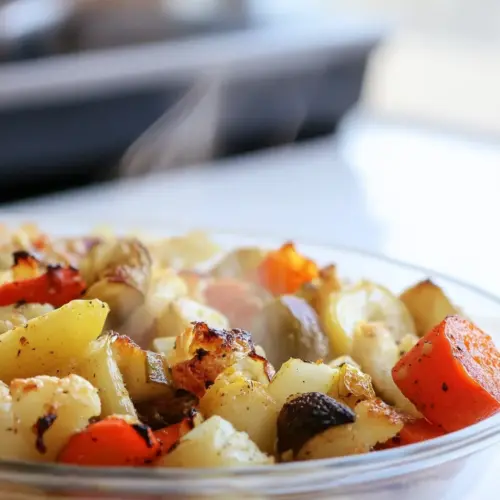
Cajun Seasoned Roasted Vegetables
Cajun Seasoned Roasted Vegetables deliver smoky, spicy flavor with tender interiors and crisped edges, perfect for an easy weeknight dinner or a fall gathering. The mix of cauliflower, sweet potato, and peppers caramelizes beautifully under a simple olive oil and stock bath, while the seasoning adds a warm kick. Make this when you want bold taste with minimal prep, it scales easily for guests.
Equipment
- Oven
- Casserole Dish
- Large spoon
Ingredients
- 1 head cauliflower chopped into florets Chopped into florets to provide a hearty, slightly nutty base that roasts to tender, caramelized edges and soaks up seasoning well.
- 1 sweet potato chopped into 1/2” squares Chopped into 1/2” squares to add natural sweetness and creamy texture that contrasts with firmer vegetables when roasted.
- 1 piece green bell pepper chopped into 1” Chopped into 1” pieces to contribute bright color and a crisp, slightly bitter flavor that softens and sweetens during roasting.
- 2 red potatoes chopped Chopped to furnish a starchy, rustic element that crisps at the edges and balances sweeter components in the medley.
- 1 large yellow onion sliced Sliced to release aromatic sweetness and develop golden, slightly charred layers that meld flavors between the root vegetables and spices.
- 3 tablespoons olive oil Used to coat vegetables for even roasting, promote browning, and carry the Cajun seasoning across all pieces for cohesive flavor.
- 1/4 cup chicken or vegetable stock Added sparingly to introduce moisture and help deglaze the roasting pan, creating a slight steam that prevents drying while enhancing depth.
- 1/2 teaspoons salt or to taste Measured to season and enhance the natural flavors in the mix, providing a savory backbone that can be adjusted to taste.
- 2 teaspoons Cajun seasoning Sprinkled to deliver bold, smoky, and spicy flavors that define the dish, bringing warmth and a characteristic Cajun kick to the vegetables.
Instructions
- Preheat the oven to 400 degrees F.: You should feel the anticipation as warm air begins to fill the oven, and that steady heat is what creates a dry environment for caramelization. A properly preheated oven ensures the surfaces of the vegetables start browning right away, rather than steaming. Common mistake to avoid, do not skip preheating because adding vegetables to a cold oven will lengthen cook time and reduce browning.
- Add all chopped vegetables to a casserole dish.: The sound of the chopped vegetables landing in the dish is part of the ritual, and arranging them in a single layer helps individual pieces crisp. If pieces are crowded they will steam and become limp instead of developing golden edges. Troubleshooting tip, if your pan is too small, transfer to a larger baking sheet to allow space for airflow and even roasting.
- Pour the olive oil and stock over the veggies and then sprinkle them with the Cajun seasoning and salt.: As the oil gleams across the vegetables, it acts as the staging ground for the seasoning to stick and then brown. The stock adds a touch of steam that encourages tender interiors while the oil promotes crunch at the edges. One thing to watch, adding too much liquid will prevent crisping, so use the measured amounts and adjust only slightly if needed.
- Either use your hands to mix everything together (my preferred method) or use a large spoon to ensure veggies get coated with oil and seasoning.: Mixing by hand gives you tactile feedback, you can feel if everything is evenly coated, and the scent of the spices will become more pronounced. If using a spoon, be gentle so you do not mash softer pieces. A common misstep is under mixing, which leads to uneven seasoning, so take a moment to ensure each piece is well dressed.
- Roast the vegetables for 45 to 55 minutes, stirring 2 or 3 times to ensure even cooking.: During roasting you will notice aromas evolving from vegetal to toasty, and visually pieces will darken at the edges. Stirring periodically promotes uniform color and prevents hotspots. Avoid the mistake of stirring too often, frequent disruption stops browning, aim for brief, decisive turns at intervals instead.
- The vegetables are done when they are cooked all the way through (sample a piece of sweet potato to make sure it’s soft) and have some color to them.: Look for tender interiors and golden to deep brown edges, the contrast signals readiness. I always test a sweet potato piece; it should yield easily under a fork and taste sweet and roasted. If something is still firm, return to the oven in short increments, just be careful not to let the others char excessively.
- Serve with your favorite hunk of meat.: As the vegetables finish, their aroma becomes the welcome note on the table, and plating them while warm keeps textures at their best. They pair well by adding a flavorful, seasoned vegetable anchor to the plate. One pitfall to avoid, do not let them sit too long before serving, they taste best when slightly crisp at the edges and warm throughout.
Notes
- Swap the stock: Use vegetable stock to keep the dish vegetarian, it still adds savory depth and helps with tenderness while allowing the Cajun seasoning to shine.
- Add different root vegetables: Try parsnips or turnips in place of one potato, they roast to a sweet, earthy profile that complements the seasoning.
- Increase the heat: If you want more kick, stir in a pinch of cayenne or smoked paprika with the Cajun seasoning before tossing, this layers in a smoky spice.
- Finish with acid: A squeeze of lemon or splash of vinegar right before serving brightens the dish, cutting through the richness and lifting the spices.
- Make it nutty: Toasted nuts or seeds sprinkled on top add crunch and a toasty flavor, they also create a pleasing contrast in mouthfeel.