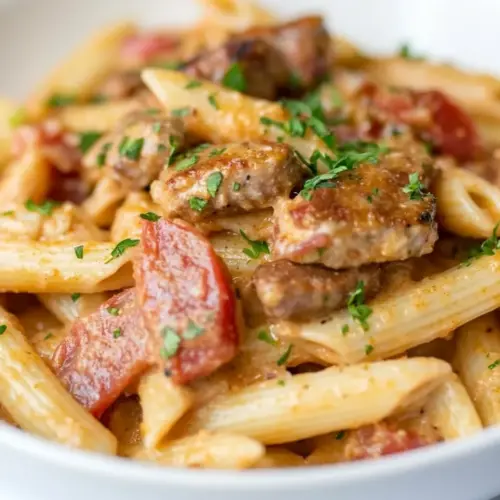
Cajun Pasta
Cajun Pasta is a creamy, spicy, and comforting one pan meal that combines smoky sausage, tender chicken, and al dente penne in a rich, cheddar infused sauce. This easy weeknight dinner features bold Cajun spices and a velvety finish from heavy cream, delivering restaurant quality flavor with minimal fuss, making it a must make for anyone craving a hearty, flavorful meal.
Equipment
- Large Skillet
- Mixing Bowl
- Wooden Spoon
Ingredients
- 1/2 teaspoon garlic powder Season generously to infuse the dish with a mellow garlic flavor; helps build a savory background when added with other spices and during cooking.
- 1/2 teaspoon Italian seasoning (see note 2) Blend aromatics smoothly to contribute herbal, slightly sweet notes; enhances overall complexity and pairs well with tomato and cream components.
- 1/2 teaspoon paprika Add warmth and mild smokiness to the spice mix; deepens color and complements the paprika and cayenne for balanced heat.
- 1/4 teaspoon cayenne pepper Provide concentrated heat and a spicy kick; used sparingly to control the overall spiciness and add a characteristic Cajun bite.
- 1/4 teaspoon onion powder Contribute subtle savory-sweet onion undertones; helps round out the spice profile and supports the fresh onion used later.
- 1/4 teaspoon dried thyme Introduce earthy, slightly lemony herbal notes; pairs with Italian seasoning and thyme for layered herb complexity in the sauce.
- Salt and freshly ground black pepper Balance flavors and enhance tastes when added to the pan and adjusted to preference; crucial for bringing out savory elements.
- 2 tablespoons olive oil Sauté vegetables and proteins with a fruity base; helps prevent sticking and distributes fat-soluble flavors throughout the dish.
- 1 medium onion peeled and finely chopped (see note 3) Build a sweet, aromatic foundation when softened; adds texture and depth after caramelizing and releasing natural sugars.
- 1 medium red bell pepper stemmed, seeded, and finely chopped Introduce bright, sweet pepper flavor and color; provides crisp-tender texture and freshness when cooked into the sauce.
- 2 celery ribs finely chopped Add aromatic crunch and an earthy, slightly bitter note; contributes classic mirepoix character and depth to the sauce.
- 2 links Andouille sausages or Kielbasa, cut crosswise into 1-inch pieces (about 8 ounces) Deliver smoky, savory richness and meaty texture; renders fat and flavor into the pan to enrich the sauce base.
- 2 cloves garlic minced Layer fresh pungency and aromatic lift; briefly sautéing garlic blooms essential oils and brightens the overall flavor.
- 1 pound boneless, skinless chicken breasts cut into 1-inch pieces Provide tender protein and absorb the sauce flavors; browning pieces adds savory Maillard notes before simmering.
- 16 ounces penne pasta or any small pasta (see note 4) Supply carbohydrate body and soak up sauce; choice of penne or small pasta captures bits of sausage and vegetables.
- 1 (15-ounce) can diced tomatoes undrained Contribute bright tomato acidity and body to the sauce; canned tomatoes add liquid, texture, and a slightly sweet tang.
- 4 cups chicken broth Create a flavorful cooking liquid base and deepen savory taste; allows pasta to cook and meld with the sauce components.
- 1/2 cup heavy cream (see note 5) Add creaminess and richness to the sauce; smooths acidity and helps create a velvety, luxurious mouthfeel.
- 1 cup shredded cheddar cheese Melt into the sauce to provide sharp, tangy cheesiness and help thicken; contributes a comforting, cheesy finish.
- Salt and freshly ground black pepper to taste Adjust final seasoning to taste and ensure balanced flavor; use to correct saltiness and enhance other ingredients.
- freshly grated Parmesan cheese for garnish (optional) Offer a salty, nutty finish when grated over the pasta; enhances umami and provides an optional savory topping.
- minced fresh parsley for garnish (optional) Provide fresh, herbaceous brightness as a finishing touch; adds color contrast and light flavor to balance richness.
Instructions
- To make the seasoning, in a small bowl, whisk together garlic powder, Italian seasoning, paprika, cayenne pepper, onion powder, dried thyme, and salt and pepper to taste (I like 1/2 teaspoon salt and 1/4 teaspoon pepper). Set aside.: As you mix these spices together you should smell the bright red pepper and the warm garlic notes rising, a preview of the bold profile to come. Whisking allows the powders to blend evenly so every pinch distributes the heat and herbaceousness. I like to taste a tiny bit on a spoon to ensure the cayenne is not overpowering, adjusting by small increments. Common mistake to avoid here is adding too much salt early on, which cannot be undone later; season lightly and adjust after simmering.
- In a large skillet over medium-high heat, heat oil until shimmering. Add onion, peppers, and celery and cook until softened. Add Andouille sausage and cook until browned.: When the olive oil shimmers, it means it is hot enough to give a quick color to the vegetables without burning them. You will hear a gentle sizzle as the diced onion , red bell pepper , and celery hit the pan and begin to soften, releasing sweet and savory aromas. The goal here is translucent onions and slightly tender peppers, not mush. Once you add the Andouille sausages the pan should sing with louder sizzles as the meat browns and renders its smoky fat, adding depth. One pitfall is overcrowding the pan; if everything is piled in, the sausage will steam instead of browning, losing flavorful crust.
- Stir in garlic until fragrant, about 30 seconds. Add chicken and Cajun seasoning and cook, stirring often, until chicken is browned and cooked through.: The moment you stir in the minced garlic the kitchen fills with an intense, aromatic note. Cook just until you can smell it, roughly half a minute, because garlic will turn bitter if it browns too long. This brief step amplifies savory flavors and prepares the surface for the next ingredient. A typical mistake here is leaving the garlic unattended, which often results in burnt, acrid bits that can spoil the pan.
- Stir in pasta, diced tomatoes, and chicken broth. Simmer uncovered until pasta is al dente and almost all of the liquid is absorbed, about 20 minutes.: As you add the bite sized pieces of chicken breasts , you should hear a steady sizzle and watch the edges take on a golden brown. Browning creates Maillard flavor compounds that deepen the eventual sauce, while the seasoning clings to the surface for immediate impact. Stirring often ensures even color and prevents the chicken from sticking or drying out. To check doneness, slice one piece; the center should be opaque and juices should run clear. Avoid overcooking, which leads to dry chicken.
- Stir in heavy cream and cheddar cheese until melted. Season to taste with salt and pepper. Garnish with Parmesan cheese and fresh parsley if desired.: When you add the penne pasta , the rough texture will begin to fog as it sinks into the simmering liquid. The undrained diced tomatoes introduce acidity and little pockets of tomato flavor, while the chicken broth supplies the cooking liquid that will infuse the pasta. Visually, the pan will look looser as the broth levels, and you should stir to prevent pasta from clumping. A common error is not stirring enough at this stage, which can leave sticky, gummy spots on the bottom of the skillet.
- Simmer uncovered until pasta is al dente and almost all of the liquid is absorbed, about 20 minutes: As the mixture simmers, the scent will deepen and the surface will show gentle bubbling. The pasta will absorb the broth and swell, and you should begin tasting for doneness after about 15 minutes. The target is al dente, a slight firmness at the center, so the pasta holds texture once you add cream and cheese. Watch the liquid level; if it disappears too fast, reduce heat to prevent scorching. Many cooks err by over boiling which yields mushy pasta, so taste often in the final minutes.
- Stir in heavy cream and cheddar cheese until melted: When you pour in the heavy cream , the sauce softens and turns glossy, smoothing the spice edges. Adding the shredded cheddar cheese melts into ribbons, creating a cohesive, velvety coat. Stir gently so the cheese fully incorporates and the sauce becomes silky. The aroma will shift to a rich, creamy note with a savory tang from the cheese. A frequent misstep is adding cold cream to a very hot pan which can cause slight curdling, so temper by stirring steadily and keeping heat moderate.
- Season to taste with salt and pepper: After the sauce has come together you must fine tune the seasoning. Taste a small spoonful and decide whether it needs a pinch more salt or a grind of black pepper. Adjust in small increments because the cheddar cheese and any canned diced tomatoes may already contribute salt. Over-salting is the main mistake here, so add a little, taste, then add more if necessary.
- Garnish with Parmesan cheese and fresh parsley if desired: Right before serving, sprinkling freshly grated Parmesan cheese adds a nutty brightness and a slightly granular finish that contrasts the creamy sauce. A scattering of minced fresh parsley introduces a fresh, herbal pop and visual color contrast. This final step elevates presentation and adds a fresh aromatic layer. Avoid adding garnishes too early, as they will wilt and lose their vibrancy.
Notes
- Measure your cayenne carefully, especially if you are sensitive to heat; a quarter teaspoon can be plenty, and you can add more after tasting.
- Reserve a bit of pasta cooking liquid as an insurance policy to loosen the sauce if it becomes too thick while resting off the heat.
- Brown proteins in batches if needed so they caramelize rather than steam, improving texture and flavor.
- Use room temperature cream when adding to the hot pan to reduce the risk of slight separation and to help it incorporate smoothly.
- Grate the cheese fresh for better melting and a cleaner texture than pre shredded varieties that can contain anti clumping agents.