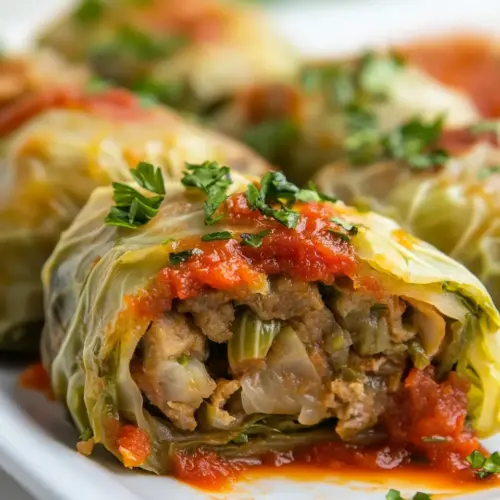
Cabbage Rolls
Cabbage Rolls are a comforting, savory dish featuring tender cabbage leaves wrapped around a hearty mixture of ground beef, rice, and aromatic herbs, baked in a tangy tomato sauce. This easy weeknight dinner delivers a balanced mix of textures, warm aromas, and crowd pleasing flavor, making it perfect for family meals or make ahead entertaining. Try it for a cozy winter supper that tastes like home.
Equipment
- Large Pot
- Long tongs
- Skillet
- 9×13 baking dish
- Foil
Ingredients
- 1 candiced tomatoes (14.5 ounce, undrained) Crushed and undrained to provide a chunky, tangy tomato base that adds acidity and texture to the sauce. Helps create a rich, slightly sweet foundation when combined with other sauce components. Contributes moisture that prevents the rolls from drying during baking.
- 1 cantomato sauce (8 ounce) Pureed and used to deepen the tomato flavor while creating a smooth, saucy consistency. Blends with crushed tomatoes to balance texture and intensify the cooked tomato profile. Serves as part of the liquid component that helps steam the cabbage during baking.
- 2 tablespoons brown sugar Sweet and granular to balance the acidity of the tomatoes and round out the sauce flavor. Dissolves into the sauce to add a caramelized note without overpowering the other aromatics. Adjusts overall sweetness to suit savory-sour balance.
- 1 tablespoon white vinegar Sharp and acidic to brighten the sauce and enhance overall flavor complexity. Cuts through richness of beef and rice, adding a mild tang that lifts the dish. Promotes flavor contrast that prevents the sauce from tasting flat.
- 1/4 cup water Neutral and hydrating to thin the tomato mixture to a spreadable, simmerable consistency. Helps adjust sauce viscosity and provides steam during cooking for tender cabbage. Ensures even distribution of flavors throughout the filling and sauce.
- 1 pound ground beef Lean protein and fat that forms the primary savory component of the filling when browned. Provides meaty texture and umami, absorbing herbs, spices, and aromatics for depth. Binds with rice and egg to create a cohesive stuffing for the cabbage leaves.
- 1/2 cup onion (chopped fine) Aromatic and softened when cooked to add sweetness and savory depth to the filling. Chopped fine to distribute mild onion flavor evenly throughout the mixture. Enhances overall aromatic profile and helps meld other seasonings.
- 1 tablespoon dried parsley Earthy and herbaceous to contribute green, slightly bitter notes that complement the meats and tomatoes. Dried form disperses flavor throughout the filling without releasing excess moisture. Adds subtle freshness and visual flecks to the mixture.
- 1 teaspoon oregano Warm and slightly minty to add Mediterranean flavor depth and savory complexity. Measured sparingly to avoid overpowering other herbs, it complements parsley and dill. Enhances the overall aromatic balance in the filling and sauce.
- 1 teaspoon salt Salty seasoning to enhance and unify all flavors in the filling and sauce. Measured to season the beef and rice but also to balance the acidity of the tomatoes. Crucial for bringing out the natural flavors of all ingredients.
- 1/2 teaspoon pepper Pungent and warming to add subtle heat and depth when combined with other seasonings. Ground form layers with salt to intensify savory notes without dominating. Helps round out the flavor profile for a balanced filling.
- 1/2 teaspoon dill Fragrant and delicate to contribute a light, herbal nuance that complements parsley and oregano. Used sparingly, it adds complexity and a slightly floral background note. Helps create a more nuanced herb blend throughout the dish.
- 2 teaspoons minced garlic Aromatic and savory to infuse the filling with a pronounced garlicky flavor and aromatic depth. Minced form ensures even distribution and quick release of flavor during cooking. Enhances the umami character of the meat mixture.
- 1 cup rice (cooked) Starchy and tender when cooked to provide bulk and a soft texture to the filling. Cooled cooked rice absorbs seasoning and binds with egg and meat for structure. Helps stretch the mixture to fill multiple cabbage leaves affordably.
- 1 egg Binder and enrichener that coagulates during cooking to hold the filling together. Adds a slight custardy richness and helps the filling maintain shape inside the cabbage. Also contributes a mild flavor and improved texture.
- 1/4 cup sauce (that has been mixed together) Combined and simmered to create a cohesive tomato-based sauce that coats and moistens the rolls. Pre-mixed sauce integrates sweet, acidic, and savory elements before being poured over assembled cabbage rolls. Ensures even flavor distribution and moisture during baking.
- 1 head cabbage (green) Large leafy vegetable used to wrap the prepared filling into individual rolls. Green cabbage leaves soften when blanched or steamed, becoming pliable for rolling while adding mild, slightly sweet flavor. Provides structure and a tender contrast to the savory filling.
Instructions
- Prepare the cabbage leaves by cutting off 1/4 inch from the bottom of the cabbage head. Place the whole cabbage head into a big pot of boiling water and boil for two minutes. Using long tongs gently peel off the outer cabbage leaves from the cabbage head inside the pot. Using the tongs you can roll the cabbage head around in the hot water and gently lift the leaves. After several layers have been removed you may have to use a knife to disconnect the leaf next to the core. Set aside the removed leaves to cool while you prepare the sauce and filling.: The smell of fresh cabbage is faintly green and earthy, and trimming the bottom exposes the inner leaves so they steam off more easily when boiled. Work on a sturdy cutting board and use a sharp knife for a clean cut. A common mistake is cutting too much, which wastes leaves, so only remove the minimum needed. As soon as the base is trimmed, you will notice water beads on the surface if the head was recently rinsed, which helps when boiling.
- Preheat oven to 350 degrees.: The bubbling water should be at a lively boil so the outer leaves loosen without cooking all the way through. You'll hear a gentle hiss as the head hits the pot, and the steam will carry a faint vegetal scent. Boiling briefly softens the leaves so they peel away easily. Avoid over boiling, which makes leaves too fragile and difficult to roll, leading to tearing when you assemble the rolls.
- In a medium bowl mix all of the sauce ingredients together.: As you lift each leaf with the tongs you will feel the warmed leaf bend and relax, making it pliable. The surface will be slick from the water but not soggy. If a leaf seems stuck, roll the head in the water a bit to loosen more layers. A pitfall here is rushing, which can bruise or tear the leaf; patience pays off for neat rolls.
- Spread a thin layer of the sauce in the bottom of a 9×13 baking dish.: Rolling the head helps release stubborn layers, and the gentle rolling action creates steam that loosens inner leaves as well. You may hear a soft rustle as leaves separate and see a pale green sheen where leaves were tucked tightly. If a leaf does not detach cleanly, use a knife to separate it near the core instead of yanking, which prevents tearing.
- Remove 1/4 cup of sauce to be added to the meat filling.: When you encounter leaves closer to the core, they cling more tightly; a careful paring with a knife frees them while preserving their shape. The exposed core will look dense and compact, and cutting around it requires steadiness so you do not lacerate the leaf. Hurrying here risks slicing the leaf, so work slowly and maintain control of the blade.
- In a skillet brown the ground beef cooking along with the onions, parsley, oregano, salt, pepper, and dill over medium heat until no pink remains and onions are tender.: Cooling helps the leaves become easier to handle and reduces the risk of burns while rolling. Lay them flat on a clean surface and let steam dissipate; they will feel warm, not hot, when ready. If you stack them while hot they can become limp and tear, so spread them out for even cooling.
- Stir in the garlic and cook another minute.: Preheating ensures the oven is at a stable temperature when you put the assembled rolls in, which promotes even baking. You will hear the oven click as it reaches temperature and possibly smell a faint warm metal scent in the kitchen. Do not skip preheating, because adding rolls to a cold oven prolongs cooking and can make the filling overcook before the cabbage is tender.
- Remove from heat and add the cooked rice, 1/4 cup mixed tomato sauce, and egg. Mix well. Set aside.: Combine the canned tomatoes, tomato sauce , brown sugar, white vinegar , and water until the mixture is uniform. Stirring releases tomato aroma and dissolves the sugar, creating a glossy sauce. If the sauce seems too sharp, a touch more brown sugar can mellow it, but avoid over sweetening which masks savory notes.
- Remove the thick stem of the cabbage leaves (cutting a V at the bottom of each leaf to notch out the thick part and this also helps it lay flatter).: This base layer prevents the rolls from sticking and creates a moat of flavor that steams during baking. The sauce should coat the bottom evenly in a thin film; you will see a glistening red sheen when done. Skipping this step often leads to burnt spots and a dry underside on the rolls.
- Lay the leaf flat and place 1/3 cup of filling toward the middle bottom of the leaf. Fold burrito style by folding in the sides onto the filling and rolling the leaf up. If your leaves have torn that’s okay, just fold the torn side in first and cover it up with the other side before rolling.: Reserving this portion for the filling ensures the meat mixture stays moist and infused with tomato flavor. Mix it thoroughly into the meat and rice so it distributes evenly. Forgetting to add it can result in a drier filling that does not cohere as well when sliced.
- Place the roll seam side down in the prepared baking dish. Repeat the process until all the leaves are filled and the dish is filled.: As the ground beef sizzles you will notice a deepening aroma and browned bits forming, which are flavor gold. Stir occasionally to break up clumps and ensure even browning. A common error is cooking at too high heat, which can char the outside while leaving meat underdone, so maintain medium heat for gentle caramelization.
- Pour the remaining sauce over the rolls and cover tightly with foil. Bake for 1 hour and 30 minutes.: Adding the garlic releases an immediate wave of fragrance that complements the browned meat. It cooks quickly, so one minute is enough to wash the mixture with savory aromatics. Overcooking garlic will make it bitter, so keep an eye and remove from heat promptly.
- Let cabbage rolls sit for 10-15 minutes before serving.: Off the heat, the mixture is warm but not sizzling, which is ideal for folding in the rice and egg without scrambling the egg. The texture should feel cohesive and slightly sticky, not wet. If the filling seems too loose, a touch more rice helps bind it; if too dry, a splash of the reserved sauce will restore moisture.
- Mix well: The filling should be uniformly combined so every bite has balanced seasoning and texture. Use a spoon to press and fold until you no longer see streaks of uncooked egg or separate pools of liquid. Uneven mixing leads to pockets of bland or dry filling, so take your time for consistency.
- Remove the thick stem of the cabbage leaves (cutting a V at the bottom of each leaf to notch out the thick part and this also helps it lay flatter): Notching the rib allows the leaf to wrap neatly and lie flat against the filling, which improves presentation and reduces tearing. The notch should remove only the bulky core, keeping as much leaf as possible. Cutting too much can leave you with smaller leaves that do not cover the filling adequately.
- Lay the leaf flat and place 1/3 cup of filling toward the middle bottom of the leaf: The filling should be mounded low and centered to facilitate a tidy roll that cooks evenly. You will feel the warmth of the filling and see steam rise slightly when it contacts the leaf. Overfilling makes rolling awkward and can burst during baking, so measure carefully.
- Fold burrito style by folding in the sides onto the filling and rolling the leaf up: As you fold, the leaf will tuck around the filling and create tight seams that hold during baking. Press gently as you roll to compact the filling so it does not shift. If a leaf tears, fold the torn edge inside as you roll; forcing a torn leaf outward will cause leakage.
- If your leaves have torn that’s okay, just fold the torn side in first and cover it up with the other side before rolling: Tears are normal and the workaround is simple, the finished roll will still hold and taste great. When folded correctly the tear becomes invisible. A mistake is trying to patch a large hole with tape like layers which can create unevenly thick spots that do not cook uniformly.
- Place the roll seam side down in the prepared baking dish: Arranging them seam side down helps them keep their shape and reduces the chance of unrolling in the oven. You should hear a soft thud as each roll settles into the sauce. Space them snugly so they support one another but not overcrowded which might prevent even heat circulation.
- Repeat the process until all the leaves are filled and the dish is filled: Assembly becomes rhythmic, and you will notice consistency improving as you progress. Keep the remaining filling covered to prevent drying. A common oversight is letting the filling sit too long uncovered, which can form a crust and alter texture.
- Pour the remaining sauce over the rolls and cover tightly with foil: The sauce should coat the rolls, pooling slightly between them to steam and infuse flavors. Covering with foil traps moisture and creates a gentle braise. Failing to cover can dry out the tops and reduce tenderness of the cabbage.
- Bake for 1 hour and 30 minutes: During baking you will smell an evolving aroma, as tomatoes mingle with herbs and beef, and the sauce will bubble quietly at the edges. The long, gentle bake allows flavors to meld and the rice to finish absorbing liquid. Avoid opening the oven repeatedly, which releases heat and extends cooking time.
- Let cabbage rolls sit for 10-15 minutes before serving: Resting lets the filling set and makes slicing or serving neater, with steam settling and flavors integrating. You will notice the sauce thicken slightly and the rolls firm up. Serving too soon may result in filling that falls apart; patience yields prettier portions.
Notes
- Trim precisely: Cut only about a quarter inch from the cabbage base so you free enough leaves without wasting the head, which maximizes yield and keeps leaves intact.
- Blanch with care: Boil the cabbage head briefly and peel leaves while warm, this prevents tearing and gives you pliable wrappers; avoid long boils that make leaves mushy.
- Even browning matters: Brown the ground beef over medium heat until it develops caramelized bits, these browned flavors deepen the overall taste of the rolls.
- Measure the filling: Use a 1/3 cup scoop for each roll so they are uniform in size and cook at the same rate, avoiding overstuffed rolls that burst.
- Mix sauce into filling: Reserve a quarter cup of sauce and stir it into the filling to keep the meat moist and add integrated tomato flavor throughout.
- Arrange snugly: Place rolls seam side down and close together in the dish so they support each other and maintain shape during baking.
- Cover tightly: Use foil to seal in moisture while baking, which creates a gentle braise and prevents the cabbage from drying out.