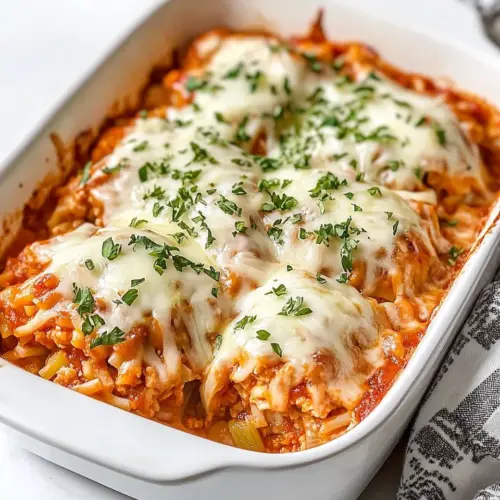
Cabbage Roll Casserole
Cabbage Roll Casserole delivers saucy, savory comfort with tender cabbage, browned ground beef, and creamy mozzarella cheese. This easy weeknight dinner combines pantry staples like canned tomatoes and cooked rice for a filling, family friendly dish. It reheats beautifully, making it perfect for meal prep and cozy winter meals you will want to make again.
Equipment
- Large Skillet
- 9 by 13 inch baking dish
Ingredients
- 2 tablespoons olive oil Sauté in a skillet to provide a fragrant, flavorful fat base that helps soften and brown aromatics while preventing sticking; contributes a subtle fruity richness typical of extra-virgin varieties.
- 8 cups cabbage, chopped Chop finely to create the bulk of the casserole, offering tender texture and sweet, slightly bitter flavor after cooking; helps mimic the wrapped filling of traditional cabbage rolls while adding volume and nutrients.
- 1 medium onion, diced Dice small and cook until translucent to add sweetness and savory depth; releases natural sugars that build the aromatic foundation and complement the beef and tomatoes.
- 3 cloves garlic, minced Mince and add early in cooking to infuse the dish with a savory, pungent aroma; helps brighten flavors and meld with onions and spices for a layered taste profile.
- 1/2 teaspoon onion powder Sprinkle to enhance the onion-forward savory notes without adding extra moisture; brings a concentrated, savory punch that boosts overall depth in a subtle way.
- 3/4 teaspoon paprika Dust over the mixture to lend a warm, slightly smoky sweetness that rounds out tomato and meat flavors; works well with paprika’s color-enhancing qualities to make the casserole appetizing.
- 1 pound lean ground beef Brown thoroughly to develop rich, meaty flavor and caramelized bits that deepen the sauce; provides protein and structure, and renders fat that carries other flavors throughout the dish.
- 18 -ounce can tomato sauce Pour in to create a smooth, tangy tomato base that binds ingredients and provides acidity; contributes umami and body to the casserole sauce for moistness and flavor balance.
- 14.5 -ounce can diced tomatoes with juices Add with juices to introduce bright, slightly acidic tomato pieces that provide texture contrast and extra liquid; enhances overall tomato flavor and distributes tiny bursts of tomato in each bite.
- 1 teaspoon Worcestershire sauce Stir in to impart a tangy, savory umami boost that deepens the meat-and-tomato savoriness; helps balance acidity and enhances the overall savory profile of the casserole.
- Kosher salt, to taste Season to personal taste to elevate and balance all flavors; brings out natural sweetness in vegetables and rounds out savory elements when used judiciously.
- 3/4 teaspoon black pepper Grind freshly to add sharp, warming spice that accentuates meatiness and balances sweeter tomato and cabbage notes; helps to define the dish’s overall seasoning.
- 1 1/2 teaspoons dried Italian seasoning Sprinkle dried herbs to introduce a Mediterranean blend of oregano, basil, and thyme flavors that complement tomatoes and beef; provides aromatic complexity and herbaceous background.
- 2 cups white rice, cooked Fold in after cooking to add tender, slightly chewy grains that absorb sauce and provide starchy body; contributes heartiness and helps replicate the rice fillings of traditional rolls.
- 1 cup mozzarella cheese, shredded Top before baking to offer creamy, melty richness and a golden, slightly stretchy finish that enhances mouthfeel; helps bind the casserole top and adds an indulgent contrast to the vegetables.
- Chopped green onions or parsley, for garnish Garnish at the end to introduce a fresh, bright herbal note and a pop of color that lifts the finished dish; adds mild oniony or parsley freshness for balance and presentation.
Instructions
- Preheat your oven to 350°F. Heat olive oil in a large skillet over medium heat. Sauté cabbage for 7-9 minutes, stirring occasionally, until barely tender. Place the cabbage in a bowl and set it aside.: When your oven reaches the target, you should feel a gentle, warm air if you open it briefly, and the rack will be ready to brown the top without cooking too aggressively. This moderate heat ensures the casserole heats evenly and the cheese melts into a golden, bubbly layer rather than burning. A common mistake is using too high a temperature which can dry the filling and overbrown the cheese, so confirm the set temperature before baking.
- In the same skillet, combine the diced onion, minced garlic, onion powder, and paprika, and sauté until the onion is softened. Next, add the lean ground beef, cooking until browned and breaking it up as it cooks. Drain any excess fat from the skillet.: As the oil warms, it will shimmer slightly and carry the scent of fruitiness. This step creates a nonstick surface and helps vegetables brown evenly, which is important for developing flavor. If the oil smokes, the pan is too hot, so lower the heat to avoid imparting bitterness to the dish.
- Stir in the tomato sauce, diced tomatoes, Worcestershire sauce, salt, black pepper, and dried Italian seasoning. Bring the mixture to a simmer and allow the flavors to meld for a few minutes, then mix in the cooked rice and add the cabbage back into the skillet.: You will hear a soft sizzle as the chopped cabbage hits the pan, and the pieces will wilt and take on slightly translucent edges with flecks of light browning. This partial tenderization keeps the cabbage from becoming mushy in the oven and preserves a pleasant texture. Avoid overcrowding the pan, which causes steaming rather than sautéing, leading to limp, waterlogged cabbage .
- Transfer the mixture to a greased 9×13-inch baking dish. Cover the dish with foil and bake for 20-30 minutes.: The retained heat will continue to soften the cabbage , and transferring it out prevents overcooking while you prepare the filling. Leaving it in the pan risks it breaking down too much when the meat is added, so give it a moment to cool slightly.
- Remove the foil, sprinkle the shredded mozzarella cheese evenly, and bake uncovered for an additional 15 minutes until the cheese is bubbly. Let rest for 5 minutes before serving. Garnish with fresh parsley or green onions.: You should smell a sweet, savory aroma as the onion becomes translucent and the garlic turns fragrant. This step layers flavor into the base of the sauce. Cook the garlic briefly to avoid bitterness that results from overbrowning it.
- Next, add the lean ground beef, cooking until browned and breaking it up as it cooks: The skillet will emit hearty, caramelized notes as the ground beef develops brown bits. Browning creates depth through the Maillard reaction, which is crucial for a rich sauce. A pitfall here is stirring too lightly so clumps remain, preventing even browning; break the meat apart for consistent texture.
- Drain any excess fat from the skillet: Removing surplus grease yields a cleaner tasting sauce and prevents a greasy mouthfeel. Use a careful tilt and spoon, or drain briefly into a heatproof container. Leaving excess fat can make the final casserole overly heavy and hinder the sauce from clinging properly.
- Stir in the tomato sauce, diced tomatoes, Worcestershire sauce, salt, black pepper, and dried Italian seasoning: As these liquids hit the hot pan, you will notice a rich, tomato forward perfume that blends with the savory meat. This mixture forms the backbone of the casserole, melding umami and acidity. Taste and adjust seasoning, because underseasoned sauce will produce a flat casserole.
- Bring the mixture to a simmer and allow the flavors to meld for a few minutes: Gentle bubbling will concentrate the sauce and marry the spices, while steam rises with a savory tang. Simmering helps evaporate excess liquid and concentrates flavor, but boiling too vigorously can break down tomatoes and make the texture grainy, so maintain a steady simmer.
- Mix in the cooked rice and add the cabbage back into the skillet: The rice will soak up sauce and the cabbage will integrate, creating a cohesive filling that is moist but not soupy. Stir gently so the grains remain intact and the cabbage retains some texture. Avoid adding undercooked rice, which can remain hard in the finished casserole.
- Transfer the mixture to a greased 9 by 13 inch baking dish: As you spread the filling, you should see an even layer that fills the dish with saucy, textured components. Greasing prevents sticking and ensures neat portions when serving. Overpacking the dish can prevent even heating, so leave a little space for bubbling and steam escape.
- Cover the dish with foil and bake for 20 to 30 minutes: During this covered bake, steam will circulate and evenly heat the filling, melding flavors without drying the surface. The edges will begin to bubble and the interior warms through. Removing the foil too soon can cause the casserole to lose moisture, so keep it covered for the recommended time to retain juiciness.
- Remove the foil, sprinkle the shredded mozzarella cheese evenly, and bake uncovered for an additional 15 minutes until the cheese is bubbly: The oven will transform the shredded mozzarella cheese into a stretchy, slightly browned blanket with an appealing aroma. Baking uncovered permits the cheese to bubble and color, contributing both texture and visual appeal. A common error is adding too much cheese which can overpower the filling, so use the listed amount for balance.
- Let rest for 5 minutes before serving: Resting allows juices to redistribute and the casserole to firm slightly, making it easier to serve neat portions. You will notice steam diminish and flavors settle, offering a cleaner slice. Cutting too soon results in a runny dish, so give it those final minutes to set.
- Garnish with fresh parsley or green onions: The bright, herbaceous notes from the chopped green onions or parsley add color and a fresh contrast to the savory casserole. Sprinkle just before serving so the herbs remain vibrant. Adding them too early will cause wilting and loss of visual appeal.
Notes
- Pre cook the rice: Make the rice a little drier than usual so it absorbs sauce rather than turning gluey, and spread it on a tray to cool quickly.
- Adjust salt at the end: Since canned tomatoes and tomato sauce vary in sodium, taste the filling before adding more salt so you avoid oversalting.
- Use medium heat for sautéing: Cooking the cabbage and aromatics over medium prevents burning while allowing gentle caramelization, yielding sweeter, rounded flavors.
- Drain fat carefully: After browning the ground beef, remove excess grease so the casserole texture is balanced and the sauce clings properly.
- Let it rest: Allowing the casserole to sit for five minutes after baking firms the layers and improves slicing, giving a prettier presentation.