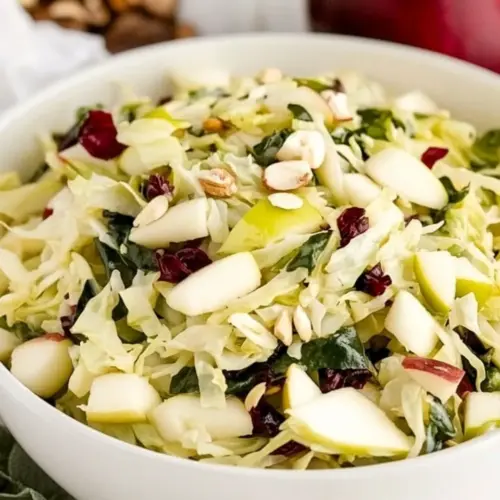
Cabbage Apple Salad
Cabbage Apple Salad is a crisp and refreshing bowl that balances crunchy cabbage with tart Granny Smith apples, nutty pistachios, and sweet dried cranberries. This easy to assemble salad is perfect for an easy weeknight dinner side or a make ahead lunch, delivering bright acidity and satisfying texture. Try it when you want a simple, crowd pleasing salad that comes together in minutes.
Equipment
- Large Bowl
- Whisk
- Knife
- Cutting Board
- Salad spinner
Ingredients
- 2/3 head cabbage, thinly sliced and then chopped into short strips Adds a crisp, slightly peppery backbone that provides bulk and crunch; thin slicing and chopping into short strips helps it meld with other textures and soak up dressing. Offers a mild, neutral flavor that balances sweeter elements and keeps the salad light and refreshing.
- 2 small Granny Smith apples, peeled and chopped Contributes tartness and juicy sweet-tart bites that brighten the overall flavor profile; peeling removes bitterness and chopping into small pieces ensures even distribution. Provides a fresh, fruity contrast that complements both leafy greens and dried fruits.
- 5 oz . baby kale, stems removed and washed if needed (use less kale or another type of greens if you're not a fan) Provides tender, leafy texture and a mild bitter-green note that contrasts the crunchy cabbage and sweet components; removing stems improves mouthfeel while washing ensures cleanliness. Adds nutritional value and color variety, helping the salad feel more substantial and vibrant.
- 1/2 cup dried cranberries (preferably low-sugar dried cranberries) Supplies concentrated pockets of sweetness and chewy texture that enhance contrast with crunchy and fresh elements; choosing low-sugar varieties keeps the salad from becoming overly sweet. Helps balance flavors by offering tart-sweet notes and visual interest with deep red color.
- 1/2 cup shelled pistachos Offers crunchy, nutty richness and a slightly buttery flavor that adds protein and satisfying texture; using shelled pistachios makes the salad easy to eat and evenly distributes nutty bites. Provides a savory counterpoint to sweet cranberries and tart apples while boosting overall mouthfeel.
Instructions
- Peel the apple and cut away the core. I used an Apple Corer and Slicer for this.: The scent of the fresh apple is bright and slightly floral as you peel, and removing the core ensures no bitter seeds make it into the salad. If you notice any bruised patches, remove them now because they can add off flavors. A common mistake is leaving the core bits in which creates chewy, unpleasant bites later.
- Cut the apple into slices lengthwise; then chop the slices into chunks.: As you cut, the sound is a crisp, almost snappy snap, and the juices bead on the knife edge. Uniform chunks help the apple mingle evenly with the other components, so aim for consistent size. Avoid slicing too thin or you lose the satisfying crunch that contrasts with the cabbage .
- Slice the cabbage into thin slices, then chop to make short strips. We used a Mandoline Slicer to cut the cabbage.: Thin slicing releases a faint vegetal aroma and the cabbage layers separate easily. Short strips are easier to toss and eat. One pitfall is making slices that are too thick which can make the salad feel dense and hard to chew.
- Pull off stems from the baby kale (or not; your choice) and wash kale in salad spinner if it needs it.: Rubbing or massaging the baby kale briefly softens the leaves and reduces bitterness, and washing removes grit so you get a clean finish. Washing also adds a crisp sound as you shake excess water away. If the kale is left unwashed, grit can ruin the texture and mouthfeel.
- Whisk together the olive oil, white balsamic vinegar, lemon juice, sweetener, salt, pepper, and black sesame seeds (or poppy seeds) to make the dressing.: As you whisk, the dressing emulsifies and takes on a glossy sheen, releasing citrus notes from the lemon juice . This mixture brightens the salad and binds the ingredients. If the dressing separates, whisk again or add a tiny splash of water. Over seasoning at this stage can mask the delicate flavors, so taste and adjust gradually.
- Put the sliced and chopped cabbage in a large bowl and toss with the dressing. Add the chopped apples and baby kale and toss again.: When you toss, the dressing clings to the crinkled surfaces of the cabbage , releasing a subtle aromatic lift. This step helps the leaves absorb flavor, but avoid overdressing which makes the salad soggy. A common error is tossing in a small bowl where everything spills out, so use a roomy vessel.
- Then add most of the dried cranberries and pistachios and toss again.: Adding the apple and baby kale now lets them pick up a light coating of dressing without wilting. The visual contrast of pale apple and green leaves is appealing, and you should hear a gentle rustle as everything mixes. If you toss too vigorously the apple can break down and produce excess juice.
- Put the salad into a serving bowl and top with the reserved dried cranberries and pistachios. Serve right away.: Incorporating the cranberries and pistachios at this point spreads pockets of sweet and crunchy texture throughout. The smell of toasted nuts, if you used them, becomes noticeable here. Avoid adding all the nuts at once if you want to reserve some for a garnish, which adds a fresh crunch at service.
- I think there are endless variations of dried fruit and nuts that would be good in this salad; have fun experimenting!: The finishing sprinkle of cranberries and pistachios creates visual appeal and a textural contrast right at the top. You should see a colorful, inviting bowl and smell the combined aromas. Serving immediately preserves crispness, while waiting too long softens textures and dulls the crunch.
- Serve right away: Freshness is the key sensory win here, with the crisp bite of cabbage and apple at their peak. If you let the salad sit, the dressing and juices will mellow the textures, which is fine for some preferences but not for crispness lovers. A mistake to avoid is refrigerating a dressed salad for too long which leads to limp leaves.
- I think there are endless variations of dried fruit and nuts that would be good in this salad have fun experimenting: The aroma of different nuts and fruits can shift the whole profile, and trying variations helps you discover your favorite combination. Experimentation is part of the fun, but changing too many elements at once can make it hard to know which adjustment you prefer.
Notes
- Toast your pistachios lightly in a dry skillet for one to two minutes to amplify their aroma, but stir constantly to prevent burning.
- Use low sugar dried cranberries to avoid an overly sweet finish, which helps the dressing shine without competition.
- Adjust the lemon and vinegar ratio to make the dressing tangier or milder, tasting as you go to reach the brightness you prefer.
- Swap greens cautiously by replacing baby kale with arugula or mixed greens if you want a softer leaf texture.
- Reserve some nuts and fruit for garnish to add a fresh crunchy finish when serving, which also improves presentation.