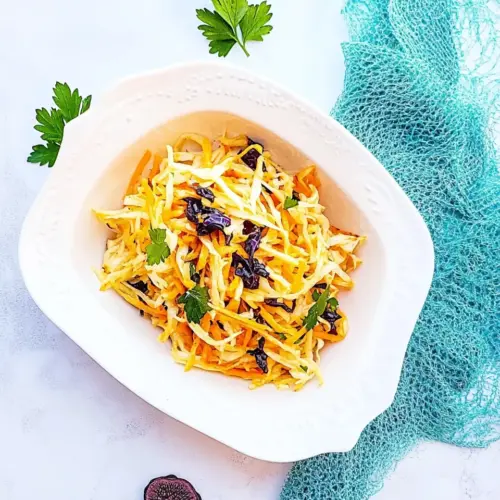
Cabbage and Carrot Slaw
Cabbage and Carrot Slaw is a crisp, creamy salad that pairs shredded cabbage and grated carrot with sweet raisins and a simple mayonnaise dressing. This easy make ahead side delivers bright texture and subtle sweetness, perfect for casual meals and gatherings, making it an ideal easy weeknight side to round out many plates.
Equipment
- Colander
- Large Mixing Bowl
- Grater
Ingredients
- 1/4 head green cabbage, shred finely Shred finely to provide a crisp, slightly sweet base and substantial texture for the slaw; it balances softer components and holds dressing well. Use fresh, tightly packed leaves to ensure a crunchy bite and longer shelf life. Toss gently with dressing to avoid wilting while allowing flavors to meld.
- 1 large carrot, grate finely Grate finely to add bright color, natural sweetness, and tender crunch that complements the cabbage; finely grated carrot distributes evenly throughout. Select firm, unblemished carrots for maximum sweetness and crispness. Combine with cabbage soon after grating to prevent drying and maintain texture.
- 1/4 cup raisins Soak or stir in to lend concentrated bursts of chewiness and sweet-tart flavor that contrast the crunchy vegetables; they also add visual interest. Rinse if desired to soften and remove excess stickiness, or plump briefly in warm water for juicier raisins. Measure to balance sweetness against dressing and salt.
- 6 cup boiling-hot water Pour as needed to blanch, soften, or briefly rehydrate ingredients and control temperature during preparation; boiling-hot water can be used to soften raisins or wilt vegetables slightly for a milder texture. Handle carefully and allow ingredients to cool before combining with mayonnaise to prevent separation. Use only as specified to achieve desired tenderness without overcooking.
- 1/4 cup mayonnaise Mix in to bind the slaw, add creaminess, and provide a tangy, rich mouthfeel that carries seasonings. Choose full-fat mayonnaise for a richer texture or low-fat varieties for a lighter result, adjusting seasoning accordingly. Whisk with salt and any additional acid or spices before coating vegetables evenly.
- 1/2 teaspoons salt Sprinkle to enhance and balance flavors by bringing out natural sweetness and cutting richness; it also helps season the entire mixture evenly. Dissolve briefly into the dressing to ensure even distribution and avoid salty pockets. Adjust quantity slightly after tasting to suit preference.
Instructions
- Mix cabbage, carrot, and raisins in a colander. Pour in boiling water and let it run out of the colander into the sink. This will wash the vegetables, but also wilt them a bit. Let all the water drain and let the vegetables cool to room temperature.: You will hear the rustle of shredded cabbage as you toss it with the grated carrot , the mixture smelling faintly green and sweet. This step organizes the ingredients so they are ready for quick wilting, and placing them in a colander helps water drain away efficiently. I like to toss gently to distribute the raisins throughout, so every forkful gets a bit of sweetness. Watch for compacted clumps of cabbage which can prevent even wilting, and break them apart with your fingers. A common mistake is overhandling, which bruises the vegetables and releases too much moisture, so be gentle.
- In a large mixing bowl, toss the salad with the mayo, then season with salt to taste.: The sound of rushing hot water is brisk, and the steam carries a softened vegetal scent as it briefly wilts the cabbage . This quick thermal shock reduces raw sharpness while preserving structure, so the slaw becomes tender without turning mushy. Pour evenly, making sure all shreds are touched by the water for consistent texture. After pouring, give the colander a gentle shake to remove excess liquid. Beware of leaving hot water sitting on the vegetables; prolonged exposure will overly soften them, so drain promptly to keep a pleasing bite.
- Chill and keep refrigerated until it's time to serve.: As the vegetables rest, the steam fades and the slaw takes on a calmer aroma, signaling that flavors are ready to meet the dressing. Cooling prevents the mayonnaise from thinning when added, which helps the dressing cling to the shreds rather than slide off. Allowing the mix to come to room temperature also lets any remaining heat continue to relax the cabbage fibers subtly. Lay the colander over a bowl briefly to catch extra moisture, and then pat lightly with paper if needed. Don’t skip cooling, as adding dressing to hot vegetables can separate the emulsion and produce a greasy texture.
- In a large mixing bowl, toss the salad with the mayo: The scoop and stir create a quiet, satisfying motion as creamy mayonnaise envelops the vegetables, turning disparate textures into a unified salad. The aroma becomes richer, and the dressing adheres to the shreds, coating them evenly when mixed with a gentle folding motion. Use a spatula or clean hands for thorough but delicate mixing, ensuring no heavy clumps of mayo remain. The why behind this technique is simple, even coating ensures consistent flavor in every bite. A typical slip here is overmixing, which can crush the vegetables and lead to a soggy result, so stop when everything looks evenly dressed.
- Then season with salt to taste: Once the mayonnaise is incorporated, the slaw’s flavors open up and the subtle vegetal sweetness becomes noticeable, allowing you to judge seasoning. Sprinkle the measured salt and toss lightly, tasting as you go to reach the balance you prefer. Salt brightens the cabbage and harmonizes with the raisins , so add incrementally. Be mindful that over-salting is easy; if you add too much, a small squeeze of lemon or extra mayonnaise can help temper the intensity, though lemon is not an ingredient in this recipe so prefer cautious salting from the outset.
- Chill and keep refrigerated until it's time to serve: The slaw settles in the refrigerator, the cool air tightening textures and allowing flavors to meld further, producing a refined mouthfeel after an hour or more. Chilling also helps the dressing firm slightly so the salad presents cleanly on a platter. I usually transfer the slaw to a covered container so it doesn’t absorb other fridge aromas, and let it rest for at least 30 minutes to let flavors integrate. Avoid freezing, as the vegetables will lose their structure. A frequent oversight is serving immediately; chilling yields a more harmonious result.
Notes
- Swap shredding styles Try a coarser shred on the cabbage if you want more chew and visual heft for hearty sandwiches.
- Plump the raisins Soak the raisins briefly in warm water before using, then drain well to add juicy bursts without drying out the salad.
- Adjust mayo ratio Use a bit less mayonnaise for a lighter coating, tossing until just lightly glazed for a fresher mouthfeel.
- Prep ahead You can prepare the vegetable mix and keep it refrigerated separately from the dressing for up to a day, then toss before serving.
- Texture focus If you prefer a silkier result, let the hot water contact be slightly longer, but watch carefully to avoid limpness.