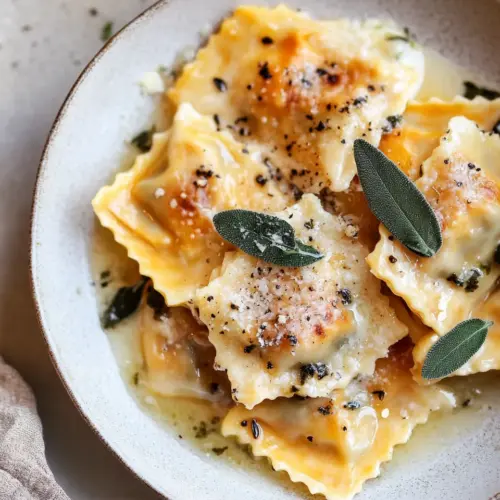
Butternut Squash Ravioli with Sage Butter
Butternut Squash Ravioli with Sage Butter is a creamy autumnal pasta alternative that pairs roasted squash with ricotta and Pecorino Romano for a silky filling, finished in nutty browned butter studded with crisp sage. It makes an easy weeknight dinner or elegant dinner party main, offering rich, comforting flavors with a simple, approachable technique that is worth making again.
Equipment
- Sheet Pan
- Medium Saucepan
- Large Pot
- Slotted Spoon
Ingredients
- 1 1/4 lbs butternut squash diced 1-inch Roasted to deepen sweetness and soften texture for easy mashing; provides the primary squash flavor and body for the ravioli filling while contributing natural sugars and moisture that balance the cheeses.
- 1 tbsp oil Used to sauté aromatics and prevent sticking; brings a neutral cooking fat that helps roast or pan-cook the squash and garlic without overpowering other flavors.
- 4 cloves garlic, smashed with the side of a knife Crushed and lightly cooked to infuse a mellow, aromatic garlic note; adds a savory depth that complements the sweet squash and enhances overall umami in the filling.
- 1/4 cup ricotta, I prefer Polly-o Folded into the mashed squash to lend creaminess and a subtle tang; helps bind the filling and creates a smooth, silky mouthfeel inside each ravioli.
- 1/4 cup Pecorino Romano, plus optional more for serving Grated into the filling to deliver salty, sharp, and nutty character; complements the ricotta and elevates savory complexity while helping season the mixture.
- 1/4 teaspoon kosher and black pepper, to taste Sprinkled into the filling to season and balance sweetness with a mild heat; combines kosher salt for overall seasoning and black pepper for subtle spiciness.
- 1/4 teaspoon nutmeg Added sparingly to provide warm, aromatic background notes; complements the squash’s sweetness and adds a hint of holiday spice without dominating the filling.
- 24 square wonton wrappers Used as the delicate pasta casing to hold the filling and create individual ravioli; their thin, pliable texture seals easily and crisps slightly when cooked or pan-fried.
- 1 large egg, beaten Beaten and brushed along wrapper edges to act as an adhesive and binding agent; ensures secure seals so the filling doesn’t leak during cooking.
- 2 tablespoons salted butter Melted to create the finishing sage butter sauce; offers rich, nutty flavor and glossy coating for the cooked ravioli while carrying the infused sage aroma.
- 8 fresh sage leaves, divided Crisped in butter to aromatize the sauce and provide herbaceous, slightly peppery notes; divided use allows some leaves to be incorporated into the butter and some reserved for garnish.
Instructions
- Preheat the oven to 400 F.: The moment the oven heats you will notice a dry warmth in the kitchen that helps crisp the outer edges of the butternut squash . This temperature is ideal for caramelization without shriveling the cubes. A common mistake is preheating for too short a time which leads to uneven roast, so wait until the oven reaches temperature.
- Place butternut, 4 sage leaves and garlic on a sheet pan and toss with 1 tablespoon oil. Season with 1/4 teaspoon salt and pepper, to taste.: At this stage you should feel the squash pieces toss easily in the oil, and the garlic should sit nestled between chunks so it roasts gently. Even spacing on the sheet pan ensures brown edges; overcrowding causes steaming instead of roasting. Avoid dumping too much oil which prevents browning.
- Roast until tender, about 35 minutes. Transfer to a bowl and mash with a fork until very smooth (a blender would work too).: The oven will fill with a sweet, toasty aroma as the squash caramelizes, and pieces will turn golden at the corners. You want fork tender cubes that mash easily, not mushy blobs. A typical problem is flipping too often, which interrupts browning, so leave them undisturbed for long enough to color.
- Mix in ricotta and pecorino, season with nutmeg, 1/4 teaspoon salt and black pepper.: When mashed, the mixture should be creamy with no large chunks, releasing a warm, sweet scent. Using a blender produces silkier texture but can make the filling too loose, so pulse gently. Over-blending can add water, so if it gets too wet, drain briefly or let it sit to firm up.
- Place the wonton wrapper on a work surface, brush the edge lightly with egg wash and add 1 tablespoon filling onto the center.: After adding the cheeses the filling will smell richer and slightly tangy, and the nutmeg should provide a cozy, aromatic undertone. Stir until homogenous, tasting for balance. A common error is under seasoning, so taste and adjust small amounts of salt and pepper carefully.
- Fold over into a triangle and press the edges to seal. Cover with a damp cloth while you make the rest.: The wrapper should feel pliable and dampen slightly from the egg wash, which helps seal. The filling mound should sit centered without touching edges, and you should see the moisture of the filling but not pooling. Using too much filling will cause leaks during cooking, so keep it controlled.
- Chop remaining sage leaves. Place butter and sage in a medium saucepan and melt over low heat. Keep warm over very low heat.: When sealed correctly the edges will be tight with no air pockets, and the wrapper will look slightly glossy where the egg wash bonded it. Covering prevents wrappers from drying out and cracking. A frequent mistake is failing to press thoroughly, which creates bubbles that burst in the pot.
- Bring a large pot of salted water to a boil. Add half of the ravioli (they are very delicate) and cook until the rise to the surface, about 2 minutes.: The butter should foam and smell nutty as the sage infuses it, but keep the heat low to avoid burning. The scent will shift from grassy to toasted, signaling readiness. Avoid letting the butter darken too much at this stage, as burnt butter will taste bitter.
- Use a slotted spoon to remove and add to the pan with the butter. Repeat with the remaining ravioli.: The water should be at a vigorous boil and smell faintly saline, which seasons the pasta as it cooks. Ravioli will bob to the top when done, appearing plump and slightly translucent at the edges. Crowding the pot is a common error because it makes them stick together, so cook in batches.
- Gently toss raviolis with the butter until warm, 1 to 2 minutes.: As you transfer the ravioli you will hear a soft plop and see them glisten from residual water, which helps the sauce cling. Tossing in the warm butter immediately keeps them from sticking and coats them evenly. Skimping on transfer speed can leave them cold and sticky, so move them quickly and gently.
- Top with black pepper and serve with additional Pecorino Romano, if desired.: The pan will emit a rich, nutty aroma and the ravioli will take on a glossy sheen, with edges possibly crisping where they touch the pan. Tossing briefly melds flavors without breaking the parcels. A common mistake is over-tossing, which can rupture the wrappers and lose the filling.
- Top with black pepper and serve with additional Pecorino Romano, if desired.: Freshly ground black pepper will add a spicy lift and the extra Pecorino Romano creates a salty finish that contrasts the sweet filling. Plate while warm so the sauce remains silky and the cheese melts slightly on top. Serving too late cools the butter and dulls the flavors, so time plating close to the table service.
Notes
- Swap the cheese sparingly Use a similar aged sheep or cow cheese only if you cannot find Pecorino Romano, but keep the ratio small so the filling does not become overly salty.
- Adjust the nutmeg A light pinch of nutmeg lifts the filling, but avoid overdoing it as it can dominate the squash; add cautiously and taste.
- Make wrappers ahead Assemble ravioli and place them on a tray dusted with a little flour, cover with a damp towel, and refrigerate briefly until ready to cook to streamline service.
- Control texture If you prefer a chunkier filling, pulse the roasted butternut squash less when mashing; for silkier texture use a blender in short bursts.
- Sage handling Crisp sage in the butter just before serving for a crunchy, herbal garnish, or finely chop it into the filling for a subtler herb presence.
- Butter choice Use good quality salted butter for the sauce, it browns predictably and seasons the dish as you toss the ravioli.