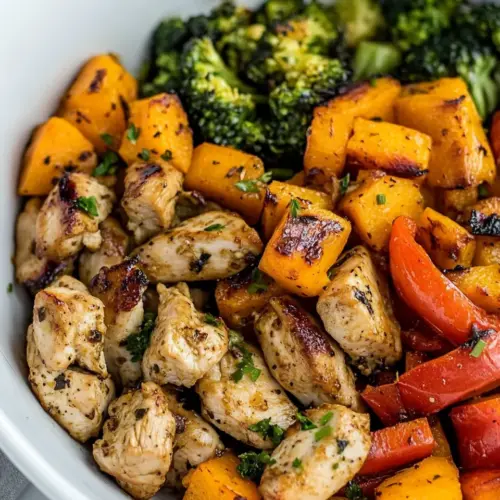
Butternut Squash Ginger Chicken Stir Fry
Butternut Squash Ginger Chicken Stir Fry is a vibrant, easy weeknight dinner that marries sweet roasted squash, tender chicken, and zippy ginger into a glossy, savory sauce. The dish is quick to prepare, offering crisp vegetables and deeply browned chicken in one skillet, perfect for busy evenings. Make it to enjoy warm, balanced flavors and a satisfying texture contrast that will become a family favorite.
Equipment
- Large wok or skillet
- Lid
- Grater
- Tongs or spatula
Ingredients
- 2 tbsp avocado oil or algae oil Use as a high smoke point cooking fat to sauté vegetables and chicken efficiently; provides a neutral flavor that lets spices shine. Add at the start of cooking to prevent sticking and promote even browning without burning delicate aromatics. Can be adjusted slightly to control richness and mouthfeel in the final stir-fry.
- 2 cups butternut squash peeled and chopped Provide sweet, creamy bulk and a tender, slightly fibrous texture when peeled and chopped; caramelizes at high heat to add depth and natural sweetness. Pair with warming spices and umami components to balance the dish. Cooks relatively quickly when cut into uniform pieces to ensure even tenderness.
- 2 large carrots peeled and chopped Contribute earthy sweetness and firm bite when peeled and chopped; help balance richer flavors and add color contrast. Retain some texture after quick stir-frying, offering pleasant chew and natural sugars that enhance caramelization. Choose uniform pieces for consistent cooking.
- 1/2 red bell pepper Add bright color and crisp, slightly sweet flavor when thinly sliced or chopped; provide a fresh, slightly tangy counterpoint to richer ingredients. Crispness helps maintain textural contrast in the stir-fry. Adds visual appeal and mild vitamin C.
- 2 cups mushrooms quartered Offer savory, umami-rich flavor and tender, meaty texture when quartered; absorb sauces and seasonings well. Browning mushrooms adds complexity and enhances overall savoriness. Cook over medium-high heat to concentrate flavor without making them soggy.
- 1 large crown broccoli chopped into florets Introduce a fresh, slightly bitter vegetal note and crunchy texture when chopped into florets; hold up well to quick, high-heat cooking. Add near the end of stir-frying to retain bright color and crispness. Provide nutritional density and a pleasant mouthfeel contrast.
- 1.5 -inch nub ginger, peeled and grated Deliver sharp, warming, and slightly spicy aroma and flavor when peeled and grated; brighten the entire dish and aid digestion. Incorporate early to infuse oil with fragrance, then cook briefly to tame raw heat while preserving freshness. Small nubs pack concentrated flavor.
- 1 large chicken breast cut into strips Supply lean protein and substantial texture when cut into strips; develop savory browning that complements the vegetables and spices. Marinate briefly or season before cooking for enhanced flavor absorption, and cook until fully opaque for safety. Sear over high heat for caramelized exterior.
- 1 tsp dried basil Add a sweet-herb aromatic note and subtle Mediterranean warmth when sprinkled; complement sweeter vegetables and savory components. Use sparingly to avoid overpowering delicate flavors, and it melds well with ginger and coconut aminos. Enhances background flavor complexity.
- 1/4 tsp ground cinnamon Contribute a warm, sweet-woodsy undertone when used sparingly; pairs surprisingly well with squash and ginger to amplify autumnal spice notes. Use minimal amount to avoid dominating other flavors while adding aromatic depth. Blends into sauces and glazes smoothly.
- 3 tbsp coconut aminos Provide a salty, slightly sweet, umami-forward seasoning that replaces soy; balances the dish without gluten. Add during cooking to coat ingredients and intensify savory notes while maintaining a subtle sweetness. Can be adjusted to taste for sodium control.
- 2 tsp fish sauce optional Introduce concentrated savory depth and a touch of briny complexity when included; enhances umami and rounds out flavors. Add cautiously if using coconut aminos to prevent over-salting, and incorporate toward the end for maximum flavor impact. Optional for those who prefer extra richness.
- 1/2 tsp sea salt to taste Regulate overall seasoning and bring out ingredient flavors when adjusted to taste; helps balance sweetness and umami in the finished stir-fry. Sprinkle gradually and taste as you go to avoid oversalting, keeping in mind other salty components. Use fine sea salt for even distribution.
Instructions
- Heat the avocado oil over medium in a large wok or skillet. Add the butternut squash and carrots and stir well. Cover and cook 4 to 5 minutes, until vegetables begin to soften.: The pan should sing softly when the oil is ready, a thin shimmer and faint wisps of steam that tell you surface temperature is ideal. At this stage you will notice the oil moving quickly across the metal when you tilt the pan, and it should feel warm to your wrist if held nearby cautiously. The purpose of starting on medium is to allow the fat to spread and prevent immediate burning of the outer vegetables, ensuring the butternut squash and carrots can develop gentle color rather than blackened edges. If the oil smokes heavily, lower the heat right away to avoid bitterness. A common mistake is starting too hot which chars the exterior while leaving interiors undercooked, so be patient and watch for that shimmering cue.
- Add remaining veggies (bell pepper through ginger), cover, cook 1 minute. Remove cover and cook 2 minutes uncovered.: When they hit the pan you will hear a soft, steady sizzle as moisture begins to evaporate, and the aroma of sweet squash will rise. Stirring coats each piece in oil so surfaces brown evenly, which builds sweetness through caramelization. Keep the pieces moving at first to avoid sticking, then let them rest briefly against the hot surface to form light golden patches. This technique deepens flavor, and the visual cue to look for is faint golden edges on the cubes. Avoid overcrowding the pan, because squeezing too many pieces together produces steaming instead of browning, yielding bland, mushy vegetables.
- Scoot veggies off to side to make room for the chicken. Add chicken, basil, and sea salt. Brown chicken 2 - 3 minutes until mostly cooked through then stir into rest of stir fry. Cover and cook 5 minutes, or until chicken is cooked through.: With the lid on, steam collects and gently penetrates the squash and carrots, softening their centers while the pan maintains some browning at contact points. You should hear a muffled hiss under the lid, and when you lift it the aroma will be sweeter and more developed. The cover speeds cooking so the roots cook through without overcooking more delicate ingredients later. A frequent oversight is leaving the lid too long, which can make the pieces collapse, so check at four minutes and test with a fork for tenderness.
- Add liquid aminos, fish sauce, and sea salt. Cook, stirring occasionally, until much of liquid has burned off, about 2 to 3 minutes.: The added vegetables introduce more moisture and brightness, and the brief covered period uses steam to start their softening. You will notice a shift in scent as the pepper and ginger release fragrant notes, and the pan surface will look glossier from released juices. This short steaming stage helps everything reach similar doneness without losing the pepper's crispness. Avoid cooking too long under cover here, as peppers can become papery; the next quick uncovered step preserves texture.
- Serve stir fry with choice of side dish and enjoy.: Exposing the pan again allows excess moisture to evaporate and encourages light browning on the newer vegetables. You should hear an enlivened sizzle and see small bubbles of sauce or vegetable juices reducing on the surface. This step concentrates flavor and gives the veggies a pleasant sheen, signaling they are ready to meet the chicken . If the mixture seems watery, increase heat slightly to hasten evaporation, but watch carefully so you do not scorch the sugars.
- Scoot veggies off to side to make room for the chicken: Pushing the vegetables aside creates a hot zone on the pan for direct contact with the surface, where the chicken can develop a sear. The sound changes to a louder, crisp sizzle when the chicken hits the metal, and the visual of browning edges is very satisfying. This staging preserves the texture of both proteins and vegetables, because the chicken benefits from head on heat while the vegetables continue cooking gently. A common mistake is mixing everything at once, which prevents a good sear and leads to steaming instead of caramelization.
- Add chicken basil and sea salt: Sprinkling sea salt and dried basil onto the chicken enhances its surface flavor and encourages browning. As the meat sears you will smell a toasty, savory note, and slight crusts will form at the edges where the proteins meet the hot pan. This step is about building layers of taste, so season moderately now and taste later, because salt will concentrate as liquids reduce. Avoid skipping salt at this stage since it is key to flavor development.
- Brown chicken 2 to 3 minutes until mostly cooked through then stir into rest of stir fry: The short browning period gives the chicken caramelized bits that add depth, while finishing it with the vegetables lets residual heat cook it fully without drying. You should see golden patches and feel the meat firm slightly when pressed. When incorporated, the pan will release a chorus of sizzling as flavors mingle. Overcooking is the chief pitfall here, so aim for a slight pink center if you will finish covered, because the next covered stage will bring it to safe doneness.
- Cover and cook 5 minutes or until chicken is cooked through: This gentle finish uses steam to ensure the chicken reaches a safe internal temperature while the vegetables continue to soften. The aroma will deepen as juices mingle, and when you lift the lid the chicken should feel springy and the juices clear. This method keeps the meat juicy, but do not extend the covered time excessively or the texture will turn dry. A quick probe with a fork or thermometer prevents guesswork.
- Add liquid aminos fish sauce and sea salt: These liquids introduce umami and savory tension that balance the sweetness of the vegetables. When they hit the pan you will notice the sauce loosen then begin to reduce, and a pleasing savory steam will rise. This step ties the dish together because the salty, slightly sweet glaze coats each component, making every bite cohesive. Avoid pouring too much at once because excessive liquid requires longer reduction and can wash out the pan flavors.
- Cook stirring occasionally until much of liquid has burned off about 2 to 3 minutes: As the sauce reduces you will see it thicken and cling to vegetables and chicken , creating glossy, flavorful bites. The sounds change from a heavy sizzle to a livelier bubbling as sugars concentrate and caramelize slightly. This reduction is crucial for texture and taste, because a thin sauce will not adhere well. Be attentive and stir, scraping the pan to prevent any burnt patches from forming which would impart bitterness.
- Serve stir fry with choice of side dish and enjoy: At serving the aroma should be warm and inviting, with a balance of sweet, savory, and bright ginger . Let the dish rest a minute so flavors settle, and plate it so the glossy sauce shows on top. Enjoy immediately for the best texture. A common oversight is letting it sit too long which softens the vegetables and dulls the vibrant contrasts you worked to create.
Notes
- Swap the oil Try avocado or algae oil for a neutral, high smoke point option; each oil slightly shifts mouthfeel and browning behavior so pick one based on your pan and heat.
- Adjust the umami Use all coconut aminos for a milder, sweeter glaze, or include the optional fish sauce sparingly to deepen savory notes without making the dish fishy.
- Vary the vegetables Keep the same cooking order: roots first then quick greens, this ensures each element hits ideal texture even if you swap in seasonal produce.
- Make it spicier Add ground chile or red pepper flakes to the sauce at the reduction stage so heat is integrated, not just sprinkled on top where it may feel disjointed.
- Batch friendly Double the vegetables but cook in two batches if needed to avoid overcrowding, then combine at the end so everything retains color and sear.