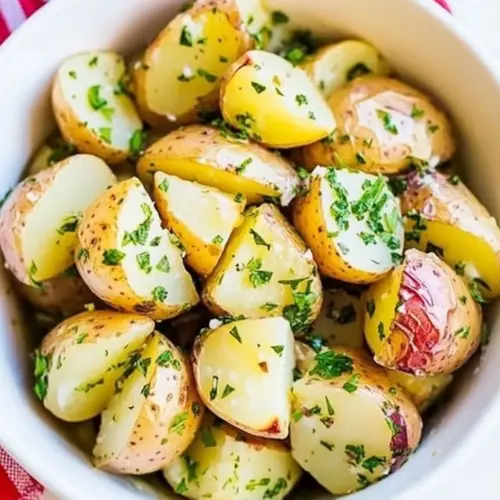
Buttered Parsley Potatoes
Buttered Parsley Potatoes are tender small red potatoes tossed in melted butter with a hint of garlic and bright parsley, offering a creamy yet fresh side. This easy weeknight side is quick to prepare and comforting, with glossy, well seasoned bites that complement a variety of mains. Make it for dinners when you want simple, crowd pleasing food that feels thoughtfully homemade.
Equipment
- Large Pot
- Colander
Ingredients
- 2 pounds small red potatoes Provide small red potatoes as the base of the dish, offering a creamy interior and firm skins that hold shape during boiling. Cut or leave whole depending on size to ensure even cooking and a pleasing bite. Serve warm so their texture complements the buttery parsley coating.
- 3 tablespoons butter, cut into slivers Add butter to create a rich, silky coating that enhances flavor and mouthfeel when tossed with the hot potatoes. Melt evenly to distribute fat and help the garlic powder and parsley adhere to the surfaces. Use slivers to control melting speed and prevent separation.
- 1/2 teaspoon garlic powder Season with garlic powder to contribute a mellow, aromatic garlic note without the moisture of fresh garlic. Sprinkle while the butter is warm so the powder blooms and infuses the potatoes with savory depth. Adjust amount to taste to avoid overpowering the delicate potato flavor.
- 2 tablespoons finely chopped fresh parsley Incorporate finely chopped fresh parsley to bring a bright, herbaceous freshness and a pleasant color contrast. Stir in at the end to preserve the herb's flavor and delicate texture while coating the potatoes. Use fine chopping to distribute flavor evenly and avoid large leafy pieces.
- salt and pepper Season with salt and pepper to balance and enhance the overall flavors, brightening the butter and parsley combination. Add salt while the potatoes are hot so it dissolves and seasons throughout, and freshly ground black pepper for a mild, warm spiciness. Taste and adjust to personal preference before serving.
Instructions
- If desired, remove skin from the middle of each potato. Place potatoes in a large pot and cover with 1 inch of water. Add 1 teaspoon salt and bring to a boil. Simmer 20 to 25 minutes or until soft.: The skins on small potatoes are thin and often add pleasant texture, but if you prefer a more uniform mouthfeel remove a strip of skin from the middle. You may notice a faint earthy scent as you peel, and the exposed flesh will look pale and slightly moist. A common mistake is over peeling which wastes flavor and nutrients, so remove only what you need if texture is your concern.
- Drain potatoes well and return to pot.: When you add enough water to rise about one inch above the potatoes , they cook evenly from the outside in. As the pot warms, tiny bubbles will form on the sides before a full simmer, and the water may look slightly cloudy as starches release. An error here is crowding the pot which can lead to uneven cooking, so use a pot that gives the tubers space to move.
- Add butter, garlic powder, and parsley. Toss to coat well.: Adding salt to the cooking water seasons the potatoes from the inside out, improving their flavor in a way that salting after cooking cannot fully replicate. You will hear the water shift from quiet simmering to a rolling boil with louder bubbling and a stronger steam aroma. Avoid boiling too vigorously which can cause the skins to split and over soften the interiors.
- Add salt and pepper to taste.: As the potatoes simmer, the scent of cooked starch becomes warm and slightly sweet, and a fork will slide through the flesh with gentle resistance when they are done. Test by piercing the largest potato in the pot, the center should be tender with no hard core. A common oversight is to undercook which yields chalky centers, so test several pieces to ensure uniform doneness.
- Drain potatoes well and return to pot: Draining removes excess water that would dilute the finish, and returning them to the still warm pot lets residual heat evaporate lingering moisture. You may hear a light rattling as the potatoes settle in the colander, and the pot will release a faint, comforting steam when they go back in. Avoid leaving them in a wet pot which can make the final coating of butter slide off rather than adhere.
- Add butter, garlic powder, and parsley: When you add the slivered butter , it will melt almost instantly against the hot surfaces, releasing a nutty aroma and creating a glossy coating. The powdered garlic blends into the butter and warms up, while the chopped parsley will begin releasing its herbaceous scent. Stir so the flavors mingle and coat each piece; a frequent mistake is adding cold ingredients that chill the potatoes , so ensure your additions are at room temperature for smooth integration.
- Toss to coat well: Tossing distributes the melted butter and seasonings, producing an even sheen and balanced taste. As you toss, listen for a quiet clinking and watch for a uniform glossy look across the potatoes . If you see pools of butter settling at the bottom, continue to toss gently until it is absorbed, and do not overwork them which can break the pieces apart.
- Add salt and pepper to taste: Finishing with salt and pepper allows you to tailor the final seasoning. Taste a warm bite to judge how much more is needed, and keep in mind the melting butter can mute flavors slightly so adjust accordingly. A typical error is over salting early in the process; it is safer to start with less and add more as you taste.
Notes
- Swap potato size with care Make sure to choose small uniform potatoes for even cooking; larger pieces will need longer simmering and can lead to inconsistent texture.
- Butter temperature matters Cut the butter into slivers and bring it close to room temperature so it melts immediately on the hot potatoes and emulsifies into a glossy coating.
- Fresh parsley timing Add the chopped parsley at the end to retain its bright flavor and vibrant color, stir just enough to incorporate but not to bruise the leaves.
- Season progressively Add a little salt to the cooking water and finish with more to taste at the end, this layers seasoning and yields better depth than salting only once.
- Drain thoroughly After boiling, let the potatoes sit briefly in the colander to release excess steam, this helps the butter cling rather than pool.
- Keep leftovers cohesive Store cooled potatoes in an airtight container and reheat gently to avoid drying out; a splash of warm butter before serving revives the texture.