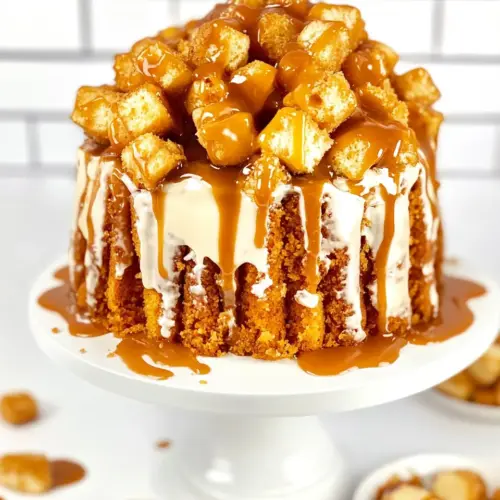
Butter Brickle Poke Cake
Butter Brickle Poke Cake is a creamy, buttery dessert with pockets of gooey caramel and crunchy toffee, perfect for an easy weeknight dessert or a festive gathering. This no fuss bake blends boxed cake convenience with rich toppings for a crowd pleasing finale that travels well and gets better after chilling, a delightful reason to make it for any celebration.
Equipment
- Hand Mixer
- Mixing Bowls
- 9x13-inch Baking Dish
Ingredients
- 1 box butter pecan cake mix Provides a fragrant, nutty-flavored cake base and pre-mixed leavening to ensure consistent rise and texture when baked.
- 1 (4-oz) box instant butterscotch pudding Thickens and infuses the dessert with concentrated butterscotch flavor, setting quickly to create rich pockets of taste throughout the cake.
- 1 cup water Adds necessary moisture to hydrate the cake mix and dissolve the pudding mix, contributing to proper batter consistency and tenderness.
- 1/2 cup butter, melted Imparts richness and a tender crumb while aiding in moisture and flavor; melted form blends seamlessly into the batter for even distribution.
- 4 large eggs Contributes structure, lift, and emulsification to the batter while enriching the cake with protein and added moisture for a stable bake.
- 2 (8-oz) bag toffee bits Provides crunchy, buttery toffee pieces that add texture contrast and bursts of sweet, caramelized flavor in every bite.
- 1 (14-oz) can sweetened condensed milk Adds concentrated sweetness and creamy mouthfeel that soaks into the cake when poured, creating sticky, caramel-like pockets.
- 1 (12.25-oz) jar Smucker's caramel ice cream topping Delivers an extra layer of smooth caramel flavor and glossy topping that enhances sweetness and creates a saucy finish over the cake.
- 1 1/2 cups heavy whipping cream Whips into light, airy whipped cream to create a fluffy topping or filling, balancing sweetness with creamy texture for the finished dessert.
- 2 tbsp light brown sugar Contributes deep, molasses-like sweetness and slight chewiness when sprinkled or folded, enhancing the caramel and toffee notes.
- 1 tsp vanilla extract Enhances overall flavor depth with warm, aromatic notes and stabilizes whipped cream when included, rounding out the dessert's sweetness.
Instructions
- Preheat oven to 350ºF. Spray a 9×13-inch baking dish with nonstick cooking spray.: As the oven warms you should notice a gentle hum and rising warmth, and this initial step sets the scene for even baking. Proper preheating ensures the batter begins rising immediately, producing a tender, consistent crumb. If you skip preheating, the cake may bake unevenly or require extra time. A common mistake is not preparing the pan thoroughly, which can make removing slices messy, so be generous with spray or lightly grease the dish and dust with flour if you prefer.
- In a large bowl, combine butter pecan cake mix, butterscotch instant pudding mix, eggs, water, and melted butter. Mix with an electric mixer until combined. Stir in 1/2 cup brickle toffee bits.: Right after combining you should see a glossy, slightly thick batter with small flecks of toffee. The mixer helps incorporate air for lift, while the melted butter ensures a smooth, rich batter. The reason you add some toffee to the batter is to create little crunchy pockets that contrast with the later soak. Avoid overmixing, or the cake can become dense and tough; stop when ingredients are just combined. If you notice clumps of dry mix, scrape the bowl and mix briefly to avoid unmixed pockets.
- Pour batter into the prepared pan. Bake for 28 – 33 minutes, until a toothpick inserted into the middle of the cake comes out clean.: When placed in the oven the batter will bloom and the top will begin to turn a golden, buttery color. Listen for a slight hollow sound if you gently tap the surface as a cue for doneness. The toothpick test helps you avoid underbaking; if there are moist crumbs attached, give it a few more minutes. A common misstep is opening the oven repeatedly, which can cause uneven rising, so check near the lower end of the time range and then again if needed.
- While cake is baking, whisk together milk and caramel topping until well blended. When the cake is done and while it's still hot, poke holes in it with a fork or straw. Pour milk mixture over the cake. Allow cake to cool completely.: Poking while hot lets the liquid sink deeply, creating glossy pockets throughout the crumb. The milk and caramel should blend into a smooth, pourable sauce with a shiny finish. Pour slowly so the mixture absorbs without pooling excessively on the surface. If you pour too fast, the liquid might run off the sides and not soak evenly. A troubleshooting tip is to start pouring in a grid pattern, allowing time for absorption between pours.
- Sprinkle 1/2 cup toffee bits over the cake.: The scattered toffee will cling to the slightly tacky top and provide an enticing crunchy layer. Visually, the toffee pieces add contrast against the caramel sheen, and every bite gains a textural pop. If you apply them while the cake is still very warm, they may soften slightly, which can still be delicious, but if you want crisp bites, wait until it cools. Avoid overloading the surface or slices can be harder to serve neatly.
- In a chilled medium bowl, combine heavy cream, brown sugar, and vanilla extract. Beat with an electric mixer on high speed until soft peaks form.: Chilling the bowl and beaters helps the cream whip faster and hold structure. As you beat you will hear the change in sound and see the cream thicken, going from glossy liquid to soft peaks that hold shape but still slump slightly at the tip. This step adds an airy counterpoint to the dense, soaked cake beneath. Common mistakes include using warm cream or overwhipping into grainy butter, so stop when soft peaks form.
- Spread whipped cream over the top of the cooled cake. Sprinkle the top of the cake with toffee bits. Drizzle caramel sauce over the top, if desired.: The whipped topping should feel light and cloudlike as you spread it, smoothing into gentle peaks and valleys that catch the caramel drizzle. The final toffee and caramel finishes create a glossy, textured surface that invites immediate serving. If the cake is not fully cooled, the whipped cream may melt and lose its form, so patience pays off here. A frequent error is applying the whipped topping while the cake is warm, which will cause separation and a runny appearance; wait until it is thoroughly cool.
Notes
- Swap the cake mix flavor You can use yellow or spice cake mix to shift the background flavor while maintaining the same method and soak ratio, which creates a subtly different aromatic profile without altering texture.
- Layer extra toffee Add more toffee bits on top just before serving for maximum crunch on each slice, especially if the cake has been refrigerated and softened the initial bits.
- Make it a day ahead Prepare the cake fully the night before and refrigerate to allow the flavors to meld; this often improves sliceability and deepens the overall flavor experience.
- Control sweetness balance If you prefer slightly less sweetness, reduce the caramel drizzle amount and let the sweetened condensed milk be the primary soak, which still provides a rich texture without extra syrup.
- Stabilize whipped cream For longer holding time, beat in a small amount of dry instant pudding mix or a stabilizer to your whipped cream so it keeps its shape during serving and transport.
- Present with style Pipe the whipped cream into rosettes and sprinkle toffee in the center of each, creating a decorative finish that also portions the crunchy topping evenly.