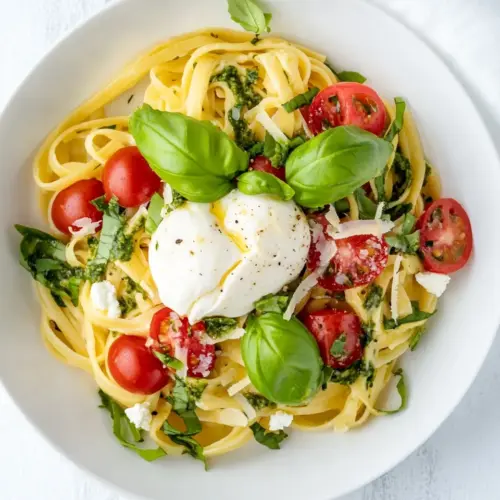
Burrata Pasta
Burrata Pasta is a creamy, herb bright pasta salad with pillowy burrata cheese, peppery rocket leaves, and sweet cherry tomatoes. This easy weeknight dinner comes together fast, offering a luxurious mouthfeel and fresh summer flavors. Make it for casual dinners or small gatherings when you want something impressive but effortless to pull together.
Equipment
- Large Pot
- Strainer
- Large serving bowl
- Blender or food processor
Ingredients
- 350 g penne pasta Cook until al dente to provide the pasta base that carries sauce and textures; drain and reserve some cooking water to loosen the sauce if needed. Use as the starchy backbone of the dish, pairing well with creamy burrata and bright tomatoes.
- 2 burrata cheese balls, (125 g each) Tear open and allow to melt slightly over warm pasta to create a rich, creamy center that adds indulgent texture and dairy flavor. Serve whole or broken into pieces so the soft curd blends with sauce for a luxurious finish.
- 80 g rocket leaves Toss gently into the salad or pasta after dressing to add a peppery, crisp leafy contrast and fresh herbal aroma; avoid overworking to keep leaves vibrant. Use as a refreshing counterpoint to the rich cheese and warm pasta.
- 250 g cherry tomatoes, cut into quarters Halve or quarter to release juices and natural sweetness that form the bright tomato component; quickly sauté or roast to concentrate flavor if desired. Combine with olive oil and garlic to make a simple fresh sauce that complements burrata.
- 6 basil leaves Tear or chiffonade to release aromatic, sweet-bitter notes that lift the overall flavor; scatter over the finished dish for color and fragrance. Use sparingly to avoid overpowering delicate cheese and greens.
- sea salt Season judiciously to enhance and balance flavors, especially tomatoes and pasta; add during cooking and adjust at the end to taste. Use coarse crystals when finishing for a pleasant texture contrast.
- 15 g basil leaves, (roughly 30 leaves) Chiffonade or roughly tear to provide an additional fresh basil layer with intense aroma and flavor; incorporate at the end to preserve fragrance. Use to garnish and reinforce basil notes without overpowering other ingredients.
- 3 tablespoon extra-virgin olive oil Drizzle to form the sauce base and carry fat-soluble flavors, adding richness and sheen to the pasta; use good-quality extra-virgin olive oil for best flavor. Toss with hot pasta and tomatoes so it melds into a glossy coating.
- 1 garlic clove, chopped Crush or finely chop to release pungent, savory aromatics that infuse the oil and tomatoes; lightly sauté to mellow sharpness before combining with pasta. Use sparingly to avoid raw bite overpowering delicate burrata.
- 1 teaspoon cold water Add a small amount when whisking with oil or drippings to slightly loosen the sauce and help emulsify for a silkier coating on pasta. Use cold water sparingly to adjust consistency without diluting flavor.
- a pinch of sea salt Sprinkle a tiny amount at the end to finish and balance the dish; use as a subtle accent rather than primary seasoning. Keep to a light pinch to avoid over-salting the delicate burrata and tomatoes.
Instructions
- Cook the pasta in a large pot of lightly salted boiling water, until al dente, about 2-3 minutes shy of the time on the package instructions.: The water should roar gently when it hits a rolling boil, and adding a generous pinch of sea salt seasons the pasta from the inside out. As the penne pasta cooks you will notice a faint wheat aroma and occasional rising bubbles, which signals even cooking. The reason to pull it a little early is to preserve chewiness so the pasta stands up against the creamy burrata cheese , rather than turning mushy when mixed. A common mistake is leaving the pasta until fully soft, which ruins the contrast of textures in the final dish, so taste a piece a couple of minutes before the package time.
- Transfer the pasta to a strainer and place it very quickly under cool running water for a couple of seconds. Drain the pasta, and let it cool slightly, before mixing it with the rest of the ingredients.: The brief chill halts cooking immediately and firms the exterior, giving you control over texture. You will feel the heat drop from the pot to your hands through the strainer, and the surface of the pasta will go from glossy steam to a slightly drier sheen. This step is important because it prevents residual heat from continuing to soften the pasta while you finish other components. Avoid rinsing until it is necessary though, as prolonged running water can remove too much surface starch that helps dressings cling to the noodles.
- Place the pasta in a large serving bowl. Add in the tomatoes, followed by the rocket leaves and basil leaves. Mix all the ingredients.: As the steam fades you will smell toasted wheat and sweet notes from the pasta, which tells you it is ready to meet the tomatoes and greens. Cooling slightly helps protect the fresh rocket leaves and basil leaves from wilting when they hit the bowl. The mistake to avoid here is adding everything while the pasta is steaming hot, which will turn vibrant herbs limp and make the burrata cheese melt too quickly.
- Finally, top the pasta with burrata cheese. You can leave it whole or cut it open and give all the ingredients a quick mix. Drizzle the basil oil on top and serve.: A roomy bowl prevents crushing delicate ingredients and lets you toss gently so each component mixes evenly. When you add the cherry tomatoes , their juices will begin to mingle with the pasta, creating pockets of bright acidity. If you overcrowd a small bowl, you risk bruising the tomatoes and tearing the leaves, which alters both texture and appearance.
- Place the basil leaves, garlic, a generous pinch of sea salt, and a tiny bit of water in a blender or food processor.: As you fold these in you will hear soft tearing and see the tomatoes release little droplets of juice that cling to the penne pasta . The contrast between the juicy tomatoes and crisp peppery greens creates lively bites. Make gentle folding motions to avoid squashing the tomatoes, because a crushed tomato can make the mixture watery instead of maintaining those delightful pops of flavor.
- Pulse for 30 seconds, slowly incorporating the olive oil into the jug/bowl, until all the ingredients are combined.: Use a wide spoon to toss so the rocket leaves and basil leaves are coated without becoming limp, and the tomato juices distribute evenly. The visual cue is that the pasta will begin to glisten lightly from the natural juices and a little olive oil. Overmixing or aggressive tossing will break down the tomatoes and wilt the herbs, which reduces the freshness the recipe relies on.
- Finally, top the pasta with burrata cheese: When you add the cool burrata cheese , you will notice a dramatic temperature contrast and a creamy, milky aroma. You can leave each burrata cheese whole for a dramatic presentation, or cut it open so the soft center spills over the pasta, creating an impromptu sauce. A common error is mixing the burrata cheese in too early, which results in a completely melted cheese and loss of its signature texture, so add it right before serving.
- You can leave it whole or cut it open and give all the ingredients a quick mix: Tearing open the burrata cheese right at the table invites guests to watch the cream cascade into the pasta, creating comforting ribbons of white. The smell is richer, and the sauce coats the penne pasta beautifully. If you prefer distinct bites of cheese, leave it intact, but be aware that leaving it whole slightly limits how much of the creamy center mingles with the rest.
- Drizzle the basil oil on top and serve: The glossy basil oil adds herbal perfume and a silky mouthfeel, giving each forkful a unified finish. When you pour the oil you will see it glint on the pasta, and the aroma of basil leaves and garlic will lift the entire dish. A mistake to avoid is using too little oil, which leaves the pasta dry, or too much, which can make the bowl slick and obscure the subtleties of the burrata cheese .
- Place the basil leaves, garlic, a generous pinch of sea salt, and a tiny bit of water in a blender or food processor: The sound of the blender starts soft and becomes a steady whir as the leaves break down, releasing aromatic oils. The cold water helps keep the color bright and prevents the basil from bruising excessively. Doing this by hand may not fully release the basil's flavor, so blending is preferred; however, over-blending can raise temperature and darken the leaves.
- Pulse for 30 seconds, slowly incorporating the olive oil into the jug or bowl, until all the ingredients are combined: As you drizzle in the extra-virgin olive oil slowly, you will see the mixture emulsify into a glossy, fragrant oil that coats the back of a spoon. The aroma of fresh basil leaves and a hint of garlic should be prominent but balanced. The trap here is adding the oil too quickly, which prevents emulsification and yields a separated sauce rather than a cohesive basil oil.
Notes
- Use good quality burrata - Fresh burrata cheese makes a big difference; its creamy center is the highlight, so buy from a reputable source and use it the same day you plan to serve. If the cheese is a few days old or stored improperly it will lose its delicate texture.
- Choose the right pasta shape - penne pasta is ideal because its tubes capture the cream and herb oil, but other short shapes like rigatoni or fusilli work too if you prefer a slightly different mouthfeel. Avoid thin strands which will not hold the basil oil as effectively.
- Control tomato moisture - If your cherry tomatoes are very juicy, drain some of the seeds and excess liquid before adding them so the pasta does not become watery. Gently scooping out seeds is quick and preserves tomato flesh.
- Make basil oil ahead - The basil oil can be made a day ahead and refrigerated in a sealed jar; bring it to room temperature before using to restore its fluidity and aroma. Re-chill will solidify oils slightly, so plan ahead.
- Keep rocket fresh - Store rocket leaves in a paper towel lined container to prevent wilting; add them to the bowl at the end to maintain their peppery crunch. If added too early they will release moisture and lose texture.
- Serving for a crowd - Toss the pasta and tomatoes in a large bowl and hold the burrata cheese separate until serving; this allows guests to enjoy an interactive moment when the cheese is opened at the table.