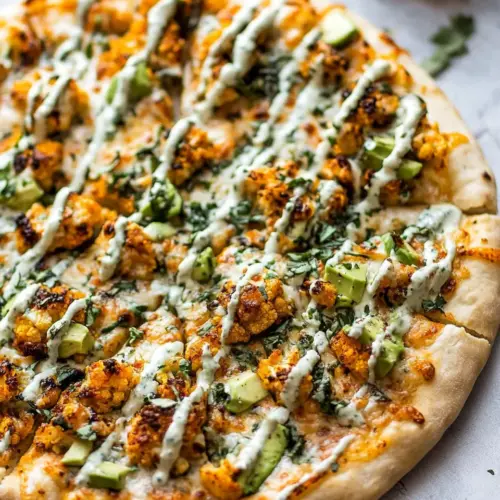
Buffalo Roasted Cauliflower Pizza
Buffalo Roasted Cauliflower Pizza combines crispy roasted cauliflower, melty cheeses, and a smoky chipotle avocado drizzle for a creamy, spicy, easy weeknight dinner. The tangy buffalo sauce and sharp cheddar meet cooling avocado, creating contrasting textures and bold flavors. Perfect for casual gatherings or a satisfying family meal, this pizza delivers big taste with vegetable forward balance, making it a recipe worth repeating.
Equipment
- Oven
- Baking Sheet
- Mixing Bowl
- Blender
- Rolling Pin
Ingredients
- 1 1/2 cups flour Combine into a dough where flour provides structure and body, forming the base of the pizza crust when mixed with liquids and yeast. Ensure proper hydration and kneading to develop gluten for a chewy, crisp crust after baking.
- 1/2 cup warm water Add as the primary liquid to hydrate the flour and activate the yeast; warm water helps dissolve yeast and encourages fermentation. Monitor temperature so it is warm but not hot to preserve yeast viability for proper rise.
- 1 1/2 teaspoons active dry yeast Activate to leaven the dough and create air pockets, giving the crust lightness and lift during proofing and baking. Sprinkle into warm water with honey to proof and ensure it bubbles before incorporating into the flour.
- 1 tablespoon honey Sweeten to feed the yeast and promote fermentation while contributing a subtle sweetness to the crust flavor profile. Dissolve into warm water before adding yeast to accelerate activation and consistent rising.
- 1/4 teaspoons salt Season sparingly to enhance overall flavor balance in the dough while regulating gluten activity for improved texture. Mix evenly into dry ingredients to ensure uniform seasoning throughout the crust.
- 1 tablespoon olive oil Enrich the dough by adding fat for tenderness, flavor, and improved crust browning; olive oil also aids in elasticity and handling. Brush on the dough or incorporate into the mix for a softer crumb and crisp exterior.
- 1 large head cauliflower cut into florets Roast as the main vegetable topping by breaking into florets to allow even cooking and char development, which intensifies flavor and texture. Toss with a small amount of oil and seasonings before roasting until tender and slightly browned.
- 1 -2 tablespoons olive oil Toss to coat florets for roasting, providing surface fat that promotes browning, caramelization, and crisp edges. Adjust quantity based on desired crispness and oven temperature to avoid sogginess.
- salt and pepper to taste Season to taste to balance and enhance the cauliflower's natural flavors, using salt to amplify and pepper for mild heat and complexity. Sprinkle before and after roasting as needed to achieve ideal seasoning.
- 1 cup of your favorite buffalo sauce my recipe is in the notes Coat to infuse roasted cauliflower with tangy, spicy flavor; buffalo sauce serves as the primary sauce to deliver characteristic heat and acidity. Use measured amount to ensure balanced flavor without overpowering the cheeses and crust.
- 8 ounces sharp white cheddar cheese shredded Melt as a primary cheese topping that contributes sharp, tangy flavor and good meltability, complementing spicy buffalo sauce. Sprinkle evenly to create savory pockets of flavor and a pleasing, slightly crumbly texture as it cools.
- 4 ounces fontina cheese shredded Melt to provide a creamy, nutty, and mellow melting cheese that blends smoothly with sharper cheeses and buffalo sauce. Layer with other cheeses to achieve depth, elasticity, and a gooey mouthfeel on the pizza.
- 4 ounces gorgonzola cheese crumbled Crumble as a bold, salty blue cheese to add punchy tang and creamy bursts; distribute sparingly for contrast with buffalo sauce and other cheeses. Use both in and optionally on top after baking for concentrated flavor pockets.
- 4 green onions chopped Garnish by chopping finely and sprinkling over the finished pizza for fresh, pungent onion flavor and a crunchy contrast to melted cheeses. Add near the end of baking or immediately after to retain some crunch and bright aroma.
- 1/3 cup cilantro chopped Finish by chopping and scattering cilantro as a bright, herbal counterpoint to spicy buffalo and rich cheeses, enhancing freshness. Add after baking to preserve its vibrant color and citrusy notes.
- 1 ripe avocado peeled + pitted Cream into a sauce or slice for topping to contribute creamy richness, cooling effect, and silky texture against spicy elements. Mash or blend into dressings or dollop slices atop the pizza for a creamy contrast.
- 1/2 cup buttermilk Thin as a component of dressings or sauces to provide acidity and liquidity, helping emulsify and lighten the avocado-based or creamy toppings. Measure to balance texture without making dressings overly thin.
- juice from one lime Brighten with lime juice to add fresh acidity that cuts through richness and balances spicy, creamy flavors on the pizza. Squeeze freshly to maximize aromatic oils and vibrant citrus notes in dressings or avocado mixes.
- 1 teaspoon dried parsley Season dry herbs to add mild, grassy flavor and a subtle green note that complements creamy and spicy elements when dried parsley is included. Sprinkle into dressings or sauces to lift the overall herbaceous profile.
- 1 teaspoon dried dill Season dry herbs to contribute a slightly tangy, savory flavor reminiscent of the sea, enhancing dressings, cream sauces, or avocado mixtures when used. Use sparingly to avoid overpowering fresher herbs or strong cheeses.
- 1/4 teaspoon onion powder Flavor as a powdered seasoning to provide a subtle sweet-onion backbone to dressings and dips without adding moisture. Incorporate into creamy mixes for added depth and rounded savory character.
- 1/4 teaspoon garlic powder Flavor similarly to onion powder by adding concentrated garlic taste without fresh garlic's texture, enhancing dressings and sauces with a warm savory note. Measure carefully to avoid overpowering delicate creamy elements.
- 1 teaspoon Worcestershire sauce Boost umami and savory depth in dressings or dips by adding Worcestershire sauce, which contributes complex tangy, slightly sweet, fermented flavors. Stir into creamy bases to round and elevate the overall taste.
- 1 inch chipotle chile adobo + 1 tablespoon adobo sauce from the can Smoke to introduce warm, spicy, and slightly fruity heat when blended into sauces or dressings; chipotle in adobo adds concentrated flavor and moderate heat. Mince finely and combine with adobo sauce to integrate evenly.
- salt + pepper to taste Adjust seasoning to taste to balance and elevate all components; salt enhances flavor while pepper adds mild heat and aromatic lift. Taste dressings, roasted cauliflower, and finished pizza, seasoning incrementally.
- 4 ounces gorgonzola cheese crumbled (optional) Optional garnish to sprinkle as extra crumbled blue cheese for additional tangy, creamy bursts after baking; can intensify blue-cheese flavor for lovers of sharp profiles. Add at serving for concentrated pockets of flavor and texture contrast.
Instructions
- In a large bowl, combine water, yeast and honey. Mix with a spoon, then let sit until foamy, about 10 minutes. Add in the flour and olive oil stirring with a spoon until the dough comes together but is still sticky. Using your hands, on a floured surface, form the dough into a ball and work the additional 1/2 cup flour into the dough if needed. All of the mixing and kneading can also be done in a stand mixer with the dough hook attachment. Next, rub the same bowl with olive oil, then place the dough inside, turning to coat. Cover with a towel and place in a warm place to rise for about 1 1/2 hours.: When your bowl of warm water and yeast starts to foam, you will see little bubbly islands that smell slightly yeasty and sweet, a sign the fermentation is alive. This foam gives the dough lift later, creating open crumbs and a tender crust. The texture of the mixture should be airy and lightly scented, not flat. If there is no foam, the most common mistake is using water that is too hot or yeast that is old, which kills activity. To troubleshoot, test water temperature by touch, aiming for warm but not hot, and try new yeast if needed.
- While the dough is rising, preheat the oven to 425 degrees F. Place the cauliflower on a baking sheet and toss with olive oil, salt and pepper. Roast in the oven for 20-25 minutes or until just beginning to char.: The bowl will gradually fill with a shaggy mass that gathers onto the spoon; it should feel tacky to the touch. This hydration level encourages a soft interior once baked. As you stir, you can smell faint olive oil richness joining the bready aroma, and the dough should begin to cling into a cohesive mass. A common misstep is overworking it at this stage, which can make the final crust tough. Let it come together gently, reserving deeper kneading for the next phase.
- While the cauliflower is roasting, make the chipotle avocado drizzle. Add all the ingredients for the drizzle to a high powered blender or food processor. Blend until smooth and creamy, scrapping down the sides as you go. Taste and season to your liking with salt and pepper.: As you press and fold the dough, you will feel its elasticity increase, signaling gluten development. The surface will shift from very sticky to manageable as you add small amounts of the reserved flour, but keep it pliable, not dry. You should hear soft smacking sounds as you fold, and the dough should bounce back slightly when pressed. Avoid adding too much extra flour, which will give a dense crust; the trick is finding that tacky but workable balance.
- By now the cauliflower should be done roasting. Add the cauliflower to a bowl and toss with 1/3 cup buffalo sauce. To the remaining 2/3 cup buffalo sauce, add 1/4 cup of the chipotle avocado sauce. Whisk until smooth.: When using a stand mixer the machine will create consistent gluten development and save effort, producing a smooth, elastic ball within minutes. You will notice the dough clean the sides of the bowl and form a glossy surface, a visual cue that the kneading is sufficient. An error to avoid is running the mixer too long, which can overdevelop gluten and tighten the crumb. Stop when the dough is slightly springy to the touch.
- Once the pizza dough is ready, lightly flour a counter. Divide the dough into 2 balls. Use your hands or a rolling pin to roll the dough out until you have a flattened disk. Place the pizzas on a greased baking sheet and then use your hands to gently tug, pull and push the pizza dough into your desired shape. If needed, trim the parchment paper down so just about an inch is overhanging from the sides. Spread the pizzas with equal amounts of buffalo sauce. Top with the cheddar and fontina cheese. Add the cauliflower and buffalo sauce. Sprinkle with gorgonzola and drizzle with any remaining buffalo sauce.: Coating the dough in a thin film of olive oil prevents sticking during the rise and gives the dough a silky sheen. Place the dough seam side down and rotate it so every part gets a light oil touch. The surface will look slightly glossy, and when covered the dough will retain moisture for a tender crust. A common oversight is using too little oil, which lets the surface dry out, forming an unwanted skin.
- Bake the pizzas at 425 degrees F for 25-30 minutes or until the cheese is all melty and gooey. Remove from the oven and top with green onions and cilantro. Drizzle with the chipotle avocado sauce. EAT while melty and delicious!: During this rest the dough should roughly double and feel pillowy, with a yeasty aroma and small air pockets visible when gently pressed. The warm environment speeds fermentation and develops flavor, and you will see a softer, aerated texture. If the dough does not rise enough, the temperature might be too low, so move it to a warmer spot. Overproofing will collapse the dough, so watch the visual cues rather than the clock alone.
- While the dough is rising, preheat the oven to 425 degrees F. Place the cauliflower on a baking sheet and toss with olive oil, salt and pepper: Preheating ensures the oven is ready to give immediate high heat when the pizzas go in, promoting color and crisping. Tossed cauliflower will glisten with oil and smell lightly savory and nutty before roasting. Spread the florets so they have room, and you will hear little rattling as they move on the sheet. Overcrowding leads to steaming instead of browning, a common mistake that prevents caramelization.
- Roast in the oven for 20 to 25 minutes or until just beginning to char: As the cauliflower roasts you will notice the smell turn from raw to sweet and nutty, and edges will develop golden brown char spots that add depth. The sound is quiet, a gentle oven hum, while the visual cue is small brown flecks and slightly crisp tips. Aim for just a bit of char so the vegetable retains some bite; over roasting will dry it out and make it lose that pleasant texture.
- While the cauliflower is roasting, make the chipotle avocado drizzle: Blending avocado , buttermilk , herbs, seasonings and chipotle creates a silky sauce that smells smoky and tangy, with a luscious green hue. The blender will whir and you should stop to scrape down the sides for an even emulsion. Taste for salt and lime balance, adjusting to preference. A typical slip is adding too little acid, resulting in a flat, bland drizzle; a squeeze of fresh lime brightens the whole sauce.
- Add all the ingredients for the drizzle to a high powered blender or food processor. Blend until smooth and creamy, scrapping down the sides as you go: A high speed blending yields a velvety, homogeneous drizzle with a glossy surface and no lumps. The smell of smoky chipotle with fresh lime should be apparent, and the texture should coat a spoon cleanly. If the sauce is too thick, add a splash more buttermilk to reach pourable consistency. Overblending for too long can slightly warm the sauce and change its freshness.
- Taste and season to your liking with salt and pepper: Tasting allows you to calibrate acidity and salt so the drizzle supports the pizza rather than overpowering it. A well seasoned drizzle will sing against the buffalo tang and the cheeses, adding harmony. If it's bland, increase salt slowly; if too sharp, a touch more avocado or a bit more buttermilk will mellow it. Skipping this step is the most common mistake and leaves the sauce underwhelming.
- By now the cauliflower should be done roasting. Add the cauliflower to a bowl and toss with 1/3 cup buffalo sauce: Tossing while hot lets the cauliflower absorb the buffalo sauce, the steam carrying the sauce into crevices so each bite gets flavor. You will see glossy orange coating and smell the vinegar forward tang. If the florets are too wet, the topping can become soggy on the pizza, so toss gently and avoid excess liquid.
- To the remaining 2/3 cup buffalo sauce, add 1/4 cup of the chipotle avocado sauce. Whisk until smooth: Combining sauces creates a layered condiment that is both bright and smoky, with emulsified texture that clings to the cauliflower and crust. The whisking action creates a uniform orange tone and a balanced body. A common error is adding too much drizzle, which dilutes the buffalo punch, so measure and taste as you go.
- Once the pizza dough is ready, lightly flour a counter. Divide the dough into 2 balls: Dividing makes two manageable pizzas with thin to medium crusts. The dough should feel elastic and slightly springy, yielding to pressure without tearing. Work on a lightly floured surface to prevent sticking while keeping the dough from drying out. Too much flour during shaping will give a dry crust, so use the minimum needed.
- Use your hands or a rolling pin to roll the dough out until you have a flattened disk: As you shape the dough, you will see it thin and widen, the edges becoming slightly thicker to hold toppings. The sound of dough moving on the counter is soft, and the surface should be even with slight bubbles forming. If the dough resists stretching, allow it to rest a few minutes to relax the gluten rather than forcing tears.
- Place the pizzas on a greased baking sheet and then use your hands to gently tug, pull and push the pizza dough into your desired shape: Shaping by hand preserves air pockets and leads to a more rustic crust, with slight irregularities that brown attractively. The surface will feel springy and the edges should puff a little. A common mistake is overhandling, which deflates the dough and gives a dense base.
- If needed, trim the parchment paper down so just about an inch is overhanging from the sides: Having a small parchment overhang helps transfer and prevents the edges from burning while keeping the pizza secure. The paper should not bunch under the crust, and trimming avoids too much paper touching the oven floor. Excess paper can curl and cause uneven browning.
- Spread the pizzas with equal amounts of buffalo sauce: A thin, even layer of buffalo sets the spicy foundation and ensures every bite has a balanced tang. You should see a bright orange sheen across the dough, but avoid a heavy puddle that will make the crust soggy. If you overapply sauce, the center may not crisp during baking.
- Top with the cheddar and fontina cheese: Layering shredded cheddar and fontina provides flavor contrast and melt dynamics, creating pockets of sharpness and creamy stretch. The cheeses will begin to soften and release aroma as they warm; you should still see distinct shreds before baking. Overloading cheese can weigh down the pizza and slow crisping.
- Add the cauliflower and buffalo sauce: Nestle the sauced cauliflower into the cheese layer so it roasts further and melds with the melting cheeses. You will hear a gentle settling as ingredients meet, and the visual should be patchy, with orange buffalo and white cheese peeking through. Crowding toppings too densely can prevent even melting and browning.
- Sprinkle with gorgonzola and drizzle with any remaining buffalo sauce: Crumbled gorgonzola creates pungent pockets that pair with the buffalo tang, and a final light drizzle adds shine and extra flavor. The blue cheese will soften into creamy islands and release an assertive aroma. Using too much blue can overpower the pizza, so scatter modestly.
- Bake the pizzas at 425 degrees F for 25 to 30 minutes or until the cheese is all melty and gooey: In the oven the cheese will bubble and the crust edges will take on golden brown notes, offering visual confirmation that the bake is complete. You should hear faint crackling as cheese edges caramelize, and the smell will be rich and savory with a hint of char. A common mistake is removing the pizza too early; the cheese should be melted and the crust set for best texture.
- Remove from the oven and top with green onions and cilantro: Fresh green onions and chopped cilantro add immediate contrast in flavor and a pop of color that brightens the plate. They should be scattered right away so their texture stays crisp. Waiting to add them will leave the herbs wilted and muted.
- Drizzle with the chipotle avocado sauce: The final silky drizzle should cascade over the hot pizza, creating glossy ribbons that cool slightly on contact and add smoky creaminess. The aroma of chipotle and lime will lift the biting buffalo, and each slice will carry a smooth counterpoint. If you drizzle too early the sauce can run off; apply after slicing for neat presentation.
- EAT while melty and delicious: Serve the pizza hot so you experience the full contrast of melted cheese, warm roasted cauliflower , and cool drizzle. The first bite should be slightly stretchy cheese and tangy buffalo, followed by smoky and creamy notes from the drizzle. Letting it sit too long will reduce the contrast between hot and cool elements, so enjoy it fresh.
Notes
- Make the buffalo sauce quickly Use the simple method in the notes, melting butter and whisking in hot sauce and seasoned salt for a consistent tangy backbone that brightens the pizza.
- Try different bake surfaces A baking stone at high heat gives a crisper bottom, a sheet pan is convenient, and a cast iron skillet can create a charred, chewy edge depending on how you prefer the crust.
- Prepare elements ahead Roast the cauliflower and blend the drizzle earlier in the day so assembly is fast and stress free when guests arrive.
- Control the spice Adjust the amount of chipotle or buffalo sauce to suit your heat tolerance; mix a little of the drizzle into the buffalo to mellow it if needed.
- Watch for oven hot spots Rotate the pan halfway through baking to get even browning and prevent one side from overcooking.