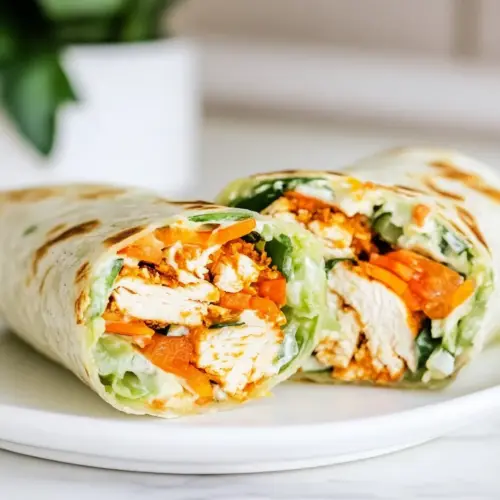
Buffalo Chicken Wrap
Buffalo Chicken Wrap is a crispy, spicy handheld that's creamy and satisfying. Juicy chicken tossed in tangy hot sauce, crunchy Romaine lettuces, and creamy avocado wrapped in soft flour tortillas makes an easy weeknight lunch or casual dinner. Quick to prepare and full of bold flavors, it’s a go to when you want something bold and fast.
Equipment
- Non-Stick Skillet
- Knife
- Mixing Bowl
- Plate
Ingredients
- 1 pound boneless skinless chicken breasts Cook thoroughly to provide the primary protein and hearty base for the wrap, yielding tender shredded or sliced chicken that absorbs the buffalo flavor well.
- 2 tablespoons olive oil Drizzle or heat to coat the chicken and help carry spices and sauce; adds a subtle richness and prevents sticking during cooking.
- 1/2 cup Frank's Hot Sauce Pour or mix into the cooked chicken to give the wrap its signature tangy heat, binding flavors and moistening the filling for a classic buffalo profile.
- 1/2 teaspoon paprika Sprinkle to contribute a warm, slightly smoky note that complements the hot sauce and enhances overall savory balance in the filling.
- 1/2 teaspoon garlic powder Dust to add a mild, aromatic garlic flavor that deepens the savory profile without overpowering the other seasonings.
- pinch of salt Add sparingly to accentuate and balance flavors, helping to bring out the other seasonings while keeping the overall taste rounded.
- 4 large flour tortillas Wrap around the fillings to hold everything together, providing a soft, pliable vessel that makes the wrap portable and easy to eat.
- 1/2 cup Blue cheese or Ranch dressing Drizzle or spread to offer creamy, tangy contrast to the spicy chicken, lending moisture and a cooling element that balances heat.
- 2 cups Romaine lettuces, chopped Chop and layer to provide crisp, refreshing crunch and a clean, slightly bitter counterpoint to the rich and spicy components.
- 1/2 cup carrot, shredded Shred to introduce sweet, crunchy texture and color, contributing freshness and a subtle vegetal note that pairs well with buffalo flavors.
- 1/2 avocado, sliced Slice to add creamy, buttery texture and mellow flavor that cools the heat while adding richness and healthy fats.
- 1/2 cup shredded cheddar cheese Sprinkle to bring melty, sharp cheesiness that adds savory depth and ties the filling together with a pleasing cheesy finish.
Instructions
- Slice chicken breast into several long, thin strips.: The cut produces pieces that cook evenly and soak up the marinade, creating more surface area for the hot sauce to cling to. When you slice, you will see pale pink meat transform into neat strips that brown attractively at the edges during cooking. A common mistake is cutting uneven strips which can lead to some pieces overcooking while others remain underdone. Aim for consistent thickness so each strip finishes at the same time, and keep your knife sharp to make clean cuts without tearing the meat.
- In a small bowl, whisk together olive oil, hot sauce, paprika, garlic powder and salt. Add chicken and allow to marinate for at least 10 minutes (or up to 24 hours).: The marinade melds bright vinegar notes from the hot sauce with the richness of the olive oil , so the chicken becomes juicy and flavorful. As it soaks, the meat will take on a glistening sheen and a faint orange color, signaling that flavors are penetrating. If you let it rest longer, it becomes even more flavorful, but overmarinating overnight can slightly change texture, so avoid much longer than 24 hours. A typical pitfall is skimping on salt, which leaves the meat tasting flat, so be sure that pinch of seasoning.
- In a large non-stick skillet over medium-high heat, add the chicken strips. Cook until no longer pink, about 4-5 minutes.: As the strips hit the hot pan you should hear a satisfying sizzle and see edges begin to brown, which adds savory caramelized flavor. The aroma will shift from raw to toasty and spicy, and juices should run clear when pierced. Avoid crowding the pan, which causes steaming instead of browning, leaving pieces pale and rubbery. If you notice steam instead of sizzle, cook in batches or slightly raise the heat to encourage Maillard browning for better flavor.
- Meanwhile, place tortillas on a plate and spread with a thin layer of bleu cheese or ranch dressing. Layer with lettuce, carrots, avocado, and cheese.: The tactile act of spreading the creamy dressing creates a moisture barrier that keeps the tortilla from becoming soggy while adding cooling creaminess. As you layer, the colors will pop, and you will feel the contrast between crisp Romaine lettuces , tender avocado , and shredded cheddar cheese . A common error is overstuffing, which makes wrapping difficult and causes fillings to spill out. Keep a modest amount of each ingredient and distribute evenly for tidy, balanced bites.
- Arrange a few chicken strips down the center of each tortilla. Wrap tightly, like a burrito. Serve with a side of hot sauce or extra dressing, if desired! Enjoy!: When you place the warm chicken on the dressed tortilla, the residual heat slightly melts the cheddar cheese and brings the dressing to life, creating a cohesive filling. Roll firmly to compress the fillings so the wrap holds together, tucking in the sides as you roll to prevent spillage. Wrapping too loosely will result in a floppy sandwich that falls apart, so tension is your friend here. If the tortilla cracks, warm it briefly to regain pliability before finishing the roll.
- Serve with a side of hot sauce or extra dressing, if desired! Enjoy!: Serving with extra condiments lets diners adjust heat and creaminess to taste, and it adds a bright final note when drizzled over the cut wrap. You will notice an inviting steam and a mix of tangy, spicy, and creamy flavors when you take the first bite. A small mistake is leaving the wrap to sit too long after assembly, which can cause the tortilla to soften; serve promptly or wrap in foil to hold temperature and texture until ready to eat.
Notes
- Swap the Dressing: Use either the suggested Blue cheese or Ranch dressing to change the cooling element; blue cheese is tangier and more assertive, while ranch is milder and herbier.
- Heat Level Control: Reduce the Frank's Hot Sauce quantity for a gentler spice, or add a splash of extra for those who prefer a real kick; you can also mix a bit of sauce into the dressing for a creamier heat.
- Extra Veg Crunch: Add more shredded carrot or substitute with thinly sliced cucumber for added freshness, paying attention to moisture so the tortilla does not get soggy.
- Cheese Variation: Swap the shredded cheddar cheese for a milder mozzarella if you want a less sharp flavor, and note that different cheeses melt differently when the warm chicken is placed on top.
- Make It Ahead: Cook and slice the chicken in advance and store separately from the vegetables and tortillas to prevent sogginess; assemble just before serving for the best texture.
- Avocado Technique: Lightly toss the sliced avocado in a splash of citrus or a pinch of salt to keep color vibrant and enhance its flavor.