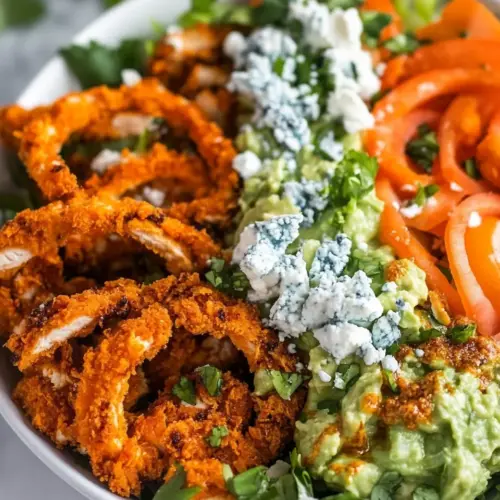
Buffalo Chicken Blue Cheese Guacamole Crunchy Baked Onion Ring Salad
Buffalo Chicken Blue Cheese Guacamole Crunchy Baked Onion Ring Salad is a creamy and crispy feast, combining spicy buffalo glazed chicken and crunchy baked onion rings with cool blue cheese guacamole and a tangy yogurt ranch. This easy weeknight dinner delivers bold textures and balanced flavors, making it perfect for summer entertaining or casual family meals. Try it for a crowd pleasing, flavor packed reason to cook tonight.
Equipment
- Oven
- Baking Sheet
- Parchment paper or Silpat
- Mixing Bowls
- Seal able plastic bag
- kitchen tongs
Ingredients
- 4 smallish chicken breast cut into strips Slice into strips to provide the main protein for the salad, offering hearty texture and substance; marinate or season before cooking to absorb flavors and keep chicken juicy; cook until golden and fully cooked to complement the crunchy and creamy components.
- 2 inch large sweet onion cut into 1/2 slices Cut into 1/2-inch slices to form large rings that crisp when baked, adding sweetness and a crunchy contrast; separate the rings carefully for even coating and cooking; bake until tender and caramelized for depth of flavor.
- 1 1/2 cups buttermilk Use as an acidic, tangy soak to tenderize and flavor the chicken strips, helping coatings adhere and adding moisture; keep refrigerated until ready to use and allow strips to soak for adequate time for best tenderness.
- 1 -1 1/2 cups + 2 tablespoons [buffalo wing sauce | https://www.halfbakedharvest.com/blue-cheese-guacamole-stuffed-mushrooms-with-buffalo-sauce/] + more for drizzling Pour as the spicy buffalo wing sauce to coat chicken and dress the salad, providing signature heat and vinegar tang; reserve extra for drizzling over finished salad to amplify flavor; adjust quantity to taste for desired spice level.
- 1 1/4 cups panko bread crumbs Provide a light, crispy coating for chicken and onion rings, contributing an airy crunch and golden color when baked; mix with seasonings for balanced flavor and even texture; press firmly for consistent adherence to wet-dipped pieces.
- 1 1/4 cups cornmeal Add a gritty, crunchy texture to the coating mix for hearty crispness and corn flavor; combine with panko and flour for balanced crunch and structure; aids in browning and staying crisp after baking.
- 1/2 cup whole wheat pastry flour or white whole wheat flour Bind dry coatings and add structure to the dredge, creating a tender but slightly hearty crumb when baked; use either whole wheat pastry or white whole wheat for subtle nutty flavor and healthier profile; sift to remove lumps for even coating.
- 1/4 teaspoon cayenne pepper Sprinkle into dry coatings to contribute warmth and a touch of heat, enhancing the buffalo profile without overpowering; measure carefully to balance with other seasonings; integrates well into breadcrumb and cornmeal mixes.
- a good pinch of salt and pepper Season both coating mixes and salad greens with a balanced pinch, bringing out natural flavors and harmonizing the spicy and tangy components; adjust to taste to avoid over-salting; works in both wet and dry phases of preparation.
- 8 -12 cups butter lettuce chopped Chop to form the fresh leafy base of the salad, offering a mild, tender backdrop that soaks up dressings; use 8 to 12 cups depending on portion size for volume and freshness; toss gently to combine with toppings without bruising.
- 1 1/2 cups grape tomatoes halved Halve to provide bursts of juicy sweetness and acidity throughout the salad, brightening each bite; scatter evenly for color contrast and texture; use ripe grape tomatoes for best flavor and firmness.
- 2 carrots sliced into matchsticks Slice into matchsticks to add a crunchy, slightly sweet root-vegetable element that complements the spicy chicken; keep uniform for consistent texture and attractive presentation; toss with greens to distribute evenly.
- 6 green onions sliced Slice thinly for mild onion bite and fresh allium flavor, providing aromatic brightness and textural contrast; use both white and green parts for color variation; sprinkle over salad just before serving for crispness.
- 1/2 cup fresh cilantro or parsley Chop fresh to introduce herbaceous brightness and a hint of citrusy flavor, enlivening the creamy guacamole and yogurt dressing; use cilantro or parsley depending on flavor preference; add just before serving to preserve freshness.
- 1 batch [blue cheese guacamole | https://www.halfbakedharvest.com/blue-cheese-guacamole-stuffed-mushrooms-with-buffalo-sauce/] regular guacamole or mashed avocado Spoon or dollop as the creamy, tangy avocado-based element that brings richness and coolness to balance the buffalo heat; include blue cheese if desired for pungent depth, or use plain mashed avocado for milder flavor; place strategically for visual appeal and scooping.
- crumbled blue cheese for topping Sprinkle crumbled on top to deliver sharp, salty tang and creamy pockets of flavor that contrast with spicy buffalo sauce; use sparingly to avoid overpowering other elements; garnish just before serving to maintain texture.
- 3/4 cup plain greek yogurt Whisk into dressings to add creaminess, tang, and protein while lightening heavier components; combine with herbs and spices for a yogurt-based dressing that complements the guacamole and buffalo flavors; chill before serving for best texture.
- 1/2 teaspoon dried parsley Stir into dressings and coatings to impart a gentle herbaceous note and visual flecks, balancing richer ingredients; measure carefully to avoid an overly dried-herb taste; blends well with yogurt and spices.
- 1/4 teaspoon dried chives Add to dressings for subtle oniony herbal nuance, enhancing savory depth without fresh chives; use sparingly to maintain balance and complement blue cheese and avocado flavors; rehydrate slightly when mixed into wet dressings.
- 1/4 teaspoon dried dill weed Incorporate for delicate anise-like freshness that brightens dressings and coatings; use small amounts to avoid overpowering other herbs; pairs well with dill-friendly components like yogurt and cucumber if present.
- 1/8 teaspoon garlic powder Blend into dressings to provide a mellow garlic background without fresh garlic pungency, ensuring even distribution and shelf stability; small quantity prevents overpowering the guacamole and buffalo elements.
- 1/8 teaspoon onion powder Mix into dressings to contribute mild savory sweetness reminiscent of onion, layering background flavor without fresh produce; use in tandem with garlic powder for rounded seasoning.
- 1/8 teaspoons salt Season dressings and coatings with a measured touch to balance other salty elements, helping to bring forward flavors without overwhelming the palate; use cautiously alongside crumbled blue cheese and buffalo sauce.
- 1/4 teaspoon black pepper Grind into dressings or coatings to add warmth and a mild bite that complements cayenne and paprika; distribute evenly for consistent seasoning across salad components.
- 1/2 teaspoon cayenne optional Sprinkle optionally into dressings or coating mixes to introduce extra heat and chili complexity for those who prefer a spicier profile; adjust or omit depending on the desired spice level.
- 1/4 teaspoons smoked paprika optional Dust optionally into dressings or crust blends to introduce smoky complexity and depth, amplifying roasted flavors; use sparingly to avoid masking the buffalo and blue cheese notes.
Instructions
- To make the dressing. In small bowl mix together the greek yogurt, parsley, chives, dill, garlic powder, onion powder, salt and pepper. Add the cayenne and smoked paprika if using. Mix well and if needed, thin with 1 or two tablespoons of buttermilk. Place in the fridge until ready to use.: When you chill the dressing after whisking the greek yogurt and dried herbs, you let the flavors meld and soften. You should notice a creamy texture and a faint herb aroma, not a sharp powdery smell which means it needs more whisking. If it seems thick, add one tablespoon of buttermilk at a time until it reaches a pourable, silky consistency. This step matters because a properly balanced dressing will coat leaves lightly without pooling, creating harmony when tossed. Common mistake to avoid, do not over thin the dressing or it will not cling to the salad components, leading to a watery plate.
- Preheat the oven to 450 degrees F. Line 2 baking sheets with parchment paper or a silpat.: As the oven heats, you should feel the kitchen change temperature and smell a dry, faintly warm scent from the racks. Proper preheating ensures the coating on both the chicken and onion rings begins crisping immediately, preventing sogginess. Use parchment or a silpat to stop sticking and to encourage even browning. The key reason this matters is a hot oven creates immediate surface crust, locking in juices. A typical pitfall is putting items into an oven that is not fully heated, which yields pale, limp coating instead of golden, audible crunch.
- Add the chicken to a large bowl and pour half the buttermilk (about 3/4 cup) overtop. Mix well and set aside. Add the remaining buttermilk to a bowl and set aside. Place the flour in a sealable plastic bag, then add onions, and shake to coat. Set aside.: Coating the chicken briefly in buttermilk tenderizes and creates a tacky surface for the crumbs to adhere to, contributing to a more cohesive crust. The tactile change is evident, the chicken feels slightly slippery and yields when pressed. Dredging the onion in the flour bag is quick and keeps your hands clean, ensuring an even dusting. This technique helps the coating cling during baking, preventing patches of exposed meat. A misstep to avoid is letting the chicken sit too long in the liquid if your buttermilk is very acidic, which can slightly over tenderize the flesh.
- In a shallow pie dish or large bowl add the panko, cornmeal, cayenne and a pinch of salt and pepper. Mix well.: Mixing the dry coating gives both the grainy body of cornmeal and the airy flakes of panko a chance to distribute the cayenne and salt evenly. You should notice a golden tone from the cornmeal and a light, flaky texture from panko when you press a handful together. The combination is essential because it yields a crust that is crisp and full of texture. One common mistake is not seasoning the crumbs, which results in bland crust despite flavorful sauce and toppings.
- Now grab the bag of onions. Shake off the excess flour and dip the onions 1 at a time into the buttermilk, then dip into bread crumbs and place on a baking sheet. Spray oil evenly over rings and sprinkle with salt and pepper. Bake for 20 to 25 minutes, or until coating is crisp flipping half way through. Season with salt, to taste. Set aside, but keep warm.: As the onion rings bake they transform from soft, raw slices into golden, crackling rounds with a slightly sweet aroma. Halfway through, listen for a subtle sizzle as moisture escapes and the crust begins to brown; flipping ensures even color and prevents one side from burning. Spraying with oil promotes crispness in the oven, mimicking the effect of frying without the extra fat. The reason this matters is texture continuity, you want rings that hold their shape and deliver a satisfying snap. Avoid overcrowding the sheet, as congested rings steam and become soggy instead of crisp.
- Meanwhile make the chicken. Remove each piece of chicken from the buttermilk, and dredge through the the remaining crumbs, pressing gently to adhere. Place on the prepared baking sheet. Repeat until all the chicken has been used. Make sure not to crowd your pan, if necessary use two baking sheets. Spray each chicken 'wing' with non-stick spray or a mist of olive oil.: When you press the crumbs onto the chicken , you are creating contact points that will brown and crisp. The surface should feel textured, not clumpy, and the pieces should sit spaced so hot air circulates. Spritzing with oil helps create a golden exterior and prevents dryness. This step ensures the crust stays attached during the initial bake and subsequent saucing. A frequent error is crowding the tray, which leads to steaming and pale crust rather than the desired deep color and crunch.
- Bake for 10-12 minutes, then gently flip using kitchen tongs and spray the other side. Bake for 10-12 minutes more, then remove from oven. Reduce the oven to 400 degrees F.: During baking, the chicken will change from pale to a warm golden brown and you may notice juices collecting briefly before absorbing into the crust. Flipping halfway ensures even browning and prevents the bottom from over crisping while the top lags. Reducing the oven temperature afterward gives you a gentler environment to rewarm everything without further browning when you finish with the sauce. Avoid leaving the chicken in too long or it will dry out; check for a juicy interior with no pink.
- Gently toss each piece of chicken in the 1/2 cup of buffalo sauce, draining the excess sauce back into the bowl. Place the chicken back on the pan and repeat until all the chicken is coated in the sauce. Place both the onion rings and chicken back in the oven for 5 minutes just to re-warm.: Tossing the chicken in buffalo wing sauce gives you that glossy, lacquered coating that sings with tang and spice. As you drain the excess sauce you avoid soggy crusts; the goal is a sticky, clingy glaze rather than a soupy mess. The short return to the oven melds flavors and warms the filling without softening the crust too much. A pitfall is over saucing, which can render the crust limp; use a light hand and adjust to your spice tolerance.
- Meanwhile add the lettuce, carrots, tomatoes, green onions and cilantro leaves to a large bowl and toss well. Divide the salad among four large plates or salad bowls. Top each plate with chicken and onion rings. Dollop with blue cheese guacamole and sprinkle with blue cheese crumbles. Drizzle on the ranch and buffalo sauce as desired. EAT.: The final toss should yield an evenly coated bed of crisp greens and vegetables, bright with color and aroma. As you plate, arrange the hot elements on top so they stay audible and textural. Dolloping the blue cheese guacamole in small mounds gives pockets of cool creaminess that contrast the warm, spicy chicken . Finish with a measured drizzle of ranch and extra buffalo wing sauce for visual appeal and flavor balance. A common mistake is tossing too aggressively after adding hot items, which wilts the greens prematurely; instead, place warm components atop and serve promptly.
Notes
- Prep in stages: Make the dressing and blue cheese guacamole ahead of time and chill them, so assembly is quick and stress free when guests arrive.
- Dry the chicken: Pat the chicken strips dry before the buttermilk bath to help the coating adhere better and prevent overly wet crusts.
- Even slices matter: Slice the onion into uniform rings to ensure they bake evenly and hold their shape.
- Use two pans if needed: Don’t crowd the baking sheets; using two pans prevents steaming and promotes consistent crisping.
- Adjust spice to taste: Start with the called amounts of buffalo wing sauce and cayenne, then add more at the table for those who want extra heat.
- Keep components separate: Hold the hot and cold elements separately until plating to preserve textural contrast and freshness.