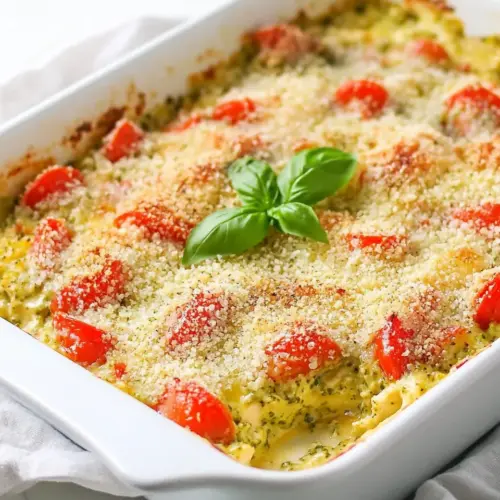
Bruschetta Pesto Chicken Casserole
Bruschetta Pesto Chicken Casserole is a creamy, crispy, and easy weeknight dinner that combines marinated grape tomatoes, herbaceous pesto, and tender chicken under a bubbly blanket of mozzarella cheese and toasted panko. The bright tomato marinade balances the rich pesto for a crowd pleasing casserole you will want to make again and again.
Equipment
- 9 X 13 baking dish
- Mixing Bowl
- Small Bowl
- Instant read thermometer
Ingredients
- 1 pint (2 cups) grape tomatoes, quartered Brightly quartered to add bursts of fresh, juicy acidity and color to the casserole; they provide a light contrast to the rich cheese and pesto and release savory juices while baking to meld flavors.
- 1/4 cup finely chopped red onion Finely chopped to lend a sharp, slightly sweet bite that balances the tomatoes and pesto; the small pieces distribute evenly for consistent flavor without overpowering the dish.
- 2 garlic cloves, minced Minced to infuse a pungent, aromatic depth throughout the casserole; when sautéed or mixed with the other ingredients, it adds savory complexity and enhances overall savory notes.
- 2 tablespoons balsamic vinegar Used to bring a tangy, slightly sweet acidity that brightens tomato flavors and balances the richness of pesto and cheese; it also helps deglaze and bind ingredients when mixed.
- 4 boneless skinless chicken breasts, about 2 pounds, cubed Cubed to provide the hearty protein base of the casserole; cooking the chicken through and combining it with the tomatoes and pesto creates a substantial, satisfying main component.
- 1/2 cup basil pesto Added to impart concentrated basil flavor, herbaceous brightness, and a creamy texture; it ties together tomatoes, chicken, and cheese while contributing savory, nutty undertones.
- 2 cups shredded mozzarella cheese Shredded and layered to create melty, creamy pockets of richness that brown slightly on top; the cheese helps bind ingredients and delivers a familiar, comforting texture.
- 1 cup seasoned panko crumbs Sprinkled on top to provide a crisp, golden crust and a toasty, savory crunch that contrasts the creamy interior; the seasoned crumbs add extra flavor and a pleasant mouthfeel.
- 2 tablespoons olive oil Used to sauté or toss ingredients so they brown evenly and develop flavor; it also helps the panko crisp in the oven and prevents sticking during assembly.
Instructions
- Preheat oven to 375 degrees.: Warmth in the kitchen signals the start, and you should smell a faint dry heat as the oven stabilizes. Preheating ensures the casserole begins cooking immediately and the top can brown properly without overcooking the center. A common mistake is putting the dish in a cold oven, which leads to longer cook time and uneven browning. If your oven runs hot or cool, use an oven thermometer to confirm the temperature.
- In a small bowl, combine the tomatoes, red onion, garlic, and vinegar. Marinate in the fridge until ready to use.: The tomato mixture should smell bright, with the sharpness of red onion softened and the garlic fragrant but not overpowering. Chilling concentrates the flavors and allows the balsamic vinegar to mellow the onion and draw juices from the tomatoes. Avoid letting the mixture sit too long uncovered, or the tomatoes can become too soft. If the mix releases a lot of liquid, spoon carefully and leave most of the free liquid behind when assembling.
- In a 9 x 13 baking dish toss the pesto and chicken together and place in a single layer.: You should feel the slick, herbaceous coating of pesto on each piece of cubed chicken , which smells of basil and olive oil. Spreading the pieces in a single layer helps them cook evenly and prevents steaming. If pieces are piled, the center can stay underdone while edges overcook. Uniformly sized cubes and an even layer minimize this risk.
- Scoop the tomato mixture on top, disregarding any excess balsamic vinegar liquid leftover. Try to not put any of the liquid on the chicken.: Visually, the vibrant red tomatoes will form a jewel like layer that contrasts with green flecks of pesto . Leaving behind the excess liquid is critical, because too much moisture will lead to a watery casserole instead of a cohesive, baked texture. A common issue is scooping the marinade with the tomatoes, which can dilute the casserole. Use a slotted spoon if needed.
- Sprinkle the cheese on top.: As you scatter the shredded mozzarella cheese , you will notice the milky aroma and the way the cheese forms a soft blanket over the tomatoes. Even distribution ensures each scoop has melty cheese. Overcrowding one area leaves others cheese sparse, resulting in uneven melt and texture.
- Mix the panko crumbs and olive oil together and sprinkle on top of the cheese.: After tossing the panko crumbs with olive oil , you should see a glossy, slightly clumped crumb texture that will toast into a golden crust. The oil promotes uniform browning and prevents the crumbs from drying out. If the crumbs are dry, they can scorch quickly; if too oily, they will stay soggy. Aim for a light, even coating.
- Bake for 25-30 minutes or until chicken is done. Cover with a foil tent if crumbs begin browning too much.: During baking you will hear a gentle bubbling and smell the herbal pesto mingled with toasty crumbs. The top should turn golden and the cheese should be melted and slightly bubbling around the edges. Use an instant read thermometer to ensure chicken reaches a safe internal temperature, avoiding undercooking. If the panko darkens too quickly, tent with foil to allow the center to finish without burning the crust.
Notes
- Swap the cheese: Try a blend of shredded mozzarella cheese and a bit of milder melting cheese for creamier texture, keeping the overall melt while introducing subtle nuance.
- Pesto variation: If you want a brighter herb punch, stir in a tablespoon more pesto before baking, which intensifies basil flavors without altering the assembly.
- To make it while shorter on time: Use pre cubed rotisserie style chicken if you have it, tossing with pesto and proceeding to assembly, saving prep time while maintaining flavor.
- Crispier topping: Toast the panko crumbs lightly in a skillet with olive oil before sprinkling to ensure maximum crunch after baking.
- Make ahead: Combine the tomato mixture and the pesto coated chicken separately, refrigerate, then assemble and bake when ready to serve for convenience.