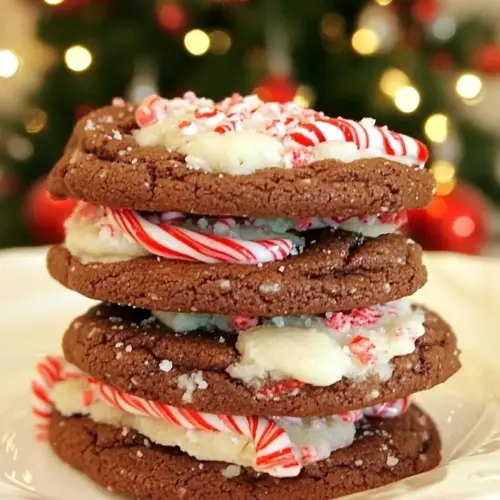
Brownie Peppermint Cookies
Brownie Peppermint Cookies bring fudgy chocolate, bright peppermint, and a creamy vanilla frosting together in an easy, festive cookie. These chewy treats are perfect for holiday cookie swaps and gifting, offering a soft interior with a crunchy candy cane topping. They are an approachable, crowd pleasing dessert that looks as good as it tastes, making them a must bake this season.
Equipment
- Mixing Bowl
- Electric Mixer
- Cookie Sheet
- Spoon or Cookie Scoop
Ingredients
- 1 (18.3 oz) pkg brownie mix (I used Betty Crocker fudge brownie mix) Provides a fudgy chocolate base and concentrated cocoa flavor while bringing sweetness and structure; follow package directions and adjust additional sugar accordingly for balanced texture.
- 1 1/4 cups all-purpose flour Adds structure and gluten for chewiness and rise; sift or whisk before combining to ensure even distribution and prevent lumps in the dough.
- 1/4 cup packed light-brown sugar Contributes light caramel sweetness and moisture while enhancing browning; pack firmly and measure accurately to avoid overly dense cookies.
- 1/4 tsp salt Balances sweetness and enhances other flavors while controlling dough spread; dissolve into dry ingredients to ensure even seasoning.
- 2 large eggs Binds ingredients together, provides lift, and contributes richness; beat until combined with sugars and wet ingredients for a cohesive dough.
- 2 tbsp milk Adds moisture and tenderness and helps loosen the batter for spread control; warm slightly if needed for easier incorporation into melted butter.
- 1/2 cup unsalted butter, melted Adds fat for richness, tenderness, and flavor while promoting a chewy crumb; melt and cool slightly to prevent cooking the eggs when mixed.
- 1 tsp vanilla extract Enhances overall depth and rounds out flavors with warm, familiar aroma; add with other wet ingredients to distribute flavor evenly.
- 3/4 tsp peppermint extract Provides bright, cooling mint flavor that defines the cookie profile; use measured amount carefully since peppermint extract is potent and can overpower dessert.
- 1 recipe vanilla cream frosting, recipe follows Creates a creamy, sweet layer for assembly while adding fat and smooth texture; prepare separately and use between cookie layers or as a topping as directed.
- 1/2 cup crushed peppermint candy canes Introduces crunchy peppermint shards and festive flavor contrast while adding visual appeal; sprinkle on top while frosting is soft to adhere well.
- 4 cups powdered sugar Offers bulk sweetness and stability for frostings, helping create a smooth, pipeable consistency; sift to remove lumps before whipping with butter.
- 1/2 cup unsalted butter, softened Provides richness and creamy mouthfeel in frosting while contributing to spreadability and flavor; soften to room temperature to ensure smooth creaming.
- 6 tbsp heavy cream Adds body and silky texture to frosting and helps achieve desired consistency for spreading or piping; add gradually to reach preferred thickness.
- 1 tsp vanilla extract Adds warm aromatic notes and enhances sweetness perception in frosting while rounding out the dairy flavors; mix in last to preserve volatile aroma.
- 1/4 tsp salt Balances sweetness in frosting and enhances overall flavor complexity while stabilizing the mixture; dissolve into the butter and sugar for even seasoning.
Instructions
- Preheat oven to 350 degrees. Butter a cookie sheet and set aside. In a large mixing bowl, whisk together brownie mix, flour, brown sugar and salt. Add in eggs and milk and stir with a large spoon. Add in melted butter, vanilla and peppermint extract, stir until well blended. Spoon dough by heaping tablespoonfuls onto greased cookie sheet (you can fit 12 per sheet). Bake for 10 minutes. Remove from oven and allow to cool completely before frosting. Once cool, frost each cookie and sprinkle with crushed candy canes.: The warm scent that blooms when an oven nears 350 degrees signals readiness, and getting the oven temperature correct ensures cookies bake evenly with the right rise and set. You'll notice a faint warmth and the preheated air when you open the door; that is your cue to move quickly so heat is not lost. A common mistake is putting cookies into an oven that is still heating, which can lead to uneven texture and spreading, so allow the oven to fully reach temperature before baking.
- In a large mixing bowl, with an electric mixer, whip together sugar, butter and cream until fluffy. Stir in vanilla and salt, blend well.: Greasing the cookie sheet with a thin layer of butter prevents sticking and encourages a gentle browning on the bottom, giving a pleasant contrast to the fudgy interior. When you run a finger over the greased surface it should feel satiny, not glistening with pools of fat. Avoid using too much fat, which can cause the cookies to slide and spread excessively.
- In a large mixing bowl, whisk together brownie mix, flour, brown sugar and salt: As you combine the dry elements, you'll see the mixture lighten in color and take on a uniform, sandy texture, which helps distribute the salt and brown sugar evenly. Whisking prevents clumps and allows the baking agents in the brownie mix to work consistently throughout the dough. A troubleshooting tip is to sift if you encounter stubborn lumps that resist whisking, which can create uneven pockets in the final cookie.
- Add in eggs and milk and stir with a large spoon: When the eggs and milk meet the dry mix, you will notice the batter darken and thicken, with ribbonlike streaks that disappear as you stir. This stage is where the mixture becomes cohesive but still slightly tacky, hinting at that fudgy interior. Overstirring here can incorporate too much air, making cookies cakier, so stir just until the wet and dry elements are combined.
- Add in melted butter, vanilla and peppermint extract, stir until well blended: Pouring in the warm, melted butter smooths the dough and brings a glossy sheen; the aroma of vanilla extract and the sharper note of peppermint extract will lift as you fold them in. Stir until you see a consistent, slightly glossy dough that holds together. Be careful with the peppermint extract , as too much can become overpowering and leave a medicinal aftertaste.
- Spoon dough by heaping tablespoonfuls onto greased cookie sheet (you can fit 12 per sheet): Using a spoon or cookie scoop, place mounds of dough spaced evenly so they bake without crowding; you'll see the dough domes hold shape and show a moist surface. The spacing ensures air circulates and edges crisp lightly while centers stay soft. A frequent error is overcrowding the sheet, which leads to merged cookies and uneven baking.
- Bake for 10 minutes: As the cookies bake for about 10 minutes , your kitchen will fill with a rich chocolate aroma and the edges will set while the centers remain soft, which is exactly what you want. Watch for a slight sheen on top and a few small cracks; these are visual cues that the cookies are done. Avoid leaving them too long, which dries out the fudgy interior and ruins the tender mouthfeel.
- Remove from oven and allow to cool completely before frosting: Cooling is crucial, because the warm cookies will make the frosting melt and slide; when cooled, the surface firms enough to support a smooth layer. You will feel the temperature shift when touching the pan; when the cookies are room temperature, they are ready. A common mistake is rushing this step, leading to runny frosting and messy presentation.
- Once cool, frost each cookie and sprinkle with crushed candy canes: The act of frosting transforms the cookies visually and texturally, creating a creamy contrast to the fudgy base; when you spread the frosting you should feel a gentle resistance and see a soft, matte finish. After frosting, add the crushed candy canes for crunch and color that make the cookies stand out on a platter. Sprinkle immediately, because the candy adheres best when the frosting is slightly tacky; waiting too long will reduce adhesion.
- In a large mixing bowl, with an electric mixer, whip together sugar, butter and cream until fluffy: Whipping powdered sugar with softened butter and heavy cream creates the body of the frosting, and you will hear the mixer change tone as the mixture lightens and increases in volume. The texture should become airy and smooth, with peaks that gently fold over instead of standing rigid. If your frosting seems grainy, continue beating for a short time; if it becomes too loose, add a touch more powdered sugar .
- Stir in vanilla and salt, blend well: Folding in vanilla extract and a pinch of salt at the end balances the sweetness and rounds the flavors, producing a frosting that tastes layered and finished. You should detect a gentle swirl of aroma from the vanilla and a subtle uplift from the salt that keeps the frosting from tasting flat. A pitfall here is over-beating after adding liquid flavorings, which can thin the frosting and make it less stable for spreading.
Notes
- Double Frosting: Frost cookies once, chill to set, then add a second thinner layer for a glossy finish that stays stable during transport.
- Crunch Level: Vary how finely you crush the candy canes; fine crumbs fold into the frosting for subtle crunch, while larger pieces add a festive crunch and visual interest.
- Mixing Temperature: If your kitchen is warm, chill the dough briefly to prevent excess spreading which preserves the fudgy center and yields a better silhouette.
- Make Ahead: Bake the cookies and freeze unfrosted for up to one month, then thaw and frost when needed to keep presentation fresh.
- Decorative Piping: Use a piping bag to swirl frosting into pretty peaks, then add crushed candy canes for a bakery look that makes great gifts.