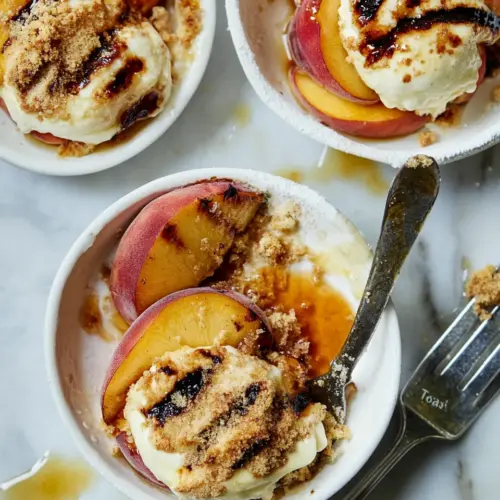
Browned Butter Grilled Peaches with Cinnamon Toast Brioche Crumbs
Browned Butter Grilled Peaches with Cinnamon Toast Brioche Crumbs is a simple summer dessert featuring caramelized grilled fruit, nutty browned butter, and crunchy cinnamon brioche crumbs. The warm peaches paired with cold vanilla ice cream create a creamy yet crisp bite that feels indulgent and easy, perfect for an easy weeknight dinner or a relaxed outdoor gathering, making it one dessert you will want to repeat.
Equipment
- Skillet
- Grill or Grill Pan
- Baking Sheet
- Parchment
- heat proof bowl
- Spatula
Ingredients
- 4 slices brioche bread, torn or pulsed into fine crumbs (about 2 cups of crumbs) Torn or pulsed into fine crumbs to provide a tender, crunchy topping that soaks up browned butter and adds texture to the dish; measure about 2 cups to ensure even coverage when toasting.
- 4 tablespoons salted butter, melted Melted and used to brown for a nutty, rich flavor that coats the brioche crumbs and enhances caramelization on the grilled fruit; salted butter adds seasoning balance to the sweet elements.
- 2 -5 tablespoons cinnamon sugar, to your taste, plus more for serving Sprinkled to taste between 2 and 5 tablespoons to layer warm spice and sweetness; provides adjustable sweetness and a subtle cinnamon note that complements the peaches and brioche crumbs.
- 4 tablespoons salted butter Added in a separate stage to brown off and develop deep nutty notes before mixing with the crumbs and honey; salted butter contributes both fat for cooking and savory balance.
- 2 tablespoons honey Drizzled into the browned butter and crumb mixture to bind the crumbs, add shine, and introduce a floral sweetness that contrasts the grilled fruit’s acidity.
- 1 teaspoon vanilla extract Stirred in to lift and unify flavors in the crumb mixture, contributing aromatic warmth and a familiar dessert flavor that enhances the overall profile.
- 1/2 teaspoon ground cinnamon Sprinkled lightly to reinforce warm, woody spice within both the crumb mixture and on the fruit, supporting the cinnamon sugar and rounding the dessert’s flavor.
- 4 ripe, but firm peaches or nectarines, halved + pit removed Halved and pitted then grilled until caramelized to provide juicy, slightly charred fruit that pairs with the buttery crumbs and ice cream; choose ripe but firm fruit for structure.
- vanilla ice cream, for serving Served alongside the warm grilled peaches and brioche crumbs to create temperature contrast and creamy richness, anchoring the dessert with a classic scoop.
Instructions
- To make the cinnamon toast crumbs. Preheat the oven to 350 degrees F. Line a baking sheet with parchment. To the baking sheet, add the breadcrumbs, butter, and cinnamon sugar, toss to coat the crumbs. Transfer to the oven and bake 10-15 minutes, until toasted. Watch closely to ensure they are not burning. To make the browned butter. Add the butter to a skillet set over medium heat. Allow the butter to brown until it smells toasted and is a deep golden brown, about 3-4 minutes. Stir often. Remove from the heat and transfer the butter to a heat-proof bowl. Stir in the honey, vanilla, and cinnamon. The butter can be used immediately or cooled completely and stored for up to 1 week. Serve at room temperature. To grill the peaches. Preheat your grill or grill pan to medium-high heat and brush the grates with oil. Grill the fruit for 2-3 minutes or until light char marks appear, flip and grill another 2-3 minutes. Remove from the grill and immediately drizzle/spread each peach half with browned butter. Serve topped with vanilla ice cream and a generous sprinkle of cinnamon toast crumbs. ENJOY!: The moment you spread the breadcrumb mixture on the lined baking sheet, the scent of butter and cinnamon will begin to sing, a warm, bakery like aroma that fills the kitchen. As the crumbs bake at 350 degrees F they will transform from pale and soft to golden and crispy, giving off a toasty smell that tells you they are close. Listen for a quiet change in the sound of the oven air and watch the edges for the first hints of color. Stirring or tossing the crumbs before baking ensures even browning and prevents scorch spots, which are the most common mistake here. If you skip watching them, the sugars can caramelize too far and turn bitter. The ideal crumb is uniformly golden with a slightly crisp, sandy texture that will provide the satisfying crunch against warm peach flesh.
- Preheat the oven to 350 degrees F: When heating the oven, you will notice the room warming and the idea of toasting becoming imminent. Preheating ensures the crumbs start to brown immediately and evenly once they enter the environment, preventing soggy bits that occur when adding items to a cool oven. A common error is to pop the crumbs in too soon; they then bake unevenly as the oven comes up to temperature. Allowing the oven to fully reach the set point produces a predictable, even toasting that yields consistent texture across the batch.
- Line a baking sheet with parchment: Lining the sheet prevents sticking and makes a quick cleanup as stray crumbs tend to cling when butter is involved. The parchment also promotes even heat distribution under the crumbs so they will toast uniformly. Not using parchment can mean burning on the underside, so take the few extra seconds to line the pan to avoid that issue.
- Add the breadcrumbs, butter, and cinnamon sugar and toss to coat the crumbs: Right away the wet butter will glue the sugar and spice to the crumbs, and the mixture will look glossy and pale. Tossing with a spatula or by hand ensures each particle is lightly coated, which encourages even caramelization. If you pile too many crumbs together without coating, some pockets will remain soft after baking. Aim for an even, loose coating so the crumbs can spread into a single layer on the sheet.
- Transfer to the oven and bake 10 to 15 minutes until toasted: As they bake, the aroma deepens and you can almost smell the change from raw bread to toasted brioche. The timing depends on your oven and the moisture in the crumbs; check at 10 minutes and every few minutes after to avoid crossing into burnt territory. The right moment is when the crumbs are golden and emit a nutty scent, not dark brown. A typical mistake is to leave them until dark brown thinking deeper color equals more flavor, but that results in bitterness rather than toastiness.
- Watch closely to ensure they are not burning: This step is all about attention. Keep the oven light on and check visually, because sugars can go from golden to burnt quickly. If you notice darker flecks forming, remove the tray and give the crumbs a stir, then return them for a minute or two as needed. Ignoring this can lead to a batch that tastes acrid, which will overshadow the delicate fruit flavors.
- Add the butter to a skillet set over medium heat: When you start making the browned butter, the butter will melt, foam, and then the milk solids will begin to brown, releasing a toasted, hazelnut like fragrance. Using medium heat helps control the process; too high and the solids can singe. A common pitfall is stepping away, so stay close and be ready to remove the pan as soon as the color deepens to a deep golden tone.
- Allow the butter to brown until it smells toasted and is a deep golden brown about 3 to 4 minutes: The butter will transform visually and aromatically, shifting from pale yellow to a clear amber with brown flecks. The smell becomes rich and toasty, and that cue is your best indicator that you have hit the sweet spot. Stir often to keep the solids from settling and burning; uneven stirring can produce hot spots that ruin the flavor.
- Stir often: Frequent stirring keeps the milk solids suspended and browning evenly, creating a uniform, nutty note. You will see tiny brown bits form on the bottom, and their even distribution is crucial to flavor. Failing to stir can let solids scorch on the pan surface, producing bitter notes that dominate when mixed with honey and vanilla .
- Remove from the heat and transfer the butter to a heat proof bowl: Once removed, the carryover heat will continue to cook the bits a touch, so transferring stops the process and prevents over browning. The bowl also lets you whisk in additions without the risk of residual skillet heat degrading delicate flavors. Leaving the butter in the pan risks further browning and possible burning.
- Stir in the honey vanilla and cinnamon: Adding honey , vanilla , and cinnamon off the heat preserves their aromas and allows them to meld with the browned butter. The mixture becomes glossy and fragrant, a perfect glaze for the peaches. A mistake here is adding extracts to a very hot medium, which can dissipate volatile aromatics; temper the butter slightly before stirring in delicate flavors.
- The butter can be used immediately or cooled completely and stored for up to 1 week: Used right away the warm butter soaks into the grilled fruit for immediate service, while cooled butter can be kept for convenience and re warmed gently. If storing, make sure the container is airtight. A common oversight is leaving it at room temperature uncovered, which can invite off odors or contamination.
- Serve at room temperature: Bringing the browned butter to room temperature makes it easy to drizzle and releases its full aroma. If it is too cold it will set and not coat the fruit properly; too hot and it may be overly runny. Aim for a fluid but slightly viscous texture for the best cling to the peach surface.
- Preheat your grill or grill pan to medium high heat and brush the grates with oil: Heating the grill to medium high produces the right sear on the peach surface while keeping the inside tender. Brushing the grates with oil and wiping excess prevents sticking and allows clear char marks to form. A common issue is an under heated surface, which leads to fruit that cooks but does not caramelize; conversely, excessively high heat can burn the exterior before the center warms.
- Grill the fruit for 2 to 3 minutes or until light char marks appear flip and grill another 2 to 3 minutes: You should hear a soft sizzle and see defined char lines that indicate proper caramelization. The flesh will perfume the air as sugars begin to heat and concentrate. Resist moving the peaches too early, as they need contact time for grill marks; flipping too soon may tear the surface instead of searing it.
- Remove from the grill and immediately drizzle or spread each peach half with browned butter: Drizzling right away allows the warm butter to soak into the peach, carrying nutty and sweet flavors into the fruit. The contrast of warm butter and slightly caramelized surface is sensory gold. Waiting too long cools the fruit and reduces absorption, so work efficiently.
- Serve topped with vanilla ice cream and a generous sprinkle of cinnamon toast crumbs: The final assembly is about contrast and balance, the cold ice cream meeting warm peach, the crunchy crumbs adding texture, and the browned butter tying everything together. Plate individual halves with a scoop and a scattering of crumbs for the most appealing presentation. A common serving mistake is to overload one component, overwhelming the harmony of flavors rather than supporting it.
Notes
- Handle peaches gently - When halving and pitting, use a gentle hand to preserve the flesh. Softer, overripe peaches can tear and lose juices on the grill. If you encounter a very soft peach, I recommend working on a plate and moving it carefully to the grill with a spatula to avoid breaking the halves.
- Watch the crumbs closely - The transition from golden to burnt can happen fast because of the sugar content. I set a timer for the minimum time, then check every two minutes, giving them a stir if needed. Stirring redistributes heat and prevents hot spots that cause burning.
- Control the browned butter color - Remove the butter from heat the moment you see brown flecks and smell toasted notes. The flavor is best at that point; lingering in the pan will push the flavor from nutty to bitter. Pouring it into a cooler bowl stops the cooking instantly.
- Keep the grill clean and oiled - Clean grates produce better sear marks and reduce sticking which preserves the peach surface. Wiping with an oil soaked towel while the grill is hot is my preferred quick method to prepare the surface.
- Make crumbs ahead - You can prepare the cinnamon brioche crumbs up to two days ahead and store them in an airtight container. This saves time on the day and keeps the texture pristine, but avoid storing them in humid conditions which will soften the crunch.