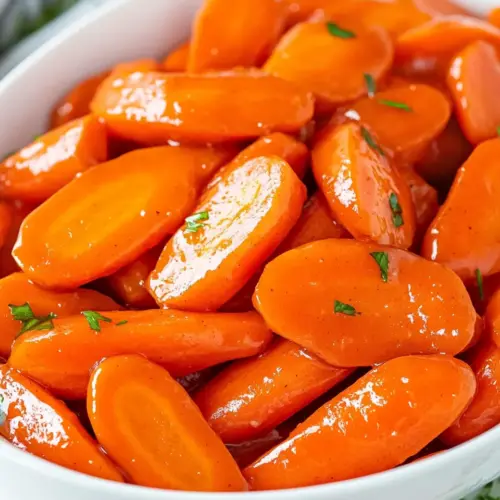
Brown Sugar Glazed Carrots
Brown Sugar Glazed Carrots are tender, glossy, and warmly sweet, with a buttery caramelized coating that makes them an easy weeknight side or festive addition to holiday spreads. This simple yet elegant recipe enhances natural vegetable sweetness with a rich glaze, creating a comforting, crowd pleasing dish you will want to serve again and again.
Equipment
- Saucepan or pot with lid
- Wooden Spoon
Ingredients
- 2 pounds carrots peeled and cut into 1/2-inch thick slices Provide sweetness and body while offering a tender texture when sliced; helps carry the glaze and absorbs flavors as carrots cook until fork-tender.
- 1 cup water Add moisture to the pan to create steam for even cooking and to dissolve brown sugar into a glossy glaze; helps prevent burning while simmering.
- 1/4 cup brown sugar Contribute rich molasses sweetness and caramelization potential; melt into the cooking liquid to form the sticky, brown glaze that coats the carrots.
- 1/2 teaspoon salt Enhance overall flavor by balancing sweetness and bringing out natural carrot taste; helps season the dish and can slightly elevate perceived saltiness.
- 1/4 cup unsalted butter Impart a silky, rich mouthfeel and help bind the glaze while adding a mild dairy richness; melts into the liquid to create a smooth, shiny coating.
- 1 teaspoon chopped fresh parsley optional for garnish Provide a fresh, herbal finish and bright color contrast when sprinkled over the finished dish; add a subtle grassy note that lifts the glaze.
Instructions
- In a saucepan or pot with a lid, combine the sliced carrots, brown sugar, butter, salt, and water or vegetable stock.: The moment you add the carrots and water to the saucepan you will hear a soft clatter as the pieces settle, and the initial steam rises quickly once the heat is on. The brown sugar will sit on top at first, granular and fragrant with molasses notes, and as the mixture warms the sugar starts to dissolve into the liquid, releasing a warm, sweet scent. The presence of butter at this stage contributes fat that will help the glaze finish with a glossy sheen, and the salt will begin to knit the flavors together. Pay attention to the sound of the simmer, it should be a gentle, steady bubble rather than a vigorous boil. A common mistake here is cranking the heat too high causing the sugar to stick or scorch. If the pan seems to be drying out too quickly, lower the heat and add a splash more water .
- Simmer covered for 10 minutes on low-medium heat until most of the liquid has evaporated and turned into a glaze.: As the lid traps steam the carrots soften and their sweet juices start to mingle with the melted brown sugar , creating a fragrant steam that smells faintly of caramel and roasted vegetable. Visually you will notice the liquid level drop and the remaining syrup darken slightly, thickening around the edges. The low to medium heat allows collagen like sugars to meld without breaking down the carrots into mush, producing tender pieces with body. Stir once halfway to ensure even cooking, and watch the liquid closely during the last minutes; you want most of it gone but not completely dry. A common error is under simmering so the glaze remains thin, yielding a watery coating. If that happens, continue to simmer briefly uncovered until it reaches the desired viscosity.
- Uncover, and cook for 3-5 more minutes, stirring occasionally. Remove from heat, sprinkle with fresh chopped parsley if desired and serve.: When you remove the lid you will hear a change, a brighter sizzle as steam escapes and the surface of the glaze begins to concentrate. The butter will emulsify into the syrup, giving a shiny finish that catches the light, and the carrots edges may develop a slight translucence and glossy caramelization. Stirring occasionally helps each piece pick up the glaze evenly and avoids hot spots. Use a wooden spoon or spatula to gently turn the pieces, listening for a soft hiss rather than loud splatter. Overcooking at this stage is easy if you step away, so keep the pan in view; if the glaze becomes too thick or starts smoking, remove from heat and add a teaspoon of water to loosen it while stirring.
- Remove from heat sprinkle with fresh chopped parsley if desired and serve: Once off the heat the aroma will be rich and buttery, with caramelized sugar notes mingling with the natural sweetness of the carrots . Adding the chopped fresh parsley at the end introduces a cool, green contrast both in flavor and color that brightens the dish. Serving warm allows the glaze to feel silky on the tongue, while cooling a bit will let it cling even more to the vegetable surfaces. A typical pitfall is adding garnish too early, which causes it to wilt; always finish and serve promptly for best texture. If the glaze has congealed too much while sitting, a quick gentle rewarm over low heat with a teaspoon of water restores the shine.
Notes
- Uniform Slices: Cut the carrots to an even 1/2 inch thickness so each piece cooks at the same rate, preventing some from becoming mushy while others remain underdone.
- Low to Medium Heat: Maintain gentle heat during simmering to let the sugar dissolve and the carrots soften without scorching the glaze, which would create a bitter note.
- Finish Uncovered: After most liquid is gone, remove the lid and concentrate the glaze for a glossy coating, but keep the pan in sight to avoid over reduction.
- Use Unsalted Butter: Unsalted butter offers better control of seasoning, letting you add precise amounts of salt at the end to balance sweetness.
- Garnish Last: Add the chopped fresh parsley right before serving to preserve its color and fresh flavor contrast against the warm sweet glaze.