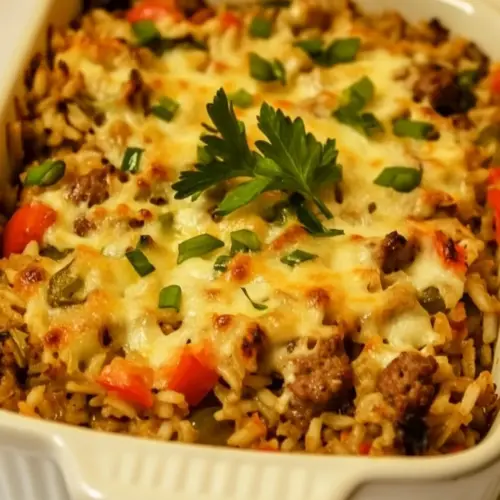
Brown Rice Casserole
Brown Rice Casserole is a comforting, savory bake that combines nutty brown rice, browned turkey Italian sausage, sautéed onion and green bell pepper, and a melty cheese topping. It’s an easy weeknight dinner with a crispy golden finish and hearty textures, perfect for leftovers and simple entertaining, making it a reliable recipe to keep in your rotation.
Equipment
- Large heavy frying pan
- Casserole Dish
- Turner
Ingredients
- 1 medium onion, finely chopped Sauté gently to release sweet and savory flavors that form the aromatic base of the casserole; finely chopped texture helps melt into other ingredients and adds moisture and depth during cooking.
- 1 large green bell pepper, stem and seeds removed and finely chopped Enhance brightness and mild bitterness by sautéing until softened; finely chopped pieces distribute pepper flavor evenly and contribute a fresh, slightly crisp contrast to richer components.
- 4 tsp . olive oil (divided) Drizzle and heat in the pan to prevent sticking and to carry flavors; divided usage allows initial sautéing of vegetables and later moistening or enriching the casserole surface for browning.
- 1 tsp . Italian herb seasoning (see notes) Season sparingly to provide a warm, herbaceous background; Italian herb seasoning blends oregano, basil, and thyme notes that unify the sausage, rice, and vegetables into a cohesive savory profile.
- 1/2 tsp . ground fennel (or more, optional) Add sparingly to impart a subtle licorice-like warmth; ground fennel complements sausage flavors and can be adjusted to heighten aromatic complexity without overpowering other elements.
- 19.5 oz . pkg. turkey Italian sausage Brown thoroughly to develop caramelized edges and concentrated savory umami; crumbled turkey Italian sausage supplies protein, fat for cooking, and a seasoned backbone for the casserole.
- 1 1/2 cup s cooked brown rice Fold in cooked grains to absorb flavors and provide hearty body; cooked brown rice contributes chewy texture, whole-grain nuttiness, and bulk that holds the casserole together when baked.
- 3/4 cup cheese (or more to taste) Sprinkle or layer to melt and bind components while adding richness; cheese contributes creamy mouthfeel, salty tang, and an appealing golden crust when baked to preference.
Instructions
- Preheat oven to 375 F/190 C.: When you preheat the oven, you set the stage for a consistent bake that melts the cheese evenly and heats the casserole through. You should feel a warm wave from the oven when you open it, and the consistent temperature prevents soggy areas. A common mistake is tossing the dish into a cold oven, which can result in uneven melting and longer bake times, so always let the oven reach temperature before placing the casserole inside.
- Heat 2 tsp. olive oil in a large heavy frying pan.: Heating the olive oil until it shimmers but not smokes readies it for aromatic sautéing and helps produce those gentle browning notes. You may hear a soft sizzle as the oil meets the pan, which is a good cue. If the oil smokes, lower the heat immediately to avoid a bitter flavor; using a heavy pan helps distribute heat evenly and prevents hot spots.
- Add the chopped onion and green bell pepper and saute until the vegetables are cooked through, about 3-4 minutes.: As the onion and green bell pepper cook, you will notice the onion soften and become translucent while the pepper brightens and loses rawness. The sizzling will slow and a sweet aroma will develop, signaling readiness. Overcooking can make the pepper limp and reduce its fresh flavor, so aim for tender but still vibrant pieces.
- Add the Italian herb seasoning and ground fennel (if using) and saute 1-2 minutes more.: Adding the Italian herb seasoning and ground fennel at this point blooms their essential oils in the warm pan, releasing warm, herbaceous scents that coat the vegetables. You should smell that aromatic lift almost immediately. A typical slip is adding dry seasoning too early and letting it burn; keep the heat moderate and stir to distribute the spices evenly.
- Remove the cooked vegetables to a bowl.: Transferring the cooked vegetables to a bowl prevents them from overcooking while you brown the sausage . The vegetables will keep a pleasant texture and their flavor will stay bright. Leaving them in the hot pan can make them mushy, which is why I always move them aside once they are done.
- Add 2 tsp. more oil to the frying pan.: A little more olive oil helps the sausage brown rather than stick, so the pan is ready for the next stage. You may hear a renewed sizzle as the oil heats. Skipping this can lead to the meat clinging to the pan and tearing rather than developing a proper crust.
- Squeeze the turkey Italian sausage out of the casing and cook until it’s fully cooked and nicely browned, breaking apart with a turner as it cooks.: As the sausage cooks, it releases flavorful juices and sets down small browned bits, which add complexity. The sound will be a steady sizzle, and the aroma will shift to savory and inviting. Avoid crowding the pan, which can steam the meat instead of browning it; brown in batches if necessary.
- This will take about 5-6 minutes, but don’t rush the browning.: Allowing the sausage this time creates those deeper, caramelized flavors that make the casserole compelling. You should see small brown flecks and a slight stick to the pan that lifts as you scrape, indicating fond formation. Rushing by turning constantly prevents proper browning and yields less flavorful results.
- When sausage is done put the cooked vegetables and brown rice into the pan and mix with the sausage.: Mixing now lets the grains and vegetables soak up the savory juices and browned bits from the sausage , creating a coherent filling. You should see steam rise and small pockets of oil glisten on the surface. A common error is adding cold rice straight from the fridge without warming it slightly, which can cool the mixture and lengthen bake time.
- Cook this mixture a few minutes, until the rice is warmed through.: Warming the mixture lets flavors marry and ensures the casserole cooks evenly later. The heat will coax additional moisture out of the vegetables and help the rice absorb flavor. If the mixture seems dry, a splash of reserved cooking liquid is fine, but avoid adding too much or the casserole will be watery.
- Put the mixture into a casserole dish that you’ve sprayed with olive oil or non-stick spray. (I used a dish that was 7″ x 9″ but a slightly larger size will work.): Transferring to a prepared dish ensures even browning on the edges and prevents sticking. The visual cue is a spread of evenly distributed filling ready for a cheese topping. Using a dish that is too large will make the layer too thin, while a much smaller dish can cause overflow, so choose one similar in size for best results.
- Sprinkle the cheese over the top.: The layer of cheese should cover the surface evenly so it melts into a cohesive topping. You will hear a soft crackle when you cut into it after baking and see a golden tint along the edges. Applying cheese unevenly can lead to dry patches, so distribute it thoughtfully.
- Put the casserole into the oven and bake until the cheese is melted and lightly browned and the whole thing is piping hot, about 20-25 minutes.: In the oven, the cheese will turn golden and the edges will bubble, which are your visual cues for doneness. A toothpick tested in the center should come out hot to the touch and steam will rise. Baking too long can dry out the rice, so monitor the topping and remove when it is lightly browned.
- Serve hot.: Serving the casserole while hot preserves the texture of the melty cheese and the warmth of the filling. The first spoonful should offer a combination of melted topping and savory filling. Letting it sit too long will cause it to set and lose some of the lushness, though leftovers reheat nicely.
- This kept well in the fridge and reheated well in the microwave, although the green pepper flavor was stronger after it was reheated.: Refrigerated leftovers will firm up, and when reheated the flavors concentrate, particularly the green bell pepper . Reheat gently to avoid drying out; a brief microwave burst or oven rewarm restores texture. Overheating can intensify certain flavors and make the dish seem sharper than when first baked.
Notes
- Prep your rice ahead: Having the brown rice cooked and at room temperature prevents the casserole from becoming soggy, and it shortens the finish time in the oven.
- Patience with browning: Let the sausage develop a brown crust for deeper flavor, scraping the fond into the mix to enrich the overall taste.
- Even vegetable chop: Finely chopping the onion and green bell pepper ensures each bite contains balanced flavor and avoids big pieces that can dominate.
- Divide the oil: Using the olive oil in two parts protects the vegetables from burning and gives the sausage room to brown properly.
- Cheese coverage matters: Apply cheese evenly over the surface so it melts into a uniform, golden layer rather than forming hot spots.
- Cool slightly before storing: Let the casserole rest briefly before refrigerating to reduce condensation, which helps leftovers keep their texture.