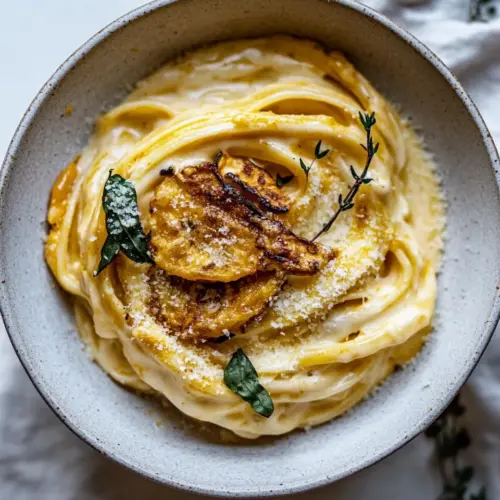
Brown Butter Pumpkin Fettuccine Alfredo with Fried Cheese
Brown Butter Pumpkin Fettuccine Alfredo with Fried Cheese is a creamy, nutty pasta that balances silky pumpkin Alfredo with crisp fried Raclette cheese. This easy weeknight dinner feels indulgent yet approachable, thanks to browned butter and fresh sage. Serve it for a cozy fall meal when you want something impressive with minimal fuss.
Equipment
- Large Pot
- Large Skillet
- Whisk
- Tongs
Ingredients
- 6 tablespoons butter Melted and browned to add a nutty, toasty depth that forms the flavor foundation of the sauce; use clarified brown butter to enrich mouthfeel and coat the pasta evenly.
- 3 cloves garlic minced or grated Aromatized and gently cooked to release pungent savory notes that build complexity; grate or mince finely so it disperses into the butter without large raw bites.
- 1 1/2 cups whole milk Added warm to thin and lighten the sauce while contributing subtle dairy sweetness; temper into the mixture slowly to avoid curdling and maintain a silky texture.
- 1 cup heavy cream Creamy and emulsifying to create a rich, luxurious base; incorporate gradually to achieve a smooth, velvety Alfredo consistency and increased body.
- 3/4 cup pumpkin puree Pureed and folded in to provide autumnal flavor, color, and slight thickness; balance pumpkin amount so it complements rather than overpowers the cheese and butter.
- 1 1/2 cup grated pecorino romano or parmesan Salted, sharp, and umami-rich cheese that melts into the sauce to provide savory backbone and creamy consistency; grate finely for even melting and season control.
- 1/2 cups shredded Raclette cheese + 4 thin slices or other swiss style cheese Melting, gooey cheese for internal creaminess plus thin slices for frying into crisp, salty garnish; use shredded for sauce integration and slices for crunchy contrast.
- 1/4 teaspoon nutmeg Warmed and powdered to add warm, aromatic spice that enhances the pumpkin and cheese; use sparingly to avoid dominating the sauce’s savory profile.
- kosher salt + pepper Seasoning with coarse salt and freshly cracked black pepper to balance and enhance all flavors; adjust gradually, tasting as cheeses already contribute saltiness.
- 1 pound fettuccine Pasta cooked to al dente to provide the structural vehicle for the sauce; toss hot fettuccine with the sauce to allow proper absorption and coating.
- 6 leaves fresh sage Fried or crisped to aromatic finish and visual contrast; pan-fry sage leaves in butter until crisp to garnish and introduce herbal, savory notes.
Instructions
- Bring a large pot of salted water to a boil.: Steam should rise steadily and the surface will ripple as the water nears a rolling boil, signaling the right moment to add the fettuccine . Use a generous amount of salt so the pasta seasons from within, which impacts the final balance of the dish. A common error is under salting the water, which leaves the pasta bland even after saucing. If your kitchen smells faintly of mineral or metal from the water, that is normal depending on your tap; it will not affect the final flavor.
- Heat a large skillet with sides over medium high heat. Add 4 tablespoons butter and allow the butter to brown, stirring often, about 3-5 minutes. Add the garlic and cook 15-30 seconds or until fragrant, then slowly pour in the milk, heavy cream, and pumpkin puree. Whisk until smooth. Bring the sauce to a gentle simmer and cook 5-10 minutes. Stir in the pecorino romano, 1 cup raclette and nutmeg. Season with salt + pepper.: You will see the butter foam and then transform into a golden amber with tiny brown flecks, releasing a warm, nutty aroma that fills the kitchen. This browning step creates depth and a slight toasted flavor that lifts the whole sauce. Stirring often prevents localized burning, and if the butter starts to smoke, the heat is too high and you should remove the skillet briefly from the burner to cool. The sensory cue to watch for is a smell like toasted nuts and a color shift to deep gold.
- Boil the fettuccine until al dente. Drain and add directly to the pumpkin Alfredo sauce. Cook until warmed through, about 5 minutes.: The sound will change from a steady bubble to a gentler simmer as the cold liquids meet the hot pan, and the kitchen will fill with the scent of garlic and warm dairy. Pouring slowly helps the temperature equalize so the dairy does not seize or separate. If the mixture curdles or looks grainy, your pan may be too hot; lower the heat and whisk vigorously to bring it back together. The visual cue to aim for is a smooth, unified liquid with no broken bits.
- Meanwhile, heat a skillet over medium heat and add 2 tablespoons butter. Add the raclette cheese slices and cook 2-3 minutes per side or until a crust forms and the cheese has 'fried'. Remove the cheese from the skillet and add the sage, fry 30 seconds. Remove the skillet from the heat.: You should hear a low, steady bubbling and see the sauce thicken slightly as water evaporates, concentrating the flavor. Whisking helps incorporate the pumpkin evenly and prevents scorching. This simmer develops a creamy body that will cling to the fettuccine . If the sauce seems too thin after simmering, continue a minute or two longer; if it becomes too thick, stir in a splash of milk to loosen it.
- Divide the fettuccine among plates and top with fried cheese + sage. Drizzle with any browned butter left in the pan. Eat!: As you add the shredded pecorino romano and Raclette , the sauce will transform, going from glossy to luxuriously thick and silky, and you will notice a tangy, savory lift. The cheeses melt into the warm cream, forming an emulsion that coats the spoon. If the cheese clumps instead of melting, the sauce temperature may be too high; remove the pan from heat and whisk gently to smooth it. Expect a fragrant note from the nutmeg that brightens the pumpkin .
- Season with salt + pepper.: Taste the sauce carefully because the cheeses bring saltiness; add kosher salt sparingly, and use freshly cracked black pepper to introduce a bright finish. Seasoning fine tunes the layers of flavor and prevents the dish from tasting flat. A frequent mistake is over salting after adding cheese; taste first and remember you can always add more later.
- Boil the fettuccine until al dente. Drain and add directly to the pumpkin Alfredo sauce.: The pasta should be tender but still offer a slight bite when you test it, and the surface will look just cooked without swelling or falling apart. Transferring the fettuccine straight into the sauce while wet helps the sauce cling to the noodles. Avoid letting the pasta sit too long after draining, or it will cool and the sauce will not adhere. If the pasta seems dry in the sauce, add a splash of the reserved pasta water to loosen and help create a glossy finish.
- Cook until warmed through, about 5 minutes.: While the fettuccine and sauce mingle, you will see the sauce thicken slightly and silkily coat the pasta, and a gentle steam will rise. This brief finish lets the flavors marry and the cheese melt fully into the strands. Do not overcook here, or the pasta will lose its texture and the sauce may become gluey. The right moment is when every ribbon is evenly coated and steaming.
- Meanwhile, heat a skillet over medium heat and add 2 tablespoons butter. Add the raclette cheese slices and cook 2 to 3 minutes per side or until a crust forms and the cheese has 'fried'.: As the cheese fries, it will render fat and develop golden brown edges that crisp while the interior stays melty. You will hear a gentle sizzling and smell the cheese caramelizing. This creates contrast and a dramatic topping. A common pitfall is using too high heat, which scorches the cheese instead of allowing it to crisp evenly; medium heat and patience are key.
- Remove the cheese from the skillet and add the sage, fry 30 seconds. Remove the skillet from the heat.: The sage leaves will sizzle and crisp almost instantly, releasing a bright, herbal aroma that complements the nutty browned butter . Fry briefly so the sage becomes delicate and crisp without burning. If the sage turns dark quickly, your pan is too hot; transfer the leaves immediately to a paper towel to stop the cooking.
- Divide the fettuccine among plates and top with fried cheese + sage.: When you plate, you will see the creamy sauce clinging to the wide ribbons and the fried Raclette perched on top, edges golden and crisp. Drizzle any browned butter left in the pan for an extra boost of nutty aroma. A final grind of black pepper brightens the plate. The dish is best enjoyed immediately, as the fried cheese will soften over time; serve right away for the most dramatic texture contrast.
- Drizzle with any browned butter left in the pan. Eat!: The last drizzle of browned butter adds concentrated flavor and aroma. Sink your fork in and enjoy the warm, creamy ribbons juxtaposed with crisped cheese and fragrant sage . A frequent error is letting the dish sit too long before serving, which dulls the textures; this one shines when fresh.
Notes
- Use a milder melting cheese if Raclette is unavailable, choose a similar Swiss style cheese for similar melting and frying behavior.
- Adjust the pumpkin by increasing or decreasing the amount slightly to change the sauce body, but keep the cheese ratio steady so the emulsion holds.
- Make it ahead by preparing the sauce up to the simmer stage, cool, and rewarm gently before finishing with freshly cooked fettuccine.
- Control richness by using a bit more milk and a touch less heavy cream for a lighter version without losing creaminess.
- Boost herb aroma by frying extra sage leaves and serving them on top for a dramatic look and fresh herbal bite.