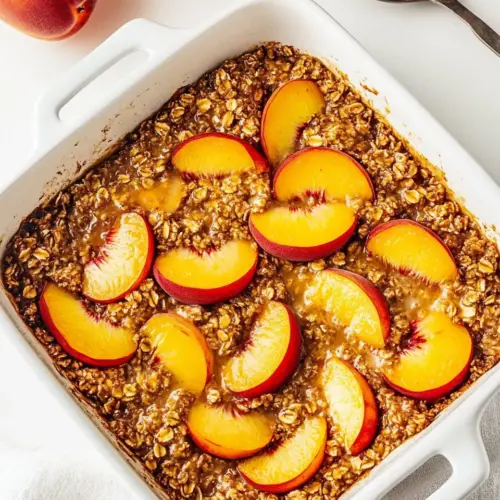
Brown Butter Peach Baked Oatmeal
Brown Butter Peach Baked Oatmeal is a warm, comforting bake that blends nutty browned butter with juicy peaches and hearty oats. This creamy yet structured breakfast is easy to prepare and perfect for leisurely weekend brunches or a make ahead weekday treat. The aroma alone invites everyone to the table, so give it a try for an effortless summer favorite.
Equipment
- 8x8-inch Baking Pan
- Medium Saucepan
- Large Mixing Bowl
- Spatula
Ingredients
- 6 tablespoons unsalted butter Melted and browned to develop a nutty, caramel-like aroma that deepens overall flavor; used to coat the oats and liquid for a richer baked texture. Adds moisture and helps create a tender crumb while providing fat for browning the top during baking.
- 2 cups old fashioned oats Rolled to provide a hearty texture and structure for the dish; absorbs liquids and sets into a cohesive bake when mixed with eggs and milk. Contributes whole-grain flavor, chewiness, and bulk to make the oatmeal substantial enough for slicing and serving.
- 2 tablespoons brown sugar Dissolved to introduce a hint of caramelized sweetness that complements the brown butter and peaches; balances tart or under-ripe fruit. Helps enhance the overall sweetness without overpowering, and promotes slight caramelization on the surface while baking.
- 1 teaspoon baking powder Leavened gently to provide lift and a lighter internal texture; creates small pockets of air that prevent the oatmeal from becoming overly dense. Reacts with liquid and heat to give the baked oatmeal a tender, cake-like quality.
- 1 teaspoon ground cinnamon Spiced to impart warm, aromatic notes that enhance the fruit and brown butter flavors; blended into the dry mix for even distribution. Adds depth and comforting fragrance, tying together the sweet and savory elements of the dish.
- 1/4 teaspoon kosher salt Seasoned sparingly to highlight flavors and balance sweetness; combined with dry ingredients to ensure even seasoning throughout. Enhances the overall taste profile and helps accentuate the natural sweetness of the peaches and brown butter.
- 1 1/2 cups milk Poured in to hydrate the oats and dissolve sugars and leaveners, forming the custardy base when baked with eggs; choice of milk affects richness. Contributes creaminess and moisture that results in a soft, set interior once baked.
- 2 large eggs Beaten and incorporated to bind the mixture and create structure; coagulates during baking to set the oatmeal and provide a slightly fluffy texture. Adds protein and helps the bake hold together for neat portions.
- 1/4 cup pure maple syrup Poured in as a natural sweetener to add gentle, complex sweetness and a sticky, moist crumb; pairs well with brown butter and peaches. Enhances flavor depth while contributing to a soft, tender interior and slight caramelization at the edges.
- 2 teaspoons vanilla extract Added for aromatic vanilla notes that round out the sweetness and elevate fruit flavors; mixed into the wet ingredients for even flavor distribution. Provides a warm, familiar fragrance and subtle flavor complexity throughout the baked oatmeal.
- 1 1/2 cups chopped peaches Folded in as tender fruit pieces that offer bursts of juicy sweetness and texture contrast; distributes natural fruit flavor throughout the bake. Adds freshness, moisture pockets, and seasonal character to each bite.
- Sliced peaches, for topping Laid on top as fresh slices to enhance presentation and provide a bright, juicy topping after baking; adds immediate fruitiness and visual appeal. Offers textural contrast and freshness when served alongside the warm baked oatmeal.
- 1 tablespoon turbinado sugar, for sprinkling Sprinkled over the surface to create a crunchy, sparkling finish that contrasts with the soft interior; melts slightly while retaining crunch. Adds a hint of molasses-like flavor and decorative sparkle to the top crust.
- Whipped cream, for serving, optional Served optionally to lend a light, airy creamy element that complements warm flavors and adds richness; dolloped before serving for extra indulgence. Balances sweetness and adds a cooling, luxurious texture to each portion.
Instructions
- Preheat the oven to 350 degrees F. Grease an 8×8-inch baking pan with cooking spray and set aside.: You will notice the kitchen warming and the air taking on a subtle roasted note as the oven reaches temperature, which primes the pan to receive the batter evenly. Preheating ensures the bake begins cooking at an even rate, producing edges that set while the center finishes without overbaking. A common pitfall is skipping the greasing step, which can cause sticking, so make sure the pan is well prepared. If your oven runs hot, place the rack in the center to prevent the top from browning too quickly.
- Place the butter, in tablespoon pieces, in a medium saucepan and melt over medium heat, stirring often, until it foams, smells nutty, and browns. This will take about 5 to 7 minutes. Scrape the browned butter into a small bowl. Let cool for 5 to 10 minutes.: You will hear gentle bubbling, then see the foam subside and amber flecks appear as proteins caramelize, releasing a nutty, warm aroma that signals the step is done. This scent is transformative, giving depth to the final dish. Letting it cool slightly prevents cooking the eggs when combined later. A common mistake is walking away and burning the butter, which leaves a bitter note, so stay attentive and stir constantly. If you smell anything acrid, discard and start with fresh butter.
- In a large bowl, combine the oats, brown sugar, baking powder, cinnamon, and salt. Set aside.: The dry mixture will smell faintly of spice and molasses, and combining these components ensures even distribution of leavening and seasoning so each bite is balanced. You want the oats coated with the dry ingredients so they absorb the liquid uniformly. Avoid over mixing here, or you can compress the oats and make the texture heavier than intended. If your baking powder is old, the bake will be flatter, so check freshness.
- Pour the milk over the oat mixture. Add the browned butter, eggs, maple syrup, and vanilla extract. Stir until well combined. Fold in the chopped peaches.: At this stage you will see the batter come together into a cohesive mass, with the milk hydrating the oats and the browned butter blending into glossy ribbons. The aroma will deepen as the maple and vanilla mingle. Folding the chopped peaches gently preserves their shape so they create juicy pockets instead of dissolving. A common issue is over stirring, which can break the fruit apart and lead to excess moisture; fold carefully and stop when even distribution is achieved.
- Pour the mixture into the prepared pan. Top with sliced peaches and sprinkle with turbinado sugar.: As you spread the batter, it should hold its shape, not run like a custard. Arrange the sliced peaches on top in a single layer for an attractive finish, and the turbinado sugar will catch the heat to form tiny, crunchy highlights. This visual layer also signals where servings will be most fruit forward. Be careful not to press the fruit into the batter, which could sink them; place them gently.
- Bake for 35 to 40 minutes or until the oats are set and lightly golden brown. Remove from the oven and let cool in the pan for 5 minutes. Cut into squares and serve with whipped cream, if desired.: The oven will do the heavy lifting, transforming loose batter into a structured yet tender bake. Look for a golden top and a slightly firm center that springs back when touched; an inserted toothpick should come out mostly clean with a few moist crumbs. Cooling briefly helps the squares hold together for neat slices. A frequent error is underbaking, which leaves a soggy center, so if the center seems very soft, give it another 5 minutes and recheck. Serve warm, and add whipped cream for extra richness if you like.
Notes
- Brown butter timing: Browning butter requires attention, so stay by the pan and stir continuously to encourage even color and prevent burning. The smell will change from dairy to warm and nutty, and amber solids will form. If you step away you risk a bitter finish, so focus on this step.
- Choose the right oats: Use old fashioned oats for the best texture, they hold up in the oven and provide satisfying chew. Quick oats will cook through too quickly and become mushy, altering the intended mouthfeel of the bake.
- Fruit preparation: Chop peaches into similar sized pieces so they distribute evenly while mixing and baking. Uniformity ensures consistent pockets of fruit rather than isolated watery spots that can make the center too soft.
- Sweetness balance: Taste the batter before baking if you are unsure about sweetness, remembering that flavors mellow with heat. If your peaches are exceptionally sweet, you can trim a tablespoon or two of maple syrup to keep the final balance bright.
- Topping technique: Place sliced peaches on top rather than stirring them in for a pretty presentation and slightly caramelized surface. The turbinado sugar adds sparkle and a hint of crunch that contrasts the soft interior.