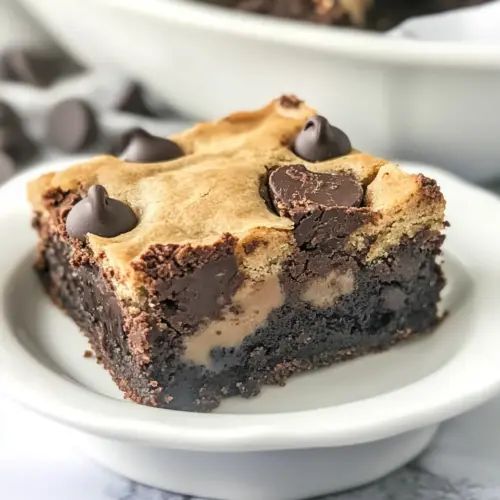
Brookie Bars
Brookie Bars are a rich, fudgy treat combining dense chocolate brownie and buttery cookie pieces into one irresistible bar. This easy to make recipe yields gooey centers, chewy cookie pockets, and a crowd pleasing dessert perfect for gatherings and cozy nights. Make a pan for sharing, and enjoy the texture contrast that keeps everyone coming back for another square.
Equipment
- 9 x 13-inch pan
- Wire Rack
- Mixing Bowl
- Wooden Spoon
Ingredients
- 2 cup s sugar Provides sweetness and structure, dissolving into the batter to tenderize and caramelize during baking; helps balance cocoa bitterness and enhances overall flavor depth in the brookie bars.
- 2/3 cup cocoa powder Adds rich chocolate flavor and contributes to a fudgy texture when combined with butter and sugar; can intensify bitterness if overused, so it should be properly measured and sifted to avoid lumps.
- 1 cup melted butter Contributes fat for moisture, richness, and a smooth mouthfeel; melted form disperses evenly with cocoa and sugar to create a dense, brownie-like crumb in the bars.
- 4 eggs Binds ingredients, adds moisture, and leavens slightly while creating structure through coagulated proteins; whisking eggs with sugar incorporates air that helps the bars set correctly.
- 2 teaspoon s vanilla Imparts aromatic sweetness and rounds out flavors, enhancing both chocolate and vanilla notes; small amount elevates overall complexity without overpowering the brookie profile.
- 1 1/2 cup s flour Provides the necessary bulk and structure, forming the framework that sets during baking; proper mixing avoids gluten overdevelopment to keep the bars tender rather than cakey.
- 1/2 teaspoon salt Balances sweetness and enhances flavor perception while controlling dough chemistry; salt also strengthens gluten slightly and elevates other ingredients when used in moderation.
Instructions
- Spray a 9 x 13 pan with non-stick baking spray or line the pan with non-stick foil. Preheat the oven to 350º.: As the oven warms, you will notice a faint metallic smell as the heat comes up, and the kitchen will start to feel toasty. Getting the pan prepared prevents sticking and helps you lift the bars out cleanly after baking, which makes slicing simpler. A common mistake is skipping the liner and then struggling to remove the bars, so take the minute to spray or line the pan. If your oven takes a bit longer to reach temperature, give it extra time so heat is consistent when the pan goes in.
- Stir together the butter, sugar, eggs, and vanilla.: Once combined, the mixture will be glossy and slightly airy, and you might hear gentle plopping sounds as the spatula cuts through. This step creates a smooth base for the brownie layer, with the butter dissolving the sugar so the batter becomes cohesive. If you overmix vigorously with a mixer, you can incorporate extra air, which can change the texture to be cakier, so use gentle strokes and stop when uniform.
- Add flour, cocoa, salt, and mix until combined. Spread in prepared pan.: The batter will darken and thicken as the flour and cocoa powder are incorporated, releasing a rich chocolate scent. Use a spatula to fold until no dry streaks remain, and scrape the bowl sides so everything is evenly mixed. Spread the batter evenly in the pan so the brownies bake uniformly; an uneven layer can cause thinner edges to overbake while the center remains too soft.
- To make the cookie dough layer, beat butter and sugars.: As you cream these together, you will notice the mixture lighten in color and become fluffy, with a soft, grainy sound from the sugar. This aeration gives the cookie pieces a tender crumb and a pleasant chew after baking. Avoid overcreaming to the point where it becomes overly pale, as that can change the texture of the cookie pieces and make them less cohesive when placed on the brownie layer.
- Add eggs and vanilla and mix until combined.: The mixture will loosen and take on a smoother sheen, and a vanilla aroma will lift the scent profile. These liquids help bind the dry elements of the cookie dough and provide structure. Under mixing here can leave pockets of dry ingredients, while overmixing can make the dough too soft for shaping, so mix until everything is evenly incorporated.
- Add dry ingredients and using a wooden spoon, mix until combined. Fold in chips.: The dough will thicken and become workable, and folding in chocolate chips creates bursts of melty texture in the finished bars. Using a wooden spoon gives you tactile feedback on the dough’s consistency, so you can stop when it holds together without being greasy. A common error is adding too much flour accidentally, which will stiffen the dough, so measure carefully.
- Flatten pieces of dough in your hands and lay across the brownie layer to cover.: Working by hand you will feel the dough tacky but manageable; shaping small pieces lets you distribute cookie islands across the brownie surface for even coverage. The tactile process helps you gauge size and spacing, which affects how much cookie per bite you get. If the dough becomes too soft from warm hands, chill briefly so it holds shape when placed on the batter.
- Sprinkle on a few more chips. Bake 30-35 mins.: During baking the kitchen will fill with a toasty, chocolatey aroma and you might hear tiny crackles as the top sets. The edges will start to pull slightly away from the pan and the surface will look set while the center retains a bit of jiggle. A common mistake is leaving them in too long, which dries the bars; aim for edges set and center just barely firm. Rotate the pan halfway if your oven has hot spots to ensure even color.
- Cool on a wire rack before cutting.: Cooling allows the center to finish setting and the bars to hold their shape, and you will notice steam fading and the scent softening as they rest. Cutting too soon can smear and lose those defined layers, so patience results in cleaner slices. If you need them faster, chill briefly but be aware the texture tightens when cold.
Notes
- Boost the chocolate: Fold extra chocolate chips into the brownie layer for pockets of molten chocolate that intensify each bite.
- Change the chips: Use dark or milk chips depending on your sweetness preference, which alters the balance between the brownie and cookie pieces.
- Mix in nuts: Add chopped nuts into the cookie dough for crunch, taking care not to overwhelm the texture contrast.
- Adjust sweetness: Reduce the sugar slightly if you prefer a less sweet bar, which will let the cocoa flavor shine more prominently.
- Chill before slicing: Refrigerate the cooled pan for cleaner cuts and firmer layers if you need to transport the bars.