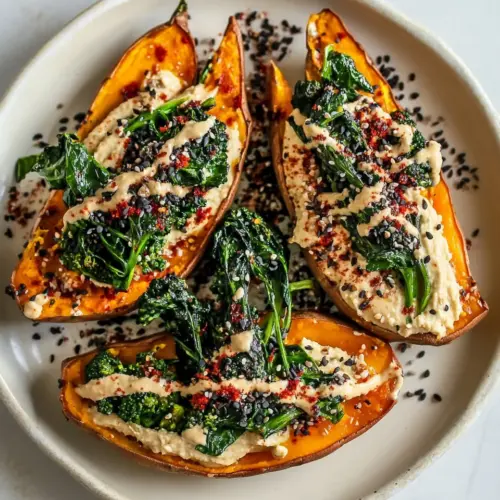
Broccoli Rabe and Hummus Topped Sweet Potatoes
Broccoli Rabe and Hummus Topped Sweet Potatoes are an easy weeknight dinner that balances creamy, smoky, and peppery flavors. Roasted sweet potatoes become tender and caramelized, while peppery broccoli rabe adds bite and a smooth hummus drizzle brings richness. This dish is a satisfying vegetarian main or hearty side that is quick to pull together and perfect for cozy nights.
Equipment
- Oven
- Rimmed Baking Sheet
- Parchment Paper
- Small Bowl
- Paring knife
Ingredients
- 4 whole sweet potatoes, washed and cut in half lengthwise Roasted to bring out natural sweetness and provide a sturdy base, halved sweet potatoes deliver creamy texture and subtle caramelized flavor that pairs well with savory toppings; rub with oil and season before baking for best results.
- 2 bunches broccoli rabe, washed and leaves picked away Wilted and slightly bitter, broccoli rabe adds leafy green contrast and earthy complexity when stems are trimmed and leaves sautéed until tender; quick cooking preserves bright color and a pleasant bite.
- 3 tablespoons olive oil, divided Used to coat and roast vegetables and enrich toppings, olive oil contributes mouthfeel and helps achieve golden edges on sweet potatoes while carrying flavors like garlic and lemon into the dish.
- 2 teaspoons kosher salt, divided Sprinkled during cooking and seasoning, kosher salt enhances overall flavor, balances sweetness, and helps draw out moisture when applied to greens or vegetables prior to roasting.
- 2 teaspoons black pepper, divided Ground to taste across components, black pepper introduces mild heat and aromatic depth; freshly cracked pepper brightens hummus and roasted vegetables without overwhelming other flavors.
- 1/4 cup plain hummus Spoonable and creamy, plain hummus provides a smooth, protein-rich topping that lends tangy, nutty notes and helps bind lemon and spices to the roasted sweet potatoes.
- 1 tablespoon fresh lemon juice Squeezed fresh to brighten flavors, fresh lemon juice adds acidity and lifts the dish by cutting through richness while enhancing the freshness of greens and hummus.
- 1/4 teaspoons smoked paprika Added sparingly for a smoky warmth, smoked paprika brings depth and a subtle savory smokiness that complements roasted sweet potatoes and accentuates the hummus topping.
- Sesame seeds, for topping Toasted as a finishing garnish, sesame seeds contribute nutty crunch and visual contrast that complements creamy hummus and tender greens when sprinkled over the assembled potatoes.
- Crushed red pepper flakes, for topping Scattered for optional heat, crushed red pepper flakes introduce a bright, spicy kick that enliven the sweet and savory elements without masking the dish's primary flavors.
Instructions
- Preheat oven to 425 degrees F and prepare 2 rimmed baking sheets with parchment paper.: You will smell a faint warm, dry heat once the oven reaches temperature, which helps ensure even roasting. Preheating is crucial so the potato skins begin to caramelize on contact, creating a slightly crisp edge and a soft, fluffy interior. Lining the sheets with parchment prevents sticking and makes cleanup simple, and it also reduces the chance of sugars scorching directly on metal. A common mistake is skipping full preheat, which can lead to uneven doneness. If your oven runs hot, rotate the pans halfway through to prevent overbrowning at the edges. Position racks so both trays get steady heat, not crowded one above the other.
- Place the sweet potatoes cut side down onto the prepared baking sheet.: When you lay the sweet potatoes face down, you will feel the cool, firm flesh against your fingers and notice the woodsy scent of the skins. This placement promotes caramelization on the exposed edges rather than drying out the flesh, resulting in a tender interior. Make sure the potatoes are spaced so hot air circulates, they should not touch. One oversight is overcrowding the pan, which causes steaming instead of roasting. If you see steam pooling, separate the potatoes or use an extra sheet pan to maintain crispness.
- Drizzle 2 tablespoons of olive oil over the potatoes and rub the olive oil over the potatoes. Season the potatoes with 1 teaspoon kosher salt and 1 teaspoon black pepper.: As you rub the olive oil into the skins, they will take on a glossy sheen and the oil will help the salt and pepper cling. The oil encourages the edges to become golden and slightly blistered, providing contrast to the creamy center. The salt penetrates as the potato cooks, seasoning the flesh. Avoid over-oiling which can make the skins soggy. If you prefer crisper skins, use a light hand and make sure the oven is properly preheated.
- Add to the oven and bake for 30 minutes or until the potatoes are soft. The timing may change based on the size of your potatoes.: You will hear a subtle crackle as moisture escapes and see small blisters form on the skin. Test doneness by inserting a paring knife into the thickest part, it should slide in easily and the flesh should feel pillowy. Larger potatoes will need more time, smaller ones less. Resist the urge to open the oven repeatedly, as that releases heat; instead check near the end of the suggested time. If the centers are still firm, give them 5 to 10 more minutes and check again.
- Put the broccoli rabe onto the other prepared baking sheet, drizzle with remaining olive oil and toss with remaining kosher salt and black pepper.: Tossing the broccoli rabe in oil until it glistens ensures each leaf and stem roasts instead of steaming, producing slightly crisped edges and a tender bite. You will smell a vegetal, almost nutty aroma when the oil warms the greens, and the salt draws out a little moisture that helps them brown. Be mindful not to overdress them, excess oil can pool and make them limp. If stems are thick, give them a light slice to promote even roasting. A common error is underseasoning, which leaves the greens flat.
- Add to the oven and bake for 15 minutes or until roasted. I cook the potatoes and the broccoli rabe at the same time.: When roasting, the broccoli rabe will darken at the edges and release a toasty scent. Look for tender stems and slightly crisp tips, which indicate they are done. Because cooking times vary, check them at 12 minutes to prevent burning. If the leaves blacken too quickly, move the tray to a higher rack to reduce direct heat. Overcooking will turn them mushy, so aim for a bright, roasted finish.
- While your vegetables are baking add hummus, lemon juice and smoked paprika to a small bowl. Stir to combine.: The texture should feel dense and creamy in the bowl, and the aroma of freshly squeezed lemon juice will lift the hummus instantly. The smoked paprika adds a whisper of smoke that complements roast flavors, and mixing these now lets the acids mellow into the hummus. If your hummus seems chalky or too thick, don’t worry, you will loosen it in the next step. Avoid adding too much lemon early or the hummus can become overly tart.
- Add water, 1 tablespoon at a time until the hummus mixture is just loose enough to drizzle, set aside.: As you whisk in water, you will see the hummus transform into a silkier sauce that pours in ribbons, and you will hear a light glug as it thins. This is important because a drizzly texture coats the sweet potatoes without drowning them. Stop when it reaches a pourable consistency, usually one to two tablespoons. A frequent misstep is making it too thin, which causes it to slide off instead of clinging. If it becomes too runny, stir in a bit more hummus to regain body.
- To assemble, lightly smash down the cut side of the sweet potato, top with roasted broccoli rabe and drizzle with the desired amount of hummus.: Gently pressing into the warm flesh releases steam, creates a cozy well for the broccoli rabe , and helps the hummus adhere. You will feel the soft interior yield beneath your palm, and the contrast of textures is what makes the dish satisfying. Finish with a scatter of sesame seeds and a pinch of crushed red pepper flakes for crunch and heat if you like. A common error is assembling while the potatoes are too cool, which prevents flavors from melding; assemble promptly while everything is warm.
Notes
- Choose similar sized potatoes so everything finishes around the same time, reducing guesswork and keeping oven time predictable.
- Remove tough stems from broccoli rabe to avoid fibrous bites, slice thicker stems so they roast tender alongside the leaves.
- Thin hummus carefully one tablespoon at a time until pourable, this prevents it from becoming too watery and sliding off the potatoes.
- Use parchment or silicone to prevent sticking and to simplify cleanup, they also help deliver even browning without scorching.
- Finish with contrasting texture such as toasted sesame seeds or a light sprinkle of crushed red pepper flakes for crunch and color.