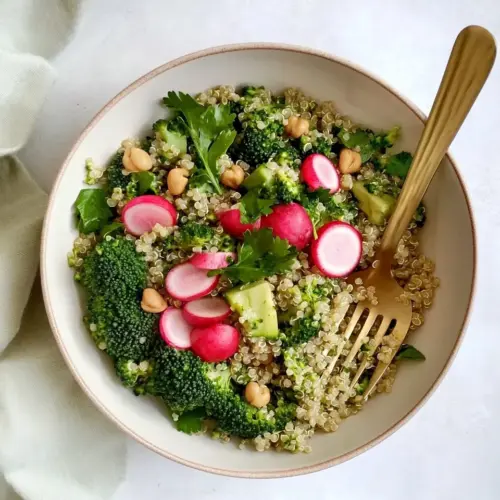
Broccoli Pesto Quinoa Salad
Broccoli Pesto Quinoa Salad is a bright, creamy textured bowl with herbaceous pea hemp pesto, nutty quinoa, and crunchy roasted chickpeas. This easy weeknight salad balances creamy avocado, crisp radish, and tender greens for an energizing lunch or light dinner, perfect for spring produce and meal prep.
Equipment
- Large Pot
- Large Bowl
- Ice Bath Bowl
- Food Processor
Ingredients
- 1 bunch broccolini, or broccoli, cut into pieces Steam or roast until tender and slightly charred; provides a hearty, cruciferous base with a slightly bitter, nutty-flavor that pairs well with bright dressings and adds substantial texture to the salad.
- 3 large kale leaves, chopped (about 3 loose-packed cups) Chop finely and massage lightly with a bit of oil or lemon to tenderize; contributes dense, leafy nutrients and an earthy depth that balances the other greens and adds chewiness to each bite.
- Extra-virgin olive oil, for drizzling Drizzle sparingly over cooked or raw components to add fruity richness and mouth-coating fat; helps meld flavors together and enhances the salad’s overall silkiness and shine.
- Juice of 1/2 lemon, more to taste Squeeze freshly for bright acidity that lifts and balances the richness of the oil and avocado; use additional amounts to taste to adjust brightness and counteract bitterness.
- 2 heaping cups cooked quinoa Fold in as a neutral, nutty-textured grain component that adds body and makes the dish more filling; holds dressing well and provides a source of protein and fiber.
- 1 watermelon radish, or 3 red radishes, thinly sliced Slice thinly for peppery crunch and visual contrast; adds a refreshing, mildly spicy bite and attractive color that complements the greens and creamier elements.
- 1 avocado, cubed Cube gently to add creamy richness and a buttery mouthfeel; contributes healthy fats and soft texture that contrasts with crunchy vegetables and roasted chickpeas.
- 1/2 cup mixed fresh herbs, I used mint and dill Chop and scatter throughout to introduce bright, aromatic notes; the mixture of herbs lends freshness and complexity while enhancing the salad’s herbaceous character.
- 1 1/2 cups Roasted Chickpeas Toss in for crisp, roasted crunch and plant-based protein; provides a savory, slightly caramelized element that adds texture and satisfying bite to the salad.
- Sea salt and freshly ground black pepper Season to taste to amplify and balance all flavors; use sparingly to avoid overpowering delicate herbs and lemon while ensuring the salad is well-rounded.
- 1/4 cup hemp seeds Sprinkle for a subtle, nutty boost and additional plant-based protein; blends seamlessly into grains and greens to enhance nutritional density without altering flavor drastically.
- 1/2 cup frozen peas, thawed Stir in for bursts of sweetness and tender pop; contributes color and light vegetal flavor while offering small pockets of freshness throughout the salad.
- 1 small garlic clove Press or mince and incorporate into dressings or pesto to deliver pungent, aromatic heat; use sparingly to avoid overpowering the fresh herbs and lemon.
- 1/4 teaspoons ea salt, more to taste Add measured to control seasoning within sauces or dressings; helps bring out other flavors and should be adjusted to personal taste to avoid oversalting.
- 1 cup packed fresh spinach, or sub basil Pack tightly or chiffonade to boost green volume and mild flavor; provides a tender leafy element that wilts slightly when dressed and pairs well with basil-like notes.
- 1/4 cup fresh dill, or sub basil or mint Finely chop to intensify herbal aroma and bright, anise-like freshness; can be added to pesto or sprinkled on top to reinforce the salad’s herbaceous profile.
- 2 tablespoons fresh lemon juice Squeeze for concentrated acidity to brighten the dressing or pesto; offers precise tartness that balances oils and creamy ingredients while enhancing overall freshness.
- 1/2 teaspoon Dijon mustard Whisk in to add subtle tang and emulsifying power to dressings; contributes a gentle sharpness that helps bind oil and lemon into a cohesive dressing.
- 2 tablespoons extra-virgin olive oil, more if desired Emulsify into dressings to provide smooth texture and mild peppery depth; helps create a stable vinaigrette that adheres nicely to quinoa and vegetables while adding flavor.
Instructions
- Prepare a large pot of salted boiling water and a large bowl of ice water. Drop the broccolini into the boiling water and blanch for about 1 minute, or until tender but still vibrant green. Transfer the broccolini to the ice water for 1 minute to stop the cooking process. Drain and set aside.: The air will smell faintly of mineral salt as the water comes to a lively boil, and a good pinch of salt seasons vegetables deeply rather than just on the surface. Using an ice bath right after blanching instantly halts the cooking process, preserving the vivid green color and a bright, slightly crunchy texture. One common mistake is overcrowding the pot, which can drop the water temperature and cause uneven cooking. Make sure the pot is large enough so the broccoli moves freely and the water returns to a boil quickly.
- Make the Lemony pea pesto: In a food processor, place the hemp seeds, peas, garlic, and salt and pulse until combined. Add the spinach, dill, lemon juice, and mustard and pulse again. While the processor is running, drizzle in the olive oil. For a thinner pesto, add more olive oil until it reaches your desired consistency. Taste and adjust seasonings.: You will hear a gentle simmer and see the stems become a brighter, deeper green, while the florets take on a glossy sheen. The one minute mark keeps them tender crisp rather than mushy. Watching the color change is the best cue, because times vary by size; if the stems are thick, they might need an extra 15 to 30 seconds. Avoid leaving them too long, or they will lose that lively bite.
- Place the kale into a large bowl and drizzle with olive oil, pinches of salt and pepper, and the lemon juice. Massage the leaves until they soften and wilt down. Portion into serving bowls with the quinoa, watermelon radish, avocado, herbs, and broccolini. Season to taste with additional olive oil, lemon juice, salt and pepper. Add the roasted chickpeas and serve with dollops of pea pesto.: The sudden chill will create a satisfying crackle when you lift a stalk from the bowl, and it locks in the color and texture. This step prevents carryover cooking which otherwise will make the stems limp and dull. A frequent oversight is skipping the ice bath; without it the vegetables keep cooking in residual heat and end up softer than intended.
- Drain and set aside: After the ice bath the broccoli should be cool to the touch and ready to be placed in the salad. Draining thoroughly keeps extra water from diluting the dressing and ensures the quinoa stays fluffy. If your vegetables are still wet, gently pat them with a kitchen towel to avoid watering down the bowl.
- Make the Lemony pea pesto: When you pulse the hemp seeds, peas, garlic, and salt you will first notice a coarse, pea like texture and a fresh, green aroma. Adding the spinach , dill , lemon juice , and Dijon deepens the flavor and changes the scent to a bright, herby perfume. While the processor runs, drizzle in the olive oil slowly to emulsify the mixture into a creamy, verdant sauce. If the pesto seems too thick, a little extra oil will loosen it; if too thin, add more hemp seeds or peas. A common pitfall is over processing into a totally smooth paste, losing the pleasurable texture that makes this pesto distinct, so pulse and scrape as needed.
- In a food processor, place the hemp seeds, peas, garlic, and salt and pulse until combined: You should hear the pulse and see a coarse, slightly grainy mixture that smells faintly nutty and vegetal. This base gives the pesto body and a subtle texture that I find more interesting than an ultra smooth sauce. Be careful not to let the garlic dominate; pulsing in short bursts keeps the garlic integrated without becoming sharp.
- Add the spinach, dill, lemon juice, and mustard and pulse again: The green mass will immediately look brighter and take on a fresher scent. The mustard helps bind and lend umami depth, while the lemon juice cuts through the richness. Over blending at this point can create heat that dulls the bright herbs, so pause occasionally to let the processor cool and scrape down the sides.
- While the processor is running, drizzle in the olive oil: As the oil streams in the pesto will become glossy and smooth, and the aroma will broaden with a fruity top note from the olive oil . This gradual emulsification helps the sauce hold together and coat the salad components. If you add the oil too quickly the mixture can separate or become overly thin, so steady pressure is key.
- For a thinner pesto, add more olive oil until it reaches your desired consistency: Adjusting texture is about mouthfeel as much as appearance, and a looser pesto will cling differently to grains like quinoa . I prefer a slightly saucy pesto that still has body so it binds the salad but does not pool at the bottom. A common error is over thinning, which can make the dressing feel greasy rather than cohesive.
- Taste and adjust seasonings: At this stage the pesto will reveal its true balance of salt, acid, and herb. Tasting allows you to add a touch more lemon juice or salt to brighten things up. Remember that the salad components will dilute the pesto slightly, so season a touch more boldly if you plan to toss heavily. Under seasoning is the usual issue, so don’t be shy to make small adjustments and taste again.
- Place the kale into a large bowl and drizzle with olive oil, pinches of salt and pepper, and the lemon juice: As you dress the kale the leaves will glisten and the aroma will sharpen, with citrus cutting through the natural earthiness. Massaging distributes the oil and acid evenly and starts the softening process. A mistake here is adding too much acid and making the leaves overly limp, so go slowly and monitor the texture.
- Massage the leaves until they soften and wilt down: You will notice the kale shrinking and becoming silkier, and the fibers loosen so each bite is more tender. This transforms tough leaves into a pleasant base that mixes well with the other elements. Over massaging can make the kale mushy, so stop when it feels pliable and no longer coarse.
- Portion into serving bowls with the quinoa, watermelon radish, avocado, herbs, and broccolini: Layering the bowl creates visual appeal and allows each component to maintain its texture. The fragrance of warm quinoa and the cool, herbal pesto invite you to dig in immediately. A common slip up is tossing everything too early which can make the avocado brown and the kale soggy, so assemble thoughtfully.
- Season to taste with additional olive oil, lemon juice, salt and pepper: Final seasoning adjusts for the temperature and moisture of the assembled bowl, and a last squeeze of lemon juice often brightens the whole thing. Taste in the same spoon you will use to eat so you get an accurate impression. Forgetting this final check can leave the salad tasting one dimensional.
- Add the roasted chickpeas and serve with dollops of pea pesto: The roasted chickpeas add crunchy contrast and a toasty aroma that rounds out the salad. Serving with visible dollops of pesto makes the plate inviting and lets people control how saucy they want each bite. A mistake I see is mixing the chickpeas too early, which can soften them; add them last to preserve their crisp texture.
Notes
- Swap herbs: If you prefer a different herb vibe, replace some of the dill with basil for a sweeter aromatic profile that plays well with peas and lemon.
- Adjust pesto texture: For a chunkier pesto, pulse less and retain a bit of whole pea and hemp seed for added mouthfeel and rustic charm.
- Make it heartier: Add extra quinoa or increase the roasted chickpeas to turn this into a more filling main for busy days.
- Serving temperature: Serve the salad slightly warm by combining warm quinoa with cooled greens or fully chilled for a picnic friendly option.
- Storage note: Keep the pesto and roasted chickpeas separate when storing leftovers to maintain texture, and combine just before serving.